
U. etruscus
Ursus etruscus, the Etruscan bear, was an extinct bear species native to Eurasia during the Early Pleistocene, existing from approximately 2.2 million to 1.4–1.2 million years ago. It is widely considered the ancestor of both the modern brown bear (Ursus arctos) and the extinct cave bear (Ursus spelaeus). Distinctive dental characteristics differentiate it from other Ursus species.
Key Facts
- ›Lived in Eurasia during the Early Pleistocene, from about 2.2 million to 1.4–1.2 million years ago.
- ›Considered the ancestor of the modern brown bear and the extinct cave bear.
- ›Distinguished from other Ursus species by specific dental features, particularly the premolars and first molar.
- ›Fossil evidence has been found across Europe and parts of Asia, including Greece, Italy, Spain, and China.
- ›Likely omnivorous, with some populations potentially relying heavily on fish, similar to modern brown bears.
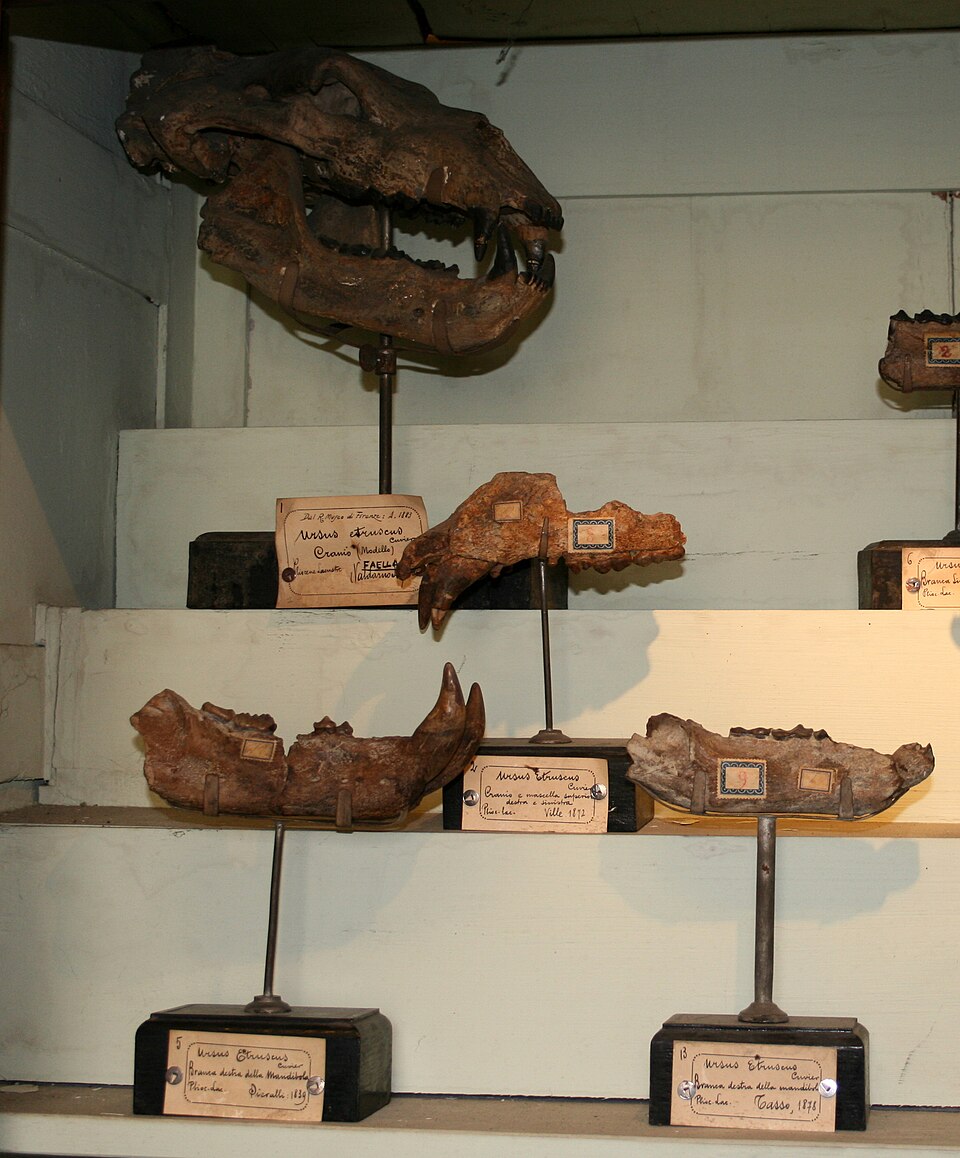
Eurasia, Europe, Great Steppe Region, Palestine, Greece, Montenegro, Croatia, Italy, Spain, Tajikistan, France, Georgia, China, Morocco
About U. etruscus
Ursus etruscus: The Etruscan Bear
The Ursus etruscus, commonly known as the Etruscan bear, represents a significant extinct species within the bear family, Ursidae. This ancient bear inhabited Eurasia during the Early Pleistocene epoch, with its existence spanning from approximately 2.2 million to about 1.4–1.2 million years ago. The Etruscan bear holds a pivotal place in evolutionary history, as it is widely considered the direct ancestor of both the modern brown bear (Ursus arctos) and the now-extinct cave bear (Ursus spelaeus).
Taxonomy and Evolution
The Etruscan bear is believed to have evolved from an earlier species, Ursus minimus, and subsequently gave rise to the lineage that includes the brown bear and cave bear. While its range was largely confined to continental Europe, fossil evidence has also been unearthed in the Great Steppe region of Eurasia. Specific fossil finds have been documented in locations such as Palestine, Greece, Montenegro, Croatia, Tuscany in Italy, and Spain.
Some scientific hypotheses suggest that a smaller variety of U. etruscus from the middle Villafranchian era might be the ancestor of the modern Asian black bear, underscoring its complex role in bear phylogeny.
Description and Distinctive Features
In terms of size, Ursus etruscus was comparable to a living brown bear. Its distinguishing characteristics are primarily found in its dental anatomy. Unlike the cave bears that evolved from it, U. etruscus consistently possessed a complete set of three frontmost lower premolars. Furthermore, the lower fourth premolar of the Etruscan bear was characteristically oval in occlusal view, lacking additional cusps beyond a small cusp on the posterior cristid of the protoconid. The lower first molar was typified by a unicuspid metaconid and a unicuspid entoconid, with no additional cusps or cristids present between them.
Ecology and Diet
Based on comparisons with modern bears, Ursus etruscus is presumed to have been omnivorous. It is possible that certain populations of the Etruscan bear adapted their diets to rely heavily on fish, demonstrating an opportunistic feeding strategy.
Fossil Distribution
Fossil remains of Ursus etruscus have been discovered at various important paleontological sites, providing a timeline and geographic spread for the species. These sites include Vassiloudi in Macedonia, Greece (approximately 1.8 million years ago); Obigarm in Tajikistan (approximately 1.8 million years ago); Pardines in Auvergne, France (approximately 2.5–1.8 million years ago); Dmanisi in Georgia (approximately 1.8–0.8 million years ago); Mestas de Con in Asturias, Spain (approximately 1.8–0.1 million years ago); Strmica in Croatia (approximately 1.8–0.1 million years ago); and Jinyuan Cave in China (approximately 1.8-1.4 million years ago). Morphologically similar specimens, referred to as U. cf. etruscus, have also been described from Ahl al Oughlam in Morocco.
Source: Wikipedia ↗
Frequently Asked Questions
When did the Etruscan bear live?
The Etruscan bear, Ursus etruscus, lived during the Early Pleistocene epoch. Its existence is estimated to span from approximately 2.2 million years ago to around 1.4–1.2 million years ago.
What is the significance of the Etruscan bear in bear evolution?
Ursus etruscus is widely believed to be the ancestral species that gave rise to both the living brown bear (Ursus arctos) and the extinct cave bear (Ursus spelaeus). Its fossil record provides crucial insights into the lineage of these bear species.
How can Ursus etruscus be identified from other bear species?
The Etruscan bear is primarily differentiated from other Ursus species by its dental morphology. Notably, it always possessed a complete set of three frontmost lower premolars, and its lower fourth premolar and first molar exhibit unique characteristics regarding shape and cusps.
Where have fossils of the Etruscan bear been found?
Fossil evidence of Ursus etruscus has been recovered from numerous sites across Eurasia. These include locations in Greece, Italy (Tuscany), Spain, Croatia, Georgia, Tajikistan, and China, indicating a wide geographic distribution.
What was the diet of the Etruscan bear?
Like modern brown bears, Ursus etruscus is thought to have been omnivorous. Some populations may have also relied significantly on fish as a food source, suggesting an adaptable diet.
Related Bears
Helarctos
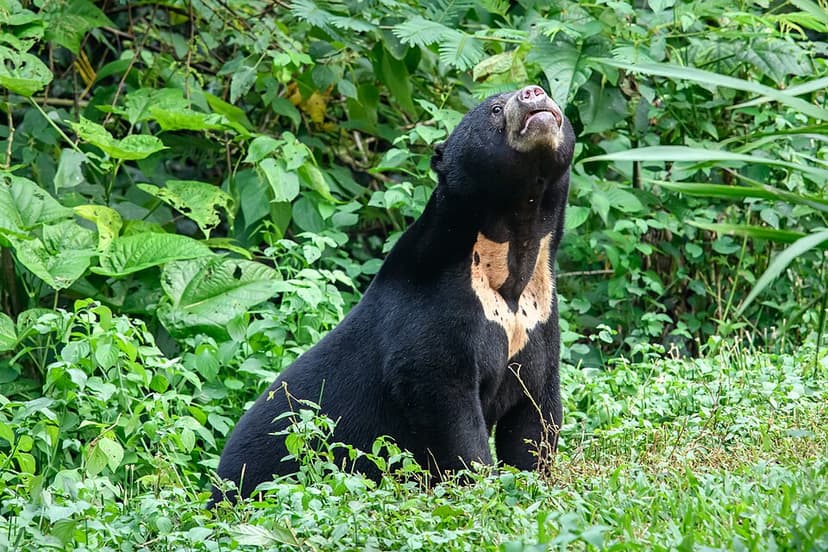
The sun bear (Helarctos malayanus) is the smallest bear species, native to the tropical forests of Southeast Asia. Distinctive for its short, jet-black fur and a characteristic orange to cream-colored chest patch, it is highly adapted for an arboreal lifestyle. Facing significant threats from deforestation and poaching, its population has seen a considerable decline.

Ursus
Ursus is a genus of bears in the family Ursidae, encompassing several well-known species such as the brown bear, polar bear, American black bear, and Asian black bear. The genus name itself is derived from the Latin word for 'bear'. These mammals are characterized by their solitary nature, except during mating seasons and when females are raising cubs, and exhibit complex mating systems driven by sexual selection.
Agriotherium
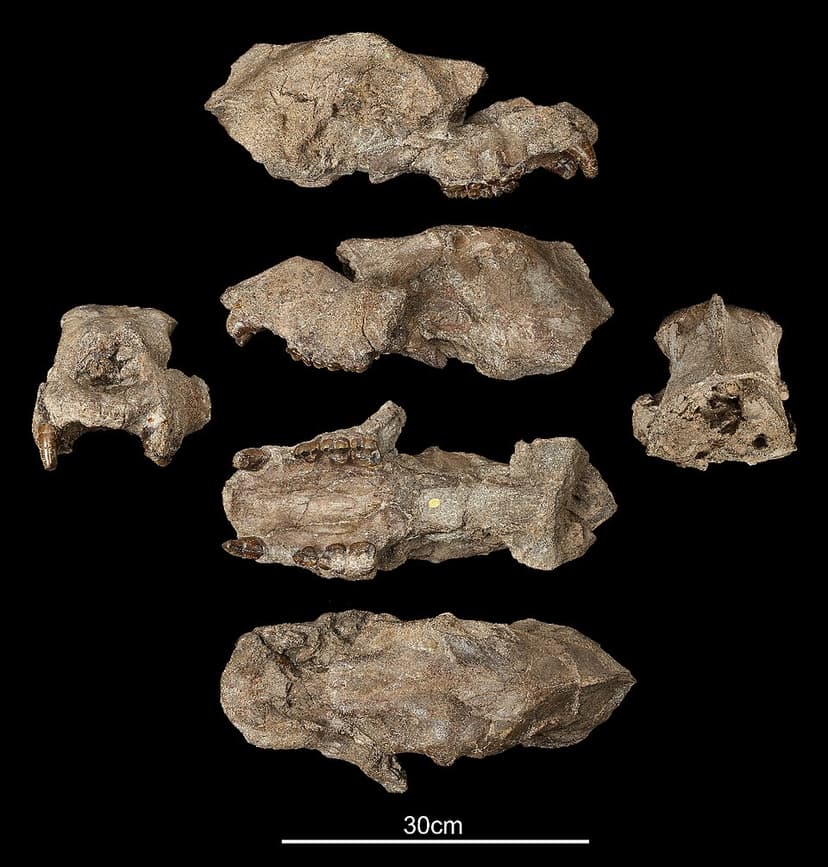
Agriotherium was an extinct genus of large bears that lived from the Miocene to the Pleistocene epochs. Fossils have been discovered across Eurasia and Africa, making it the only known bear genus to colonize sub-Saharan Africa. Distinctive for their longer legs and shorter faces compared to modern bears, Agriotherium likely possessed a powerful bite force, though its exact dietary habits are debated.