
U. minimus
Ursus minimus, also known as the Auvergne bear, was an extinct species of bear that inhabited continental Europe during the Pliocene and Pleistocene epochs, approximately 5.3 to 1.8 million years ago. Its skeletal structure bore a strong resemblance to the modern Asian black bear, making fossil identification challenging. This species is considered ancestral to Ursus etruscus.
Key Facts
- ›Existed in Europe from 5.3 to 1.8 million years ago.
- ›Its fossilized remains are found across various European countries, including France, Italy, and Russia.
- ›Skeletal features were notably similar to the modern Asian black bear.
- ›Believed to be the ancestor of Ursus etruscus.
- ›Its geographic range extended from continental Europe to the Black Sea and as far south as Italy.

Europe
About U. minimus
Ursus minimus: The Auvergne Bear
Ursus minimus, commonly referred to as the Auvergne bear, is an extinct species of bear that inhabited continental Europe during the Pliocene and Pleistocene epochs. Its fossil record indicates an existence spanning from approximately 5.3 to 1.8 million years ago, making it a significant part of Europe's ancient mammalian fauna for roughly 3.5 million years. This species is of particular interest as it appears to have given rise to Ursus etruscus, another important ancestral bear species.
Distribution and Fossil Evidence
The geographic range of U. minimus was extensive across continental Europe, extending eastward to the Black Sea region of Russia and southward into Italy. Fossil discoveries confirm its presence in numerous countries, including France, Slovakia, Hungary, Ukraine, Italy, Bulgaria, Georgia, and Russia. Specific fossil sites that have yielded remains include Kossiakino 1 in the Russian Federation (dating back to 5.3—3.4 Mya), the Kuchurgan gravel site in Ukraine (4.9—4.2 Mya), and Osztramos locality 7 in Hungary (3.4—1.8 Mya).
Physical Characteristics and Ancestry
One of the notable features of U. minimus is the remarkable similarity of its skeleton to that of the larger Asian black bear (Ursus thibetanus). This resemblance can make it challenging to distinguish between the fossilized remains of U. minimus and modern Asian black bears, with the age of the specimens often being a primary differentiating factor. The study of this species provides valuable insights into the evolutionary history of bears in Europe and their eventual diversification.
Source: Wikipedia ↗
Frequently Asked Questions
When did Ursus minimus live?
Ursus minimus lived during the Pliocene and Pleistocene epochs. Its existence is documented from approximately 5.3 to 1.8 million years ago, spanning about 3.5 million years.
Where were Ursus minimus fossils found?
Fossils of Ursus minimus have been discovered in numerous locations across Europe. These include France, Slovakia, Hungary, Ukraine, Italy, Bulgaria, Georgia, and Russia.
What is Ursus minimus known for?
Ursus minimus is notable for its ancient lineage in Europe and its skeletal similarity to the modern Asian black bear. It is also recognized as the species that likely gave rise to Ursus etruscus.
How can Ursus minimus be identified from fossils?
Distinguishing the remains of Ursus minimus from those of modern Asian black bears can be difficult due to their similar skeletal structures. Age of the bones is often a key differentiator.
Related Bears
Helarctos
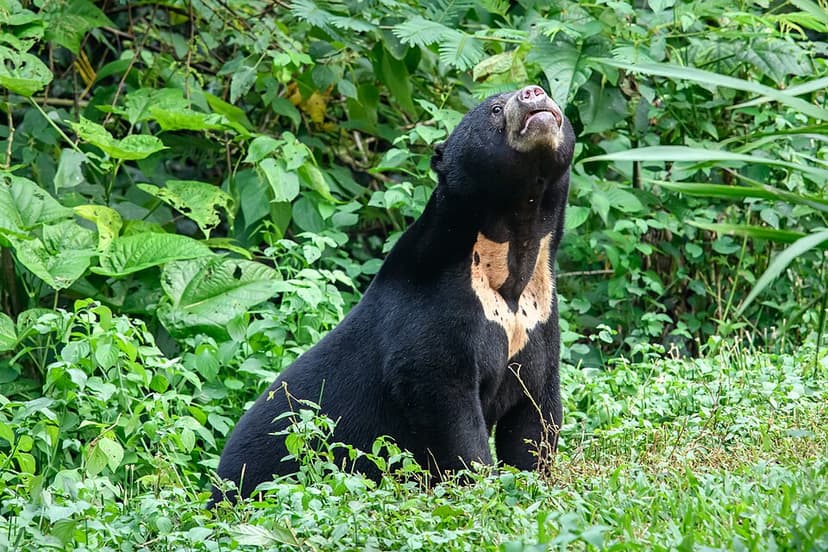
The sun bear (Helarctos malayanus) is the smallest bear species, native to the tropical forests of Southeast Asia. Distinctive for its short, jet-black fur and a characteristic orange to cream-colored chest patch, it is highly adapted for an arboreal lifestyle. Facing significant threats from deforestation and poaching, its population has seen a considerable decline.

Ursus
Ursus is a genus of bears in the family Ursidae, encompassing several well-known species such as the brown bear, polar bear, American black bear, and Asian black bear. The genus name itself is derived from the Latin word for 'bear'. These mammals are characterized by their solitary nature, except during mating seasons and when females are raising cubs, and exhibit complex mating systems driven by sexual selection.
Agriotherium
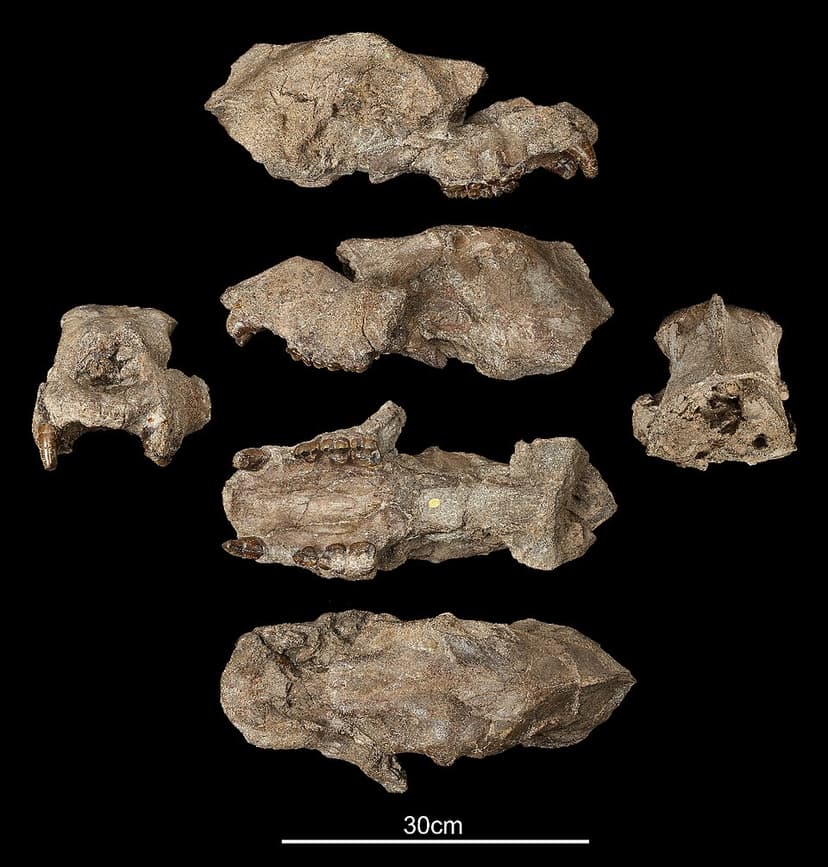
Agriotherium was an extinct genus of large bears that lived from the Miocene to the Pleistocene epochs. Fossils have been discovered across Eurasia and Africa, making it the only known bear genus to colonize sub-Saharan Africa. Distinctive for their longer legs and shorter faces compared to modern bears, Agriotherium likely possessed a powerful bite force, though its exact dietary habits are debated.