
Ursavus
Mammal, Carnivora, Ursidae·Omnivore/Hypocarnivore
Ursavus is an extinct genus of bear that existed across North America, Europe, and Asia during the Miocene epoch, approximately 23 to 5.3 million years ago. It is notable for being the earliest member of the subfamily Ursinae in North America, having likely dispersed from Asia. Species of Ursavus varied in size from cat-sized to wolf-sized and were primarily omnivores or hypocarnivores.
Key Facts
- ›Existed in North America, Europe, and Asia during the Miocene period (23–5.3 million years ago).
- ›Believed to be the earliest member of the subfamily Ursinae in North America.
- ›Species ranged in size from cat-sized to wolf-sized.
- ›Primarily omnivores or hypocarnivores.
- ›Fossil evidence includes teeth, skull fragments, and, in rare cases, complete skeletons.
- ›Its genus has been suggested to have evolved in North America and dispersed westward into Asia, though evidence favors Asian origin.

North America, Europe, Asia
About Ursavus
Ursavus is an extinct genus of bear that inhabited North America, Europe, and Asia during the Miocene epoch, a geological period spanning roughly from 23 to 5.3 million years ago. The genus existed for an estimated 17.7 million years, leaving a significant fossil record across these continents.
Origins and Dispersal
Evidence suggests that Ursavus likely originated in Asia and subsequently dispersed into North America around 20 million years ago. This migration made it the earliest known member of the subfamily Ursinae to appear in the New World. However, some research has proposed the possibility that Ursavus may have evolved in North America and then migrated westward into Asia, although the greater abundance of fossils in Europe leading towards eastern Asia makes this westward dispersal scenario less probable.
Physical Characteristics and Diet
In terms of size, the various species within the Ursavus genus would have ranged from being as small as a domestic cat to as large as a wolf. Their dietary habits are primarily characterized as omnivorous or hypocarnivorous, indicating a mixed diet of plant matter and meat, with a leaning towards a carnivorous diet.
Fossil Discoveries
Knowledge of Ursavus largely comes from fossil evidence, which often includes teeth and skull fragments. In some fortunate instances, more complete remains have been found. For example, a new species, U. tedfordi, was identified from a complete skull discovered in the Gansu region of China, dating to the late Miocene. This specimen was approximately wolf-sized and is considered to be the closest relative to the common ancestor of modern bears, excluding the giant panda and the spectacled bear. Another notable find is U. orientalis from the Shanwang diatomite in Early Miocene China, known from a complete skeleton; however, there is ongoing scientific discussion about its potential reassignment to the genus Ballusia.
Fossil Distribution
Fossils of Ursavus have been unearthed at various sites, providing insight into its geographic spread and temporal presence. Key find locations include:
- North America: Pawnee Buttes Site, Colorado (U. pawniensis); Yost Farm Site, Saskatchewan, Canada (U. primaevus); Myers Farm Site, Nebraska (U. brevirhinus).
- Europe: Pasalar site, Turkey (U. primaevus); Baigneaux-en-Beauc, France (U. brevirhinus); Hambach mine horizon, Germany (U. elmensis).
- Asia: Shanwang diatomite, China (U. orientalis); Lufeng site, China (U. depereti); Linxia Basin, China (U. tedfordi).
Source: Wikipedia ↗
Frequently Asked Questions
When did Ursavus live?
Ursavus lived during the Miocene epoch, which spans from approximately 23 to 5.3 million years ago. This period represents a significant duration of about 17.7 million years for the genus.
Where were Ursavus fossils found?
Fossils of Ursavus have been discovered in North America (specifically the United States and Canada), Europe (France and Germany), and Asia (China and Turkey). This wide distribution indicates the genus's extensive geographic range.
What was the size of Ursavus species?
The size of Ursavus species varied considerably. Smaller species were comparable in size to a domestic cat, while larger members of the genus were about the size of a wolf.
What did Ursavus eat?
Ursavus species are generally classified as omnivores or hypocarnivores. This suggests their diet was varied, consisting of both plant matter and meat, with a tendency towards a more carnivorous diet.
Is Ursavus considered an ancestor of modern bears?
One species, U. tedfordi, found in China, is believed to be the nearest to the common ancestor of modern bears, with the exception of the giant panda and the spectacled bear.
Related Bears
Hemicyoninae
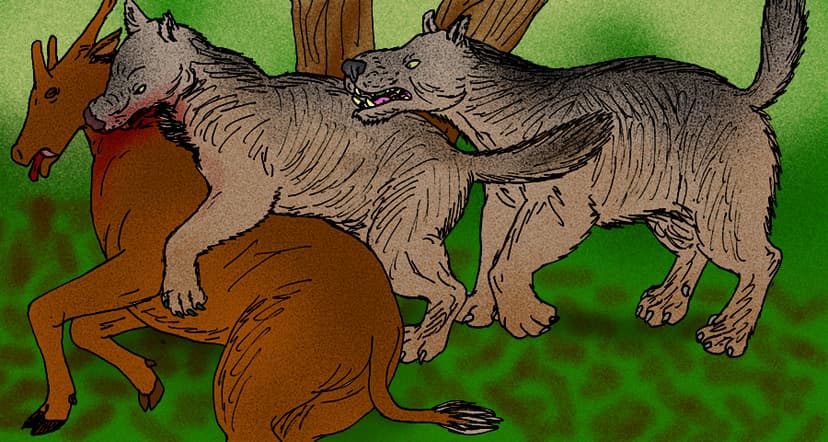
Hemicyoninae, often referred to as dog bears, were an extinct subfamily of Ursidae that existed from the Oligocene through the Miocene epochs. These bear-like carnivorans inhabited parts of Europe, North America, Africa, and Asia, and are notable for their long evolutionary history, spanning approximately 28.6 million years.

Cave Bear
The cave bear (Ursus spelaeus) was a prehistoric species of bear that inhabited Europe and Asia during the Pleistocene epoch, going extinct approximately 24,000 years ago. Named for the prevalence of their remains found in caves, they are believed to have spent more time in these sheltered environments than modern bears, often using them for hibernation. Distinctive for their large size and a predominantly herbivorous diet, cave bears displayed significant variability in size, morphology, and genetics.
Helarctos
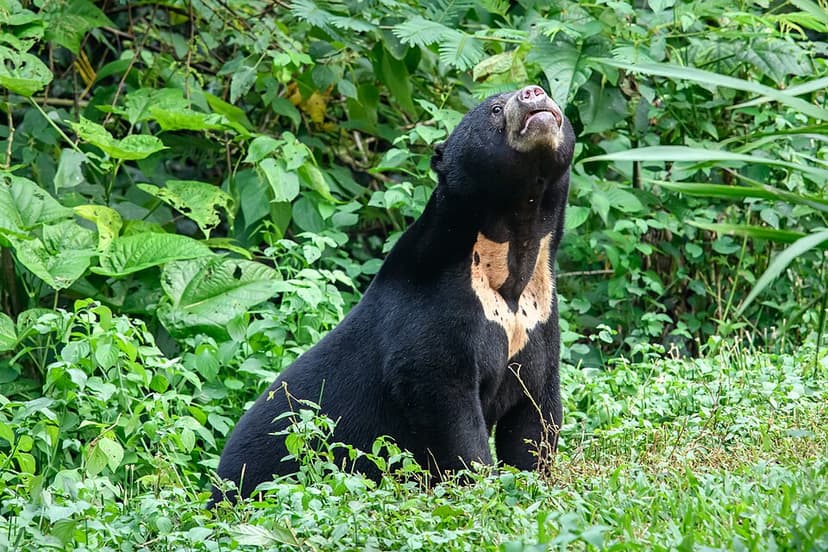
The sun bear (Helarctos malayanus) is the smallest bear species, native to the tropical forests of Southeast Asia. Distinctive for its short, jet-black fur and a characteristic orange to cream-colored chest patch, it is highly adapted for an arboreal lifestyle. Facing significant threats from deforestation and poaching, its population has seen a considerable decline.