
Dermophis mexicanus
North America·viviparous·Least Concern·Mexico, Guatemala, El Salvador, Honduras, Nicaragua, possibly Belize
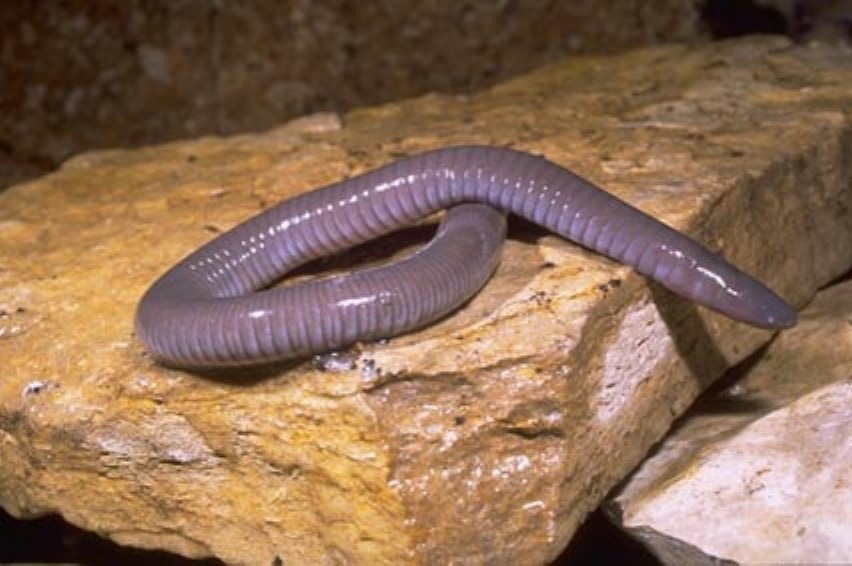
Dermophis mexicanus, also known as the Mexican burrowing caecilian, is a limbless amphibian native to Mexico and Central America. This species is characterized by its earthworm-like appearance, with a segmented body due to numerous skin folds, and lives a fossorial lifestyle, burrowing under leaf litter and debris.
Key Facts
- ›Resembles a large earthworm with a segmented appearance due to around 100 transverse skin folds.
- ›Adults typically range from 30 to 50 CM in length.
- ›Inhabits subtropical/tropical dry and moist forests, plantations, and gardens.
- ›Feeds on invertebrates such as earthworms, termites, slugs, and snails, with larger individuals consuming mice and small lizards.
- ›It is viviparous, with a gestation period of approximately 11 months.
- ›The IUCN conservation status is 'Least Concern'.
Subtropical Or Tropical Dry Forests, Moist Lowland Forests, Moist Montane Forests, Plantations, Rural Gardens, Heavily Degraded Former Forests
Earthworms, Termites, Crickets, Slugs, Snails, Mice, Small Lizards
Mexican Burrowing Caecilian, Mexican Caecilian, Tapalcua, Tepelcua
Persecution Due To Snake-Like Appearance
About Dermophis mexicanus
Dermophis mexicanus, commonly known as the Mexican burrowing caecilian, is a species of limbless amphibian belonging to the family Dermophiidae. This species is native to Mexico and Central America, where it leads a fossorial existence, burrowing beneath leaf litter and plant debris.
Description and Habitat
The adult Mexican burrowing caecilian typically reaches lengths of 30 to 50 cm, presenting a general appearance akin to a large earthworm. Its body is elongated and lacks limbs. A distinctive feature is the presence of approximately one hundred transverse annular folds in its skin, which create the illusion of segmentation. The head is characterized by a pointed snout, a single row of teeth in the lower jaw, and a pair of vestigial eyes covered by skin. Between the eyes and nostrils, a pair of protrusible tentacles is present. The upper surface of the body is dark grey, contrasting with a pale grey under surface that displays darker markings on the annuli.
Its natural habitats are varied, encompassing subtropical or tropical dry forests, moist lowland forests, and moist montane forests. It is also found in plantations, rural gardens, and areas that were formerly forests but have since undergone heavy degradation. The species thrives in damp, loose soil and is often found under leaf litter, logs, and other plant debris, frequently in banana and coffee plantations. It can be found at altitudes up to 1,200 meters above sea level.
Biology and Reproduction
The diet of Dermophis mexicanus consists primarily of invertebrates, including earthworms, termites, crickets, slugs, and snails. Larger individuals are known to prey on small mice and lizards. The caecilian moves by employing internal concertina-like movements and by undulating its body from side to side.
This species is viviparous, giving birth to live young. Male caecilians begin spermatogenesis at one year of age but may delay reproduction until their second year. Females can also start reproducing after one year, though most do so in their second year. Fertilization is internal, and the developing larvae, numbering up to 16, subsist on their egg yolks for three months. Subsequently, they develop rasping teeth and feed on maternal glandular secretions, stimulated by scraping the oviduct lining. The young emerge after approximately 11 months of gestation, measuring between 10 to 15 cm in length. Upon emergence, they shed their larval teeth and quickly develop adult dentition.
Conservation Status
Dermophis mexicanus is currently listed as 'Least Concern' on the IUCN Red List of Threatened Species. Despite having several disjunct populations, and a noted decrease in abundance in some previously common areas, it is not considered to be facing an immediate threat of extinction. It is worth noting that the species may be persecuted in certain regions due to its superficial resemblance to snakes.
Source: Wikipedia ↗
Frequently Asked Questions
What does the Mexican burrowing caecilian look like?
The Mexican burrowing caecilian resembles a large earthworm, with an elongated body and no limbs. Its skin has approximately a hundred transverse folds that give it a segmented appearance. The upper surface is dark grey, while the underside is pale grey with darker markings.
Where does Dermophis mexicanus live?
This species is found in Mexico and Central America, including Guatemala, El Salvador, Honduras, and Nicaragua, and possibly Belize. Its natural habitats include subtropical and tropical dry and moist forests, as well as plantations and gardens.
What is the diet of the Mexican burrowing caecilian?
Dermophis mexicanus preys on a variety of invertebrates, such as earthworms, termites, crickets, slugs, and snails. Larger individuals have been known to consume small mice and lizards.
How does the Mexican burrowing caecilian reproduce?
This caecilian is viviparous, meaning it gives birth to live young. The gestation period lasts about 11 months, during which the developing larvae initially subsist on egg yolk and later feed on maternal secretions.
What is the conservation status of Dermophis mexicanus?
The Mexican burrowing caecilian is listed as 'Least Concern' by the IUCN. While it has several disjunct populations and may be less common in some former areas, it is not currently considered at high risk of extinction.
Related Caecilian species

Dermophis parviceps
Dermophis parviceps is a species of caecilian found in Costa Rica and Panama, with possible presence in Colombia. This slender, subterranean amphibian is distinguished by its pinkish head contrasting with a purplish-gray body and annular grooves that lack dark pigment.

Atretochoana eiselti
Atretochoana eiselti is a unique species of lungless caecilian, distinguished by its large size, broad flat head, and fleshy dorsal fin. Originally known from only two preserved specimens, it was rediscovered in 2011 in Brazil, inhabiting aquatic environments. Its most striking feature is the complete absence of lungs, a rarity among tetrapods, leading to ongoing questions about its respiratory mechanisms.
Chthonerpeton indistinctum
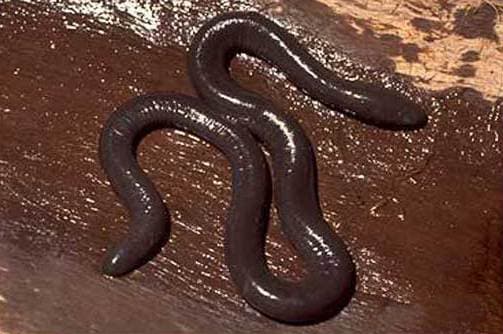
Chthonerpeton indistinctum is a limbless amphibian belonging to the Typhlonectidae family, native to northeastern Argentina, Paraguay, Uruguay, and southeastern Brazil. It is distinguished by its snakelike body with numerous transverse folds, sensory tentacles near its nostrils, and a unique white flecked coloration.