
Dermophis parviceps
North America·Viviparous·Not Evaluated·Costa Rica and Panama; possibly Colombia
Dermophis parviceps is a species of caecilian found in Costa Rica and Panama, with possible presence in Colombia. This slender, subterranean amphibian is distinguished by its pinkish head contrasting with a purplish-gray body and annular grooves that lack dark pigment.
Key Facts
- ›Found in humid montane and lowland forests.
- ›Occurs at elevations between 40 and 1,200 meters.
- ›Exhibits a slender body shape.
- ›Possesses a pinkish head that contrasts with its purplish-gray body.
- ›Annular grooves do not have the dark pigment seen in related species.
- ›Likely viviparous, not requiring water for reproduction.

Humid Montane Forests, Lowland Forests, Subterranean Environments, Leaf Litter
Slender Caecilian, La Loma Caecilian
Deforestation
About Dermophis parviceps
Dermophis parviceps is a species of caecilian belonging to the family Dermophiidae. It is primarily found in the humid montane and lowland forests of Costa Rica and Panama, with some potential presence noted in Colombia. This species is characterized by its slender build and subterranean lifestyle.
Description and Habitat
Specimens of Dermophis parviceps typically measure between 112 and 217 millimeters in length. A distinctive feature is its pinkish head, which contrasts sharply with its purplish-gray body. The annular grooves along its body lack the dark pigmentation observed in related species such as Dermophis mexicanus and Dermophis oaxacae. This caecilian inhabits forests at elevations ranging from 40 to 1,200 meters above sea level. As a subterranean organism, it can be found burrowing up to 60 centimeters below the soil surface, or sheltering beneath logs and within leaf litter.
Reproduction and Conservation
Dermophis parviceps is likely viviparous, meaning it gives birth to live young and does not rely on water for its reproductive cycle. The species can be locally common within its range. While deforestation is a potential threat, the extent of its impact on the population is not yet well understood. Fortunately, Dermophis parviceps is present in numerous protected areas across Panama and Costa Rica, which aids in its conservation.
Source: Wikipedia ↗
Frequently Asked Questions
What are the common names for Dermophis parviceps?
Dermophis parviceps is known by the common names slender caecilian and La Loma caecilian.
Where is Dermophis parviceps found?
This species is found in Costa Rica and Panama. Its presence in Colombia is also possible, though sources may vary on this.
What is the physical description of Dermophis parviceps?
Dermophis parviceps has a slender body, measuring between 112–217 mm in length. Its head is pinkish, contrasting with a purplish-gray body, and its eyes are visible through the skin.
What kind of habitat does Dermophis parviceps prefer?
Dermophis parviceps inhabits humid montane and lowland forests. It is a subterranean species, living up to 60 cm below the soil surface, or found under logs and in leaf litter.
How does Dermophis parviceps reproduce?
It is believed to be viviparous, meaning it gives birth to live young, and does not depend on water for reproduction.
Related Caecilian species
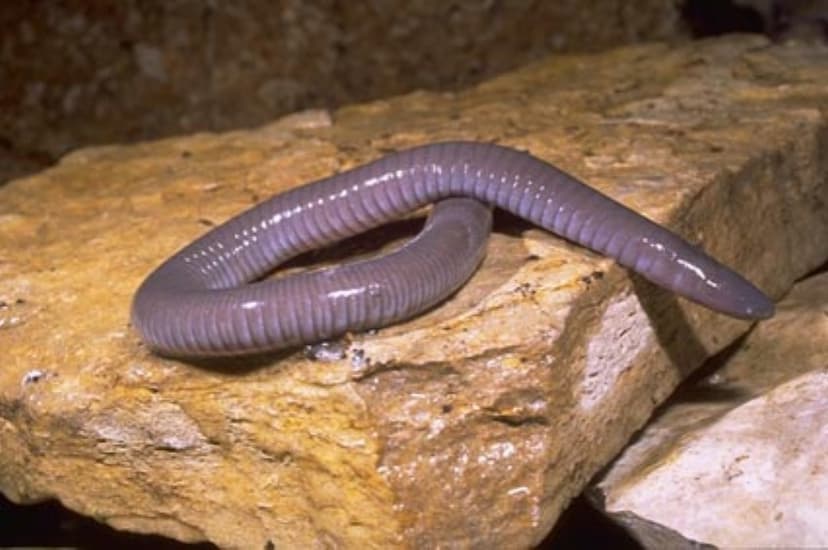
Dermophis mexicanus
Dermophis mexicanus, also known as the Mexican burrowing caecilian, is a limbless amphibian native to Mexico and Central America. This species is characterized by its earthworm-like appearance, with a segmented body due to numerous skin folds, and lives a fossorial lifestyle, burrowing under leaf litter and debris.

Atretochoana eiselti
Atretochoana eiselti is a unique species of lungless caecilian, distinguished by its large size, broad flat head, and fleshy dorsal fin. Originally known from only two preserved specimens, it was rediscovered in 2011 in Brazil, inhabiting aquatic environments. Its most striking feature is the complete absence of lungs, a rarity among tetrapods, leading to ongoing questions about its respiratory mechanisms.
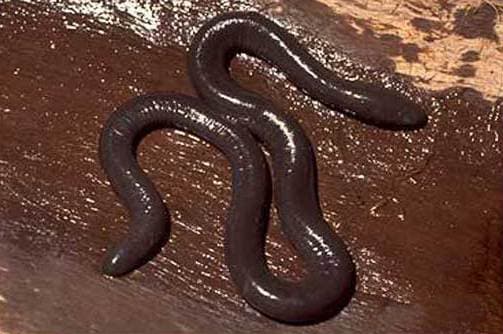
Chthonerpeton indistinctum
Chthonerpeton indistinctum is a limbless amphibian belonging to the Typhlonectidae family, native to northeastern Argentina, Paraguay, Uruguay, and southeastern Brazil. It is distinguished by its snakelike body with numerous transverse folds, sensory tentacles near its nostrils, and a unique white flecked coloration.