
Herpele squalostoma
Africa·Oviparous (presumed)·Southeastern Nigeria, Cameroon, western Central African Republic, Equatorial Guinea (including Bioko), Gabon, Republic of the Congo, western Democratic Republic of the Congo, and possibly the Cabinda Province of Angola.
Herpele squalostoma, also known as the Congo caecilian, is a species of caecilian found in Central and extreme eastern West Africa. This species is characterized by its cylindrical body, prominent snout, and eyes covered by bone, and it exhibits parental care through maternal dermatophagy.
Key Facts
- ›Found in lowland forests, fruit tree plantations, rural gardens, and secondary forests.
- ›Possesses a cylindrical body with a prominent snout and eyes hidden by bone.
- ›Reproduction is likely oviparous, with females providing parental care.
- ›Mothers feed their young by shedding an outer layer of skin (dermatophagy).
- ›Occurs in protected areas like Korup National Park and Moukalaba-Doudou National Park.

Lowland Forest, Fruit Tree Plantations, Rural Gardens, Secondary Forest
Congo Caecilian
International Pet Trade, Chytridiomycosis
About Herpele squalostoma
Herpele squalostoma: The Congo Caecilian
Herpele squalostoma, commonly known as the Congo caecilian, is a species of amphibian belonging to the order Gymnophiona, commonly referred to as caecilians. This species is native to the diverse ecosystems of Central and extreme eastern West Africa. Its range spans across countries such as Cameroon, Gabon, and the Democratic Republic of the Congo.
Description and Physical Characteristics
The Congo caecilian possesses a distinctly cylindrical body, typically measuring between 6–8 mm in width, with adult specimens recorded up to 41 cm in length. A prominent snout aids in its subterranean lifestyle. Unlike many amphibians, its eyes are covered by bone and are not visible externally, a common adaptation for fossorial species. In preserved specimens, the skin exhibits a dark olive coloration adorned with minute yellowish spots. The body is segmented by annuli, with fewer than 135 primary annuli and 12–16 secondary annuli that do not fully encircle the body.
Reproduction and Parental Care
While direct observation of reproduction is limited, Herpele squalostoma is presumed to be oviparous, laying eggs. A remarkable aspect of this species is its advanced parental care. Females have been found with clutches of young, and they provide nutrients to their offspring through a process called maternal dermatophagy. This involves the shedding of an outer layer of skin, which the young consume, also facilitating the vertical transmission of the mother's microbiome. Offspring typically become independent once they reach a size of 10–12 cm.
Habitat and Ecology
Herpele squalostoma inhabits a variety of environments, including lowland forests, fruit tree plantations, rural gardens, and secondary forests. While its upper elevational limits are not precisely known, it has been recorded at least up to 800 meters above sea level in Cameroon. The species is presumed to be largely fossorial, spending a significant portion of its life burrowing underground.
Conservation and Threats
Herpele squalostoma is found in numerous protected areas, such as Korup National Park in Cameroon and Moukalaba-Doudou National Park in Gabon, which offer some degree of sanctuary. While the international pet trade is not known to be a significant threat, it is a factor to consider. A more pressing concern is the potential impact of chytridiomycosis, as the pathogen Batrachochytrium dendrobatidis has been detected in this species.
Source: Wikipedia ↗
Frequently Asked Questions
What is the Congo caecilian?
Herpele squalostoma, commonly called the Congo caecilian, is a species of amphibian belonging to the caecilian order. It is native to Central and extreme eastern West Africa.
What does Herpele squalostoma look like?
It has a cylindrical body, typically 6–8 mm wide, with a prominent snout. Its eyes are covered by bone and are not externally visible. In preservative, its body is dark olive with small yellowish spots.
How does the Congo caecilian reproduce?
Herpele squalostoma is presumed to be oviparous, meaning it lays eggs. Females provide significant parental care, developing a specialized skin layer for their young to consume.
What is maternal dermatophagy in Herpele squalostoma?
Maternal dermatophagy is a unique form of parental care where the mother sheds an outer layer of skin. This skin provides essential nutrients to the offspring and facilitates the vertical transmission of their microbiome.
Where is Herpele squalostoma found?
This species is found across Central Africa and in the southeasternmost part of West Africa, including countries like Cameroon, Gabon, and the Democratic Republic of the Congo.
What are the potential threats to Herpele squalostoma?
While not a major known threat, international pet trade might impact populations. Additionally, the detection of Batrachochytrium dendrobatidis suggests chytridiomycosis is a potential danger to the species.
Related Caecilian species
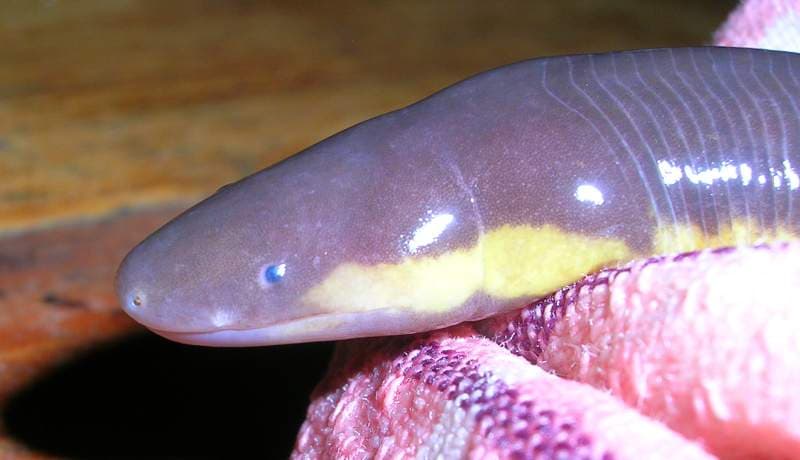
Ichthyophiidae
The Ichthyophiidae, also known as Asiatic tailed caecilians or fish caecilians, are a primitive family of caecilians found across South and Southeast Asia and in southernmost China. They are distinguished by their tails, numerous body scales, and mouths that are not recessed, setting them apart from more derived caecilian families. Ichthyophiidae reproduce by laying eggs in moist soil, with larvae that develop in water before metamorphosing into terrestrial adults, and females may exhibit parental care.
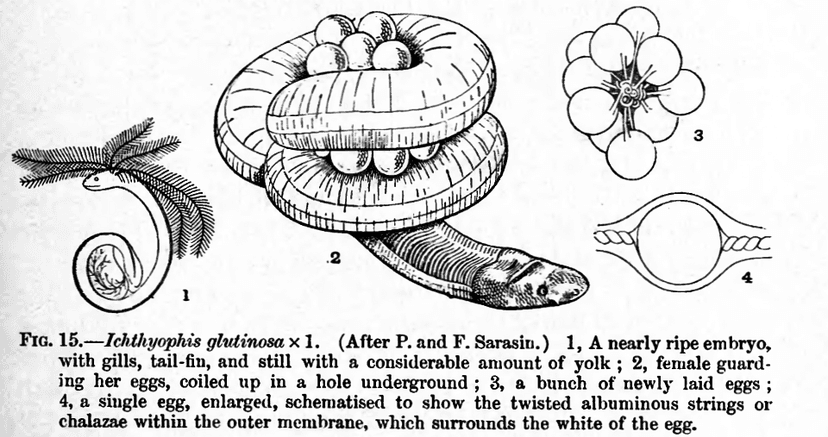
Ichthyophis glutinosus
The Ichthyophis glutinosus, commonly known as the Ceylon caecilian or common yellow-banded caecilian, is a species of caecilian native to Sri Lanka. It is characterized by its long, segmented appearance, steely blue and yellow coloration, and its habitat in moist tropical and subtropical forests and pastures.
Common yellow-banded caecilian
The Common yellow-banded caecilian, also known as the Ceylon caecilian, is a species of caecilian endemic to Sri Lanka. It is characterized by its earthworm-like appearance, with steely blue and pale yellow coloration and a distinctive yellow band along its sides. This adaptable species inhabits moist tropical and subtropical forests and pastures, where it burrows in damp earth or leaf litter.