
Ichthyophis dulitensis
Ichthyophis dulitensis is a caecilian species endemic to Borneo, specifically known from the vicinity of Mount Dulit in Sarawak, Malaysia. Described in 1960, it is a poorly understood species with an uncertain taxonomic status. Its common name, the Mount Dulit caecilian, reflects its limited known geographic range.
Key Facts
- ›Endemic to Borneo, specifically near Mount Dulit in Sarawak, Malaysia.
- ›Described by Edward Harrison Taylor in 1960, with the holotype collected in 1891.
- ›A moderately slender caecilian, with the holotype measuring 235 MM in snout-vent length.
- ›Presumed to inhabit tropical moist forests and likely lives a subterranean existence as an adult.
- ›The species is poorly known, and its taxonomic status is uncertain.
- ›Threats to its survival are currently unknown.

Tropical Moist Forest, Subterranean
Mount Dulit Caecilian
About Ichthyophis dulitensis
Ichthyophis dulitensis, commonly known as the Mount Dulit caecilian, is a species of caecilian found exclusively in the island of Borneo. Its known distribution is presently restricted to the immediate vicinity of Mount Dulit in northern Sarawak, Malaysia, from which it derives its name. Described by Edward Harrison Taylor in 1960, this species remains poorly understood, with its taxonomic status considered uncertain.
Description and Habitat
This caecilian is characterized as moderately slender. The type specimen, collected in 1891, measured 235 mm (9.3 inches) in snout-vent length, with an average body width of about 8 mm (0.31 inches) and a head length of 11 mm (0.43 inches). Distinctive features include small eyes with white pupils and a black iris, a short tail measuring 5.6 mm (0.22 inches), and skin marked by approximately 313 ring-shaped folds (annuli). A notable physical characteristic is a creamy spot located on its throat.
The holotype was discovered at an elevation of 610 meters (2,000 feet) above sea level, suggesting an habitat within tropical moist forests. It is presumed that adult Ichthyophis dulitensis lead a subterranean existence, burrowing within the soil or leaf litter.
Conservation and Knowledge Gaps
Currently, the threats facing Ichthyophis dulitensis are unknown, and its conservation status has not been formally assessed. The species is considered poorly known, and further research is needed to fully understand its ecology, reproductive strategies, and population status. The limited geographic range and the uncertainty surrounding its taxonomic classification highlight the need for more comprehensive studies.
Source: Wikipedia ↗
Frequently Asked Questions
What is the scientific name of the Mount Dulit caecilian?
The scientific name for this species is Ichthyophis dulitensis. It belongs to the family Ichthyophiidae.
Where is Ichthyophis dulitensis found?
Ichthyophis dulitensis is endemic to Borneo, and its known distribution is limited to the area near its type locality, Mount Dulit in northern Sarawak, Malaysia.
What does Ichthyophis dulitensis look like?
It is described as a moderately slender caecilian. The holotype measured 235 mm (9.3 in) in snout-vent length and had small eyes with white pupils and a black iris. Its skin features approximately 313 ring-shaped folds, and it has a creamy spot on its throat.
What is the habitat of Ichthyophis dulitensis?
The holotype was collected at an elevation of 610 meters (2,000 ft) in what is presumed to be tropical moist forest. Adult individuals are likely subterranean.
Is Ichthyophis dulitensis well-studied?
No, Ichthyophis dulitensis is considered a poorly known species. Its taxonomic status is uncertain, and much about its life and ecology remains undocumented.
Related Caecilian species

Ichthyophis sumatranus
Ichthyophis sumatranus, commonly known as the Sumatra caecilian, is a species of amphibian endemic to Sumatra, Indonesia. This species is characterized by its dark brown coloration, distinct eyes with a white spot, and a subterranean lifestyle as an adult. Its primary threat is habitat loss due to the expansion of palm oil plantations.

Ichthyophis tricolor
Ichthyophis tricolor, also known as the three-colored caecilian or Maddatorai caecilian, is an amphibian species native to the Western Ghats of India. This burrowing caecilian is characterized by its distinctive violet-brown body marked with a yellow lateral stripe and a broad, white ventral stripe. Its exact taxonomic status remains a subject of ongoing research.
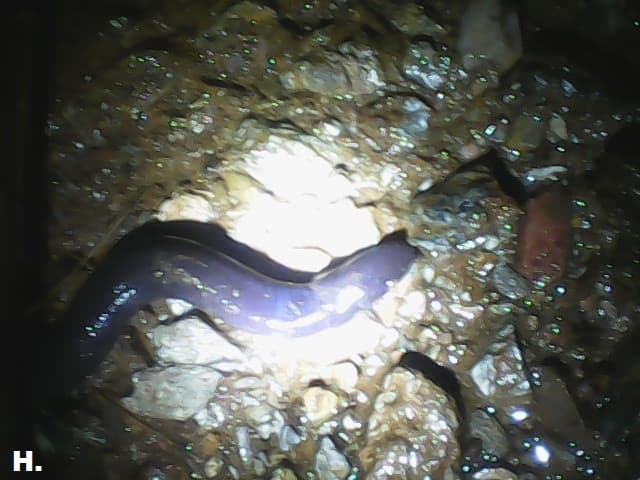
Sikkimese caecilian
The Sikkimese caecilian (Ichthyophis sikkimensis) is a species of amphibian found in the Himalayan foothills of India, Nepal, and potentially Bhutan. Described by Edward Harrison Taylor in 1960, this burrowing amphibian is characterized by its elongated, limbless body and smooth, moist skin.