
Ichthyophis sumatranus
Ichthyophis sumatranus, commonly known as the Sumatra caecilian, is a species of amphibian endemic to Sumatra, Indonesia. This species is characterized by its dark brown coloration, distinct eyes with a white spot, and a subterranean lifestyle as an adult. Its primary threat is habitat loss due to the expansion of palm oil plantations.
Key Facts
- ›Endemic to Sumatra, Indonesia.
- ›Believed to inhabit tropical moist forests with a subterranean adult lifestyle.
- ›Presumably oviparous with terrestrial eggs and aquatic larvae.
- ›Adult males range from 176-273 MM, females from 205-285 MM.
- ›Threatened by habitat conversion for palm oil plantations.

Tropical Moist Forest, Subterranean
Sumatra Caecilian
Conversion of Forest For Palm Oil Plantations
About Ichthyophis sumatranus
Ichthyophis sumatranus (Sumatra Caecilian)
Ichthyophis sumatranus, more commonly referred to as the Sumatra caecilian, is a species of amphibian native to the island of Sumatra in Indonesia. It belongs to the family Ichthyophiidae, a group of limbless, serpentine amphibians.
Description and Characteristics
The physical appearance of Ichthyophis sumatranus is characterized by its dark brown dorsal coloration with subtle lighter grooves, and a lighter brown ventral side. A notable feature is its distinct eye, which is encircled by a black iris and a prominent white lens, complemented by a white spot located in front of the eye and a series of small cream-colored glandules partly surrounding it. The lips are also cream-colored. Adult specimens exhibit a short tail, typically measuring between 3 to 5 millimeters in length, with body widths ranging from 6 to 10 millimeters. The species possesses numerous body folds, numbering between 315 to 329, and 7 tail folds.
Habitat and Lifestyle
While precise details about its distribution are not fully documented, Ichthyophis sumatranus is known to inhabit western Sumatra. It is believed to reside in tropical moist forests, where adults adopt a subterranean lifestyle. The reproductive strategy is presumed to be oviparous, with eggs laid terrestrially and larvae developing in an aquatic environment.
Conservation and Threats
The primary threat facing the Sumatra caecilian is the extensive conversion of its natural forest habitat for the development of palm oil plantations. Information regarding the species' presence within protected areas remains unknown, highlighting a need for further research and conservation efforts.
Source: Wikipedia ↗
Frequently Asked Questions
What is the Sumatra caecilian?
The Sumatra caecilian, scientifically known as Ichthyophis sumatranus, is a species of amphibian belonging to the Ichthyophiidae family. It is native to the island of Sumatra in Indonesia.
What does Ichthyophis sumatranus look like?
This caecilian has a dark brown coloration above with lighter grooves and a lighter shade of brown ventrally. It features distinct eyes with a black iris surrounding a white lens, a white spot in front of the eye, and cream-colored lips. Adults have a short tail and a maximal body width of up to 10 mm.
Where does the Sumatra caecilian live?
Ichthyophis sumatranus is found in western Sumatra, Indonesia. While its exact range is not precisely known, it is believed to inhabit tropical moist forests.
What is the habitat of Ichthyophis sumatranus?
Adult Sumatra caecilians are thought to lead a subterranean lifestyle within tropical moist forests. The species is presumed to lay terrestrial eggs from which aquatic larvae hatch.
What are the main threats to Ichthyophis sumatranus?
The most significant threat to the Sumatra caecilian is the conversion of its forest habitat for palm oil plantations. Information regarding its presence in protected areas is currently unknown.
Related Caecilian species
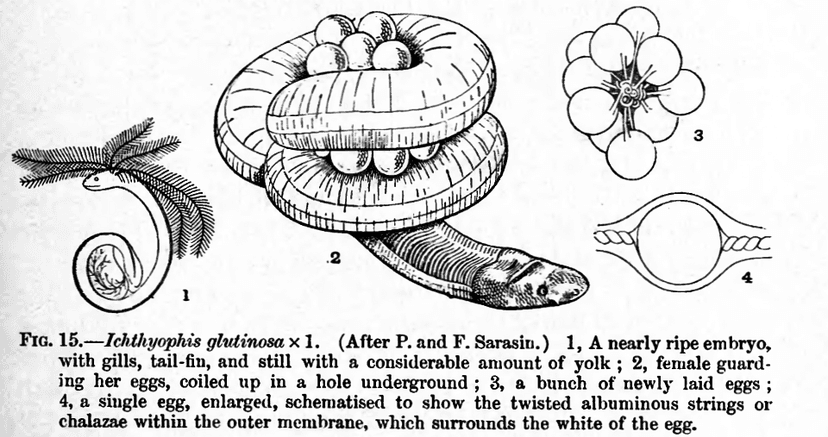
Common yellow-banded caecilian
The Common yellow-banded caecilian, also known as the Ceylon caecilian, is a species of caecilian endemic to Sri Lanka. It is characterized by its earthworm-like appearance, with steely blue and pale yellow coloration and a distinctive yellow band along its sides. This adaptable species inhabits moist tropical and subtropical forests and pastures, where it burrows in damp earth or leaf litter.
Ichthyophis glutinosus
The Ichthyophis glutinosus, commonly known as the Ceylon caecilian or common yellow-banded caecilian, is a species of caecilian native to Sri Lanka. It is characterized by its long, segmented appearance, steely blue and yellow coloration, and its habitat in moist tropical and subtropical forests and pastures.

Ichthyophis tricolor
Ichthyophis tricolor, also known as the three-colored caecilian or Maddatorai caecilian, is an amphibian species native to the Western Ghats of India. This burrowing caecilian is characterized by its distinctive violet-brown body marked with a yellow lateral stripe and a broad, white ventral stripe. Its exact taxonomic status remains a subject of ongoing research.