
Ichthyophis kodaguensis
Asia·Data Deficient·Southern Western Ghats, India (Karnataka, possibly Kerala)
Ichthyophis kodaguensis, also known as the Kodagu striped Ichthyophis, is a species of caecilian found exclusively in the southern Western Ghats of India. This species is distinguished by its dark chestnut-brown body adorned with a bright, cream-yellow lateral stripe that runs the length of its form.
Key Facts
- ›Endemic to the southern Western Ghats of India.
- ›Characterized by a dark chestnut-brown dorsum and a prominent cream-yellow lateral stripe.
- ›Found in agricultural habitats like coffee and areca nut plantations.
- ›The type series included seven females, with lengths ranging from 158 to 272 MM.
- ›Previously classified as 'data deficient' by the IUCN due to scarce information.

Mixed Plantations, Agricultural Land, Near Streams
Kodagu Striped Ichthyophis
About Ichthyophis kodaguensis
Ichthyophis kodaguensis, commonly referred to as the Kodagu striped Ichthyophis, is a species of caecilian, a type of limbless amphibian, found in India. This species belongs to the family Ichthyophiidae and is naturally found in the southern Western Ghats.
Distribution and Habitat
The known distribution of Ichthyophis kodaguensis is primarily within the southern Karnataka state of India, specifically in the Kodagu and Chickmagalur districts. There are also indications of its presence in adjacent areas of Kerala. The type series was collected from mixed plantations of coffee and areca nut at an elevation of approximately 1,143 meters above sea level. Specimens have been discovered by digging in soil near small streams, found at night on dry pathways near forest fragments, and on coffee plantations. This suggests the species can inhabit and potentially tolerate disturbed agricultural environments.
Description
Adult specimens of Ichthyophis kodaguensis exhibit a subcylindrical body that is slightly compressed from top to bottom. The head is marginally wider than the body. A notable characteristic is the presence of a bright, cream-yellow lateral stripe that runs the full length of the body, marked by irregular edges and an interruption at the first collar. The dorsal surface is uniformly dark chestnut brown, with a somewhat lighter snout. The underside is a paler lilac-grey-brown, becoming slightly darker towards the posterior and bordering the lateral stripe. The eyes are visible through unpigmented skin as small, dark circles with a lighter grey central lens, and they are encircled by a narrow whitish ring. Living individuals also possess long and thin tentacles.
Conservation Status
In 2008, the International Union for Conservation of Nature (IUCN) classified Ichthyophis kodaguensis as 'data deficient'. This designation was made due to the limited amount of information available concerning the species' population size, distribution, and specific ecological requirements. While the species appears capable of coexisting with human-modified habitats like agricultural plantations, the scarcity of data prevented a more definitive assessment of its conservation needs.
Source: Wikipedia ↗
Frequently Asked Questions
What is Ichthyophis kodaguensis?
Ichthyophis kodaguensis is a species of caecilian, a limbless amphibian, belonging to the family Ichthyophiidae. It is native to the southern Western Ghats in India.
Where is Ichthyophis kodaguensis found?
This species is endemic to the southern Western Ghats, with confirmed records from the Kodagu and Chickmagalur districts of southern Karnataka state, India. It is also believed to occur in adjacent Kerala.
What does Ichthyophis kodaguensis look like?
It has a subcylindrical body that is slightly compressed. The dorsal side is a uniform dark chestnut brown, featuring a striking, bright cream-yellow lateral stripe along its entire length. The underside is a paler lilac-grey-brown.
What is the habitat of Ichthyophis kodaguensis?
Ichthyophis kodaguensis has been found in mixed coffee and areca nut plantations, often near small streams or other water bodies. It appears to be able to tolerate disturbed agricultural habitats.
What is the conservation status of Ichthyophis kodaguensis?
The International Union for Conservation of Nature (IUCN) previously classified Ichthyophis kodaguensis as 'data deficient'. This classification was due to a lack of sufficient information to assess its conservation status, despite its ability to live in agricultural areas.
Related Caecilian species
Ichthyophis supachaii
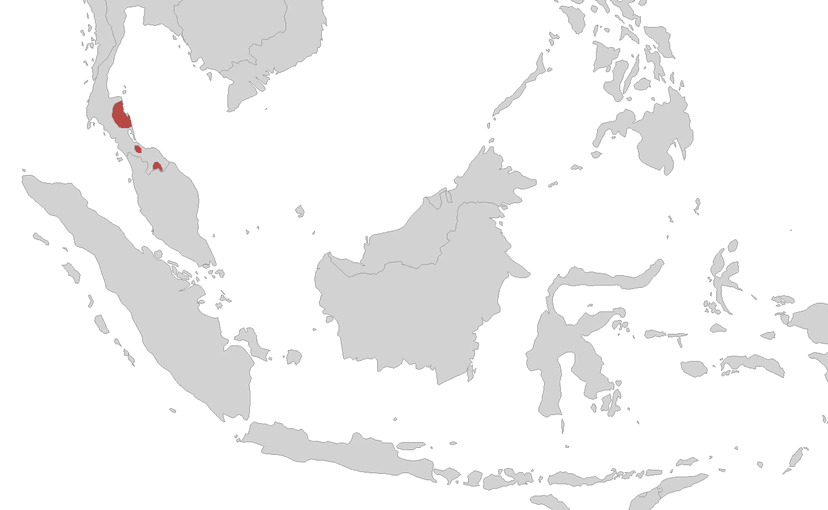
Ichthyophis supachaii, also known as Supachai's caecilian, is a species of amphibian found in the tropical forests of Thailand and potentially Malaysia. This burrowing caecilian is distinguished by its habitat preferences, often found near rivers and in moist forest environments.

Chthonerpeton exile
Chthonerpeton exile is a species of caecilian found exclusively in Brazil, known only from a single, now-lost specimen. Its specific name, 'exile', reflects its slender and delicate body shape, and it is also known by the common name Bahia caecilian. Little is documented about its habitat or population status.

Chthonerpeton viviparum
Chthonerpeton viviparum, also known as the Santa Catarina caecilian, is an aquatic species of caecilian found exclusively in the vicinity of Joinville, in eastern Santa Catarina State, Brazil. Its ecology and specific habitat requirements are not well-documented, but it is known to inhabit standing bodies of water.