
Oscaecilia osae
North America·Unknown·Not Evaluated·Golfo Dulce area, Costa Rica
Oscaecilia osae is a species of caecilian belonging to the Caeciliidae family, found exclusively in the Golfo Dulce region of Costa Rica. This subterranean amphibian is distinguished by its slender, attenuated body, absent eyes, and uniform lavender coloration, which lightens towards the front and underside.
Key Facts
- ›Endemic to Costa Rica, specifically the Golfo Dulce area.
- ›Known by common names such as the airstrip caecilia or airstrip caecilian.
- ›Possesses a slender, attenuated body with a width of 4–5 MM.
- ›Eyes are not visible, and the skin is a uniform lavender color.
- ›Inhabits lowland rainforests below 240 meters in elevation.
- ›Considered well-protected within Corcovado National Park.

Lowland Rainforest, Subterranean
Airstrip Caecilia, Airstrip Caecilian
About Oscaecilia osae
Oscaecilia osae, also known as the airstrip caecilia or airstrip caecilian, is a species of caecilian belonging to the family Caeciliidae. This limbless amphibian is endemic to Costa Rica, with its known distribution confined to the Golfo Dulce area on the Pacific coast. The specific epithet 'osae' is derived from the Osa Peninsula, which is the location of its type locality.
Description and Habitat
The physical characteristics of Oscaecilia osae include a highly attenuated, slender body. An adult female specimen measured 382 mm in total length and had a body width of 4–5 mm. Notably, its eyes are not visible. The skin is a uniform lavender color, becoming lighter towards the anterior and ventral sides, a coloration attributed to small, closely spaced glands. Oscaecilia osae is a subterranean species, inhabiting lowland rainforests at elevations below 240 meters.
Conservation and Distribution
Information regarding major threats to Oscaecilia osae is limited, as its distribution and ecology are not extensively documented. However, the species is considered to be well-protected by its presence within Corcovado National Park. Its known range is restricted to the Golfo Dulce region.
Source: Wikipedia ↗
Frequently Asked Questions
What is Oscaecilia osae?
Oscaecilia osae is a species of caecilian, a limbless amphibian belonging to the family Caeciliidae. It is native to Costa Rica and is known for its subterranean lifestyle.
Where is Oscaecilia osae found?
This species is endemic to Costa Rica and is known only from the Golfo Dulce area, located on the Pacific Ocean side of the country. Its specific name, osae, refers to the Osa Peninsula, its type locality.
What does Oscaecilia osae look like?
Oscaecilia osae has a highly attenuated, slender body measuring up to 382 mm in length and 4–5 mm in width. Its eyes are not visible, and its coloration is a uniform lavender, becoming lighter at the anterior and ventral regions.
What is the habitat of Oscaecilia osae?
This caecilian is a subterranean species found in lowland rainforests at elevations below 240 meters. It lives beneath the surface of the ground.
Are there any major threats to Oscaecilia osae?
Currently, there appear to be no major threats identified for Oscaecilia osae. Its distribution and ecology are not extensively understood, but it is considered well-protected within Corcovado National Park.
Related Caecilian species
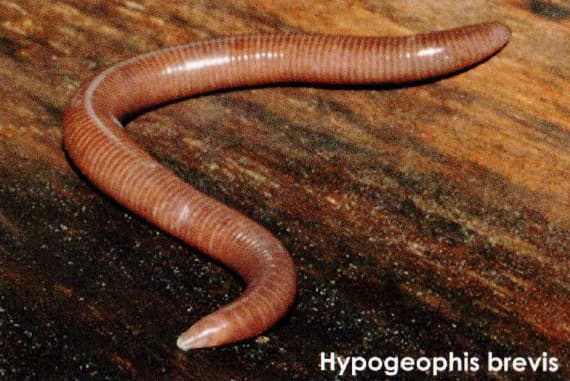
Hypogeophis brevis
Hypogeophis brevis is a species of caecilian native to the Seychelles islands of Mahé and Silhouette. It was formerly classified under the genus Grandisonia and is distinguished by its limited known distribution, having been documented from only a few specimens collected over time.

Dermophis parviceps
Dermophis parviceps is a species of caecilian found in Costa Rica and Panama, with possible presence in Colombia. This slender, subterranean amphibian is distinguished by its pinkish head contrasting with a purplish-gray body and annular grooves that lack dark pigment.
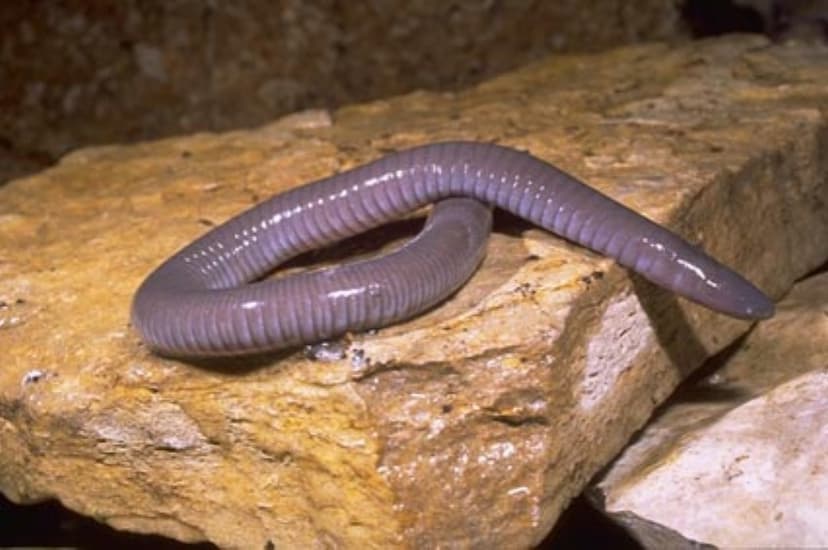
Dermophis mexicanus
Dermophis mexicanus, also known as the Mexican burrowing caecilian, is a limbless amphibian native to Mexico and Central America. This species is characterized by its earthworm-like appearance, with a segmented body due to numerous skin folds, and lives a fossorial lifestyle, burrowing under leaf litter and debris.