
Siphonops paulensis
South America·Least Concern·Northern Argentina, Paraguay, eastern Bolivia, and southern Brazil.
Siphonops paulensis, also known as Boettger's caecilian, is a species of legless amphibian belonging to the Siphonopidae family. This species is native to South America, inhabiting diverse environments from forests to shrublands, and notably adapting to human-altered landscapes including urban gardens. It is considered locally common and not currently facing significant threats.
Key Facts
- ›Native to northern Argentina, Paraguay, eastern Bolivia, and southern Brazil.
- ›Inhabits subterranean environments within forests, savannas, shrublands, and grasslands.
- ›Demonstrates adaptability to human disturbances, including urban gardens.
- ›Considered a locally common species.
- ›Not currently facing major conservation threats.
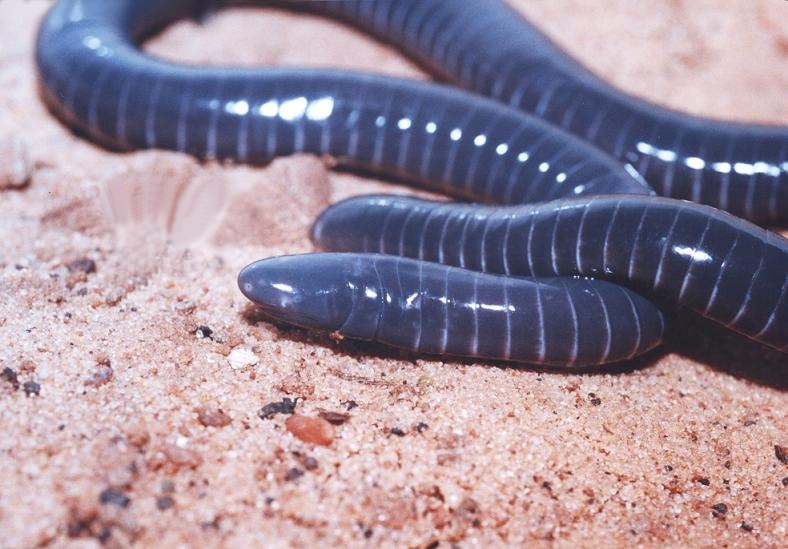
Forests, Savannas, Shrublands, Grasslands, Urban Gardens
Boettger's Caecilian
About Siphonops paulensis
Siphonops paulensis, commonly known as Boettger's caecilian, is a species of amphibian belonging to the legless order Gymnophiona. As a member of the Siphonopidae family, this species is native to South America, with its natural range encompassing northern Argentina, Paraguay, eastern Bolivia, and southern Brazil.
Habitat and Distribution
This caecilian species primarily inhabits subterranean environments within a variety of terrestrial ecosystems. Its preferred habitats include forests, savannas, shrublands, and grasslands. Notably, Siphonops paulensis exhibits a remarkable adaptability to anthropogenic disturbances. It has been observed thriving in areas significantly altered by human activity, such as urban gardens, and has even been recorded breeding and raising its young in close proximity to densely populated cities like Santa Cruz. This resilience suggests a capacity to persist in human-modified landscapes.
Conservation Status
Siphonops paulensis is considered a locally common species within its geographic distribution. Current assessments indicate that the species is not facing significant threats to its survival. Its ability to adapt to diverse and even human-impacted environments likely contributes to its stable population status.
Source: Wikipedia ↗
Frequently Asked Questions
What is Siphonops paulensis?
Siphonops paulensis is a species of caecilian, a type of legless amphibian. It belongs to the Siphonopidae family and is known by the common name Boettger's caecilian.
Where is Siphonops paulensis found?
This species is naturally found in several South American countries, including northern Argentina, Paraguay, eastern Bolivia, and southern Brazil.
What kind of habitat does Siphonops paulensis prefer?
Siphonops paulensis lives underground in various terrestrial habitats such as forests, savannas, shrublands, and grasslands. It has also shown an ability to thrive in areas modified by humans, like urban gardens.
Is Siphonops paulensis endangered?
No, Siphonops paulensis is considered a locally common species and is not currently facing major threats to its survival. Its population appears stable in its natural range.
Related Caecilian species

Caecilia nigricans
Caecilia nigricans, also known as the Rio Lita caecilian, is a subterranean amphibian species found in the tropical forests and foothills of Colombia, Ecuador, and Panama. While it is not currently endangered, its habitat is threatened by deforestation and other human activities.

Atretochoana eiselti
Atretochoana eiselti is a unique species of lungless caecilian, distinguished by its large size, broad flat head, and fleshy dorsal fin. Originally known from only two preserved specimens, it was rediscovered in 2011 in Brazil, inhabiting aquatic environments. Its most striking feature is the complete absence of lungs, a rarity among tetrapods, leading to ongoing questions about its respiratory mechanisms.
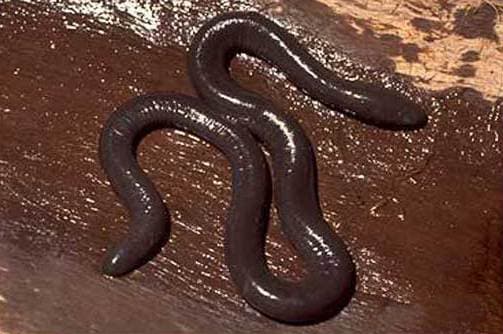
Chthonerpeton indistinctum
Chthonerpeton indistinctum is a limbless amphibian belonging to the Typhlonectidae family, native to northeastern Argentina, Paraguay, Uruguay, and southeastern Brazil. It is distinguished by its snakelike body with numerous transverse folds, sensory tentacles near its nostrils, and a unique white flecked coloration.