
Uraeotyphlus oxyurus
Asia·Probably oviparous (egg-laying) with terrestrial eggs and aquatic larvae.·Not Specified·Western Ghats in Kerala and Tamil Nadu, southern India
Uraeotyphlus oxyurus, also known as the red caecilian, is a species of caecilian found exclusively in the Western Ghats of southern India. This fossorial amphibian is characterized by its relatively thick, dark brown body, narrow head, and distinctive whitish tail tip, inhabiting moist soils in forests and agricultural areas.
Key Facts
- ›Found only in the Western Ghats of Kerala and Tamil Nadu, India.
- ›Has a dark brown body with a contrasting whitish tail tip.
- ›Possesses very small, distinct eyes surrounded by a white ring.
- ›A fossorial species, meaning it lives primarily by burrowing.
- ›Inhabits humus-rich, loose, moist soil in forests and agricultural areas.
- ›Likely reproduces by laying terrestrial eggs that hatch into aquatic larvae.

Moist Evergreen Forest, Agricultural Land, Rural Gardens, Humus-Rich, Loose, Moist Soil
Red Caecilian, Sharp-Nosed Caecilian, Dark-Brown Caecilian, Pale-Throated Caecilian, Harp-Tailed Caecilian
Habitat Destruction, Use of Agrochemicals, Changes In Soil Chemistry, Collection of Humus By Local People
About Uraeotyphlus oxyurus
Uraeotyphlus oxyurus, commonly referred to as the red caecilian, sharp-nosed caecilian, or harp-tailed caecilian, is a species of caecilian native to the Western Ghats of southern India. This limbless amphibian belongs to the family Ichthyophiidae and is known for its fossorial lifestyle, meaning it primarily lives underground.
Description
The physical characteristics of Uraeotyphlus oxyurus include a relatively thick body, a narrow head, and a short tail. Adults can grow up to 300 mm (11.8 inches) in length. The creature's body is typically dark brown, contrasting with a distinctive whitish tip on its tail. The chin and throat areas are a lighter shade of brown. Its eyes are notably small but distinct, each surrounded by a white ring. The tentacles, sensory organs, are positioned close to and below the nostrils, which are visible from a dorsal perspective.
Habitat and Ecology
Uraeotyphlus oxyurus is a fossorial species, preferring to inhabit humus-rich, loose, and moist soil. Its natural environments include moist evergreen forests, agricultural lands, and rural gardens, often found at elevations up to 1,500 meters (4,900 feet) above sea level. The species is likely oviparous, meaning it reproduces by laying eggs, which are terrestrial and hatch into aquatic larvae. While adaptable, potential threats to its survival include habitat destruction, the application of agrochemicals, alterations in soil chemistry, and the removal of humus by local communities. It is believed that Uraeotyphlus oxyurus may be present in the Wayanad Wildlife Sanctuary.
Source: Wikipedia ↗
Frequently Asked Questions
What is Uraeotyphlus oxyurus?
Uraeotyphlus oxyurus is a species of caecilian, a limbless amphibian, belonging to the family Ichthyophiidae. It is commonly known by names such as the red caecilian or sharp-nosed caecilian.
Where is Uraeotyphlus oxyurus found?
This species is endemic to the Western Ghats region of southern India, specifically in the states of Kerala and Tamil Nadu.
What does Uraeotyphlus oxyurus look like?
It has a relatively thick, dark brown body, a narrow head, and a short tail that is often tipped with white. Its eyes are small but visible, encircled by a white ring, and its chin and throat are a lighter brown.
What is the habitat of Uraeotyphlus oxyurus?
Uraeotyphlus oxyurus is a fossorial species, preferring to live in humus-rich, loose, and moist soil. It has been found in moist evergreen forests, agricultural land, and rural gardens.
What are the threats to Uraeotyphlus oxyurus?
Threats to this species are not well understood, but potential risks include habitat destruction, the use of agrochemicals, changes in soil chemistry, and the collection of humus by local populations.
Related Caecilian species

Boulengerula fischeri
Boulengerula fischeri, also known as Fischer's African caecilian, is a species of caecilian native to Rwanda. This slender, pink, spaghetti-like amphibian is found in montane forests and adjacent farmlands. Its specific name honors German botanist Eberhard Fischer.
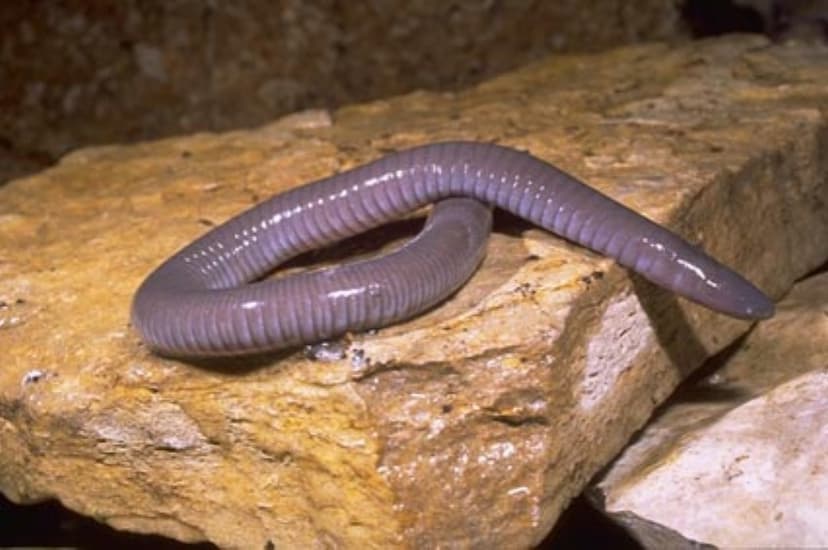
Dermophiidae
The Dermophiidae are a family of neotropical caecilians native to Central and South America, and Africa. These amphibians superficially resemble worms or snakes and are distinguished by being the only viviparous caecilians to possess secondary annuli, which are rings around their bodies.
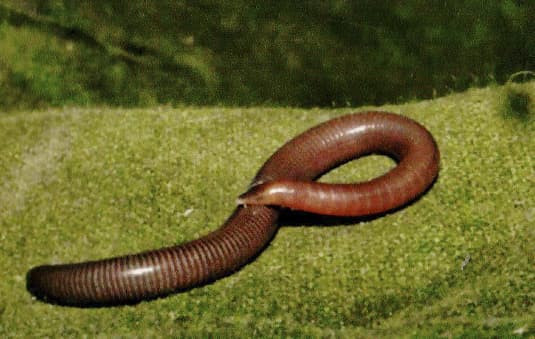
Grandisonia larvata
Grandisonia larvata, also known as the Indian Ocean caecilian, is a species of amphibian belonging to the Indotyphlidae family. It is exclusively found on the Seychelles islands of Mahé, Praslin, La Digue, and Silhouette.