
Canina
Canina is a taxonomic subtribe within the tribe Canini, encompassing wolf-like canids. Fossils indicate their existence as far back as 9 million years ago, making them an ancient lineage within the dog family. A distinctive characteristic of Canina members is their shared karyotype of 78 chromosomes, which allows for the production of hybrids.
Key Facts
- ›Represents the wolf-like subtribe of the tribe Canini.
- ›Fossil evidence suggests existence dating back 9 million years.
- ›Possess a shared karyotype of 78 chromosomes, enabling hybridization.
- ›Defined by specific cranial features, including a strongly arched zygoma and a particular cusp on the p4 tooth.
- ›Considered sister to the subtribe Cerdocyonina.

Wolf-Like Canids
- Strongly Arched Zygoma
- Second Posterior Cusp On P4 Lying Between the First Posterior Cusp and the Cingulum
About Canina
The Canina are a taxonomic subtribe within the tribe Canini, distinguished as the wolf-like canids. This ancient lineage has a fossil record dating back millions of years, with evidence suggesting their existence as far back as 9 million years ago. A key characteristic uniting members of the Canina subtribe is their shared karyotype, comprising 78 chromosomes arranged in 39 pairs, which notably enables the production of canid hybrids.
Taxonomy and Morphology
The subtribe Canina is scientifically defined by specific morphological traits. These include a zygoma that exhibits a strong arching from dorsal to ventral directions. Furthermore, they typically possess a second posterior cusp on their p4 tooth, situated between the first posterior cusp and the cingulum. These cranial features are diagnostic for distinguishing members of this group. Canina is considered a sister subtribe to Cerdocyonina within the broader Canini tribe.
Source: Wikipedia ↗
Frequently Asked Questions
What is Canina?
Canina is a taxonomic subtribe within the tribe Canini, which includes the wolf-like members of the dog family. They are colloquially known as wolf-like canids.
How old is the Canina subtribe?
Fossils of the Canina group date back to 5 million years ago, with evidence suggesting they may have existed as far back as 9 million years ago.
What is a notable genetic characteristic of Canina members?
Members of the subtribe Canina share a common karyotype of 78 chromosomes, arranged in 39 pairs. This genetic similarity allows for the production of canid hybrids.
How is the Canina subtribe taxonomically defined?
The subtribe Canina is defined by two synapomorphies: a zygoma that is strongly arched dorsoventrally, and the usual presence of a second posterior cusp on the p4 tooth located between the first posterior cusp and the cingulum.
Related Canid species
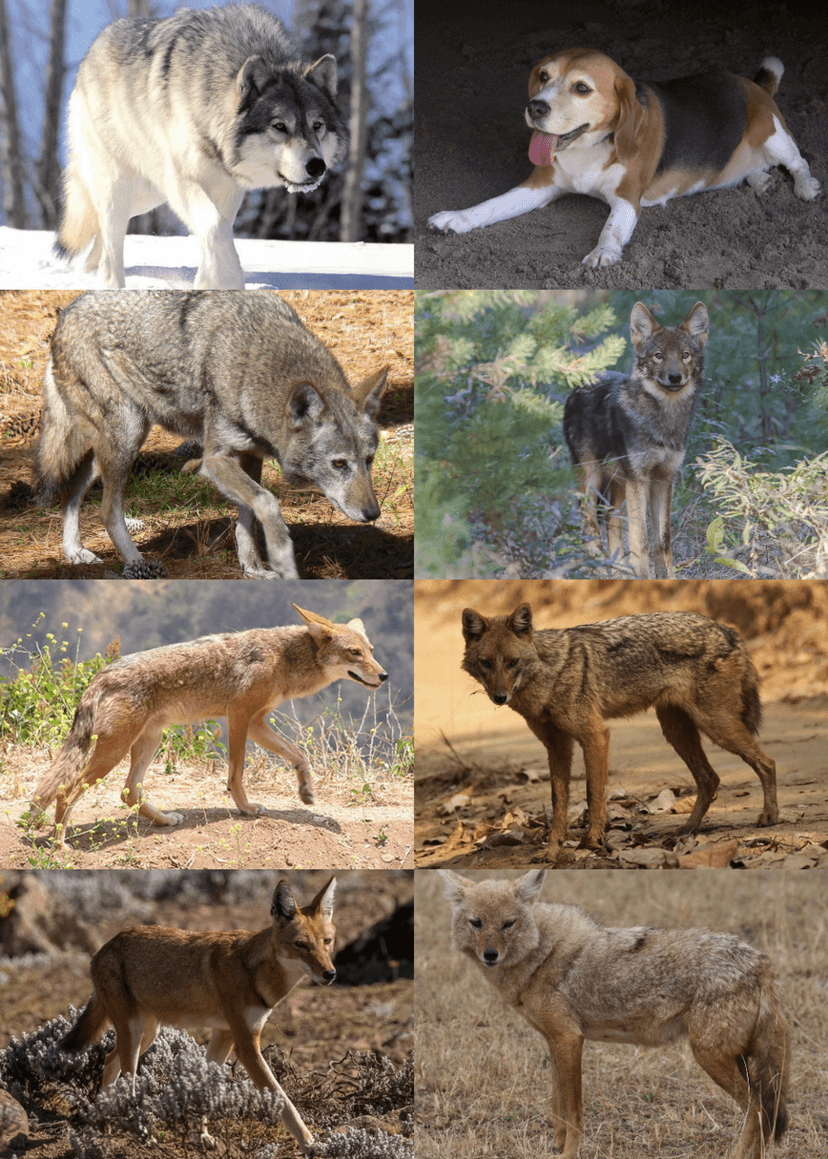
Canis
Canis is a genus of canids that encompasses a diverse group of animals including wolves, dogs, coyotes, and jackals. These species are characterized by their moderate to large size, robust skulls and dentition, long legs, and relatively short ears and tails. They are found across various continents and play significant roles in their respective ecosystems.

Cuon
The dhole (Cuon alpinus) is a canid native to South, East, and Southeast Asia, distinguished by its unique skull morphology, lack of a third lower molar, and single-cusped upper molars. These highly social animals live in large clans and are diurnal pack hunters, primarily targeting large and medium-sized ungulates. Historically widespread, their range has significantly contracted due to habitat loss, prey depletion, and competition, leading to their current Endangered status.
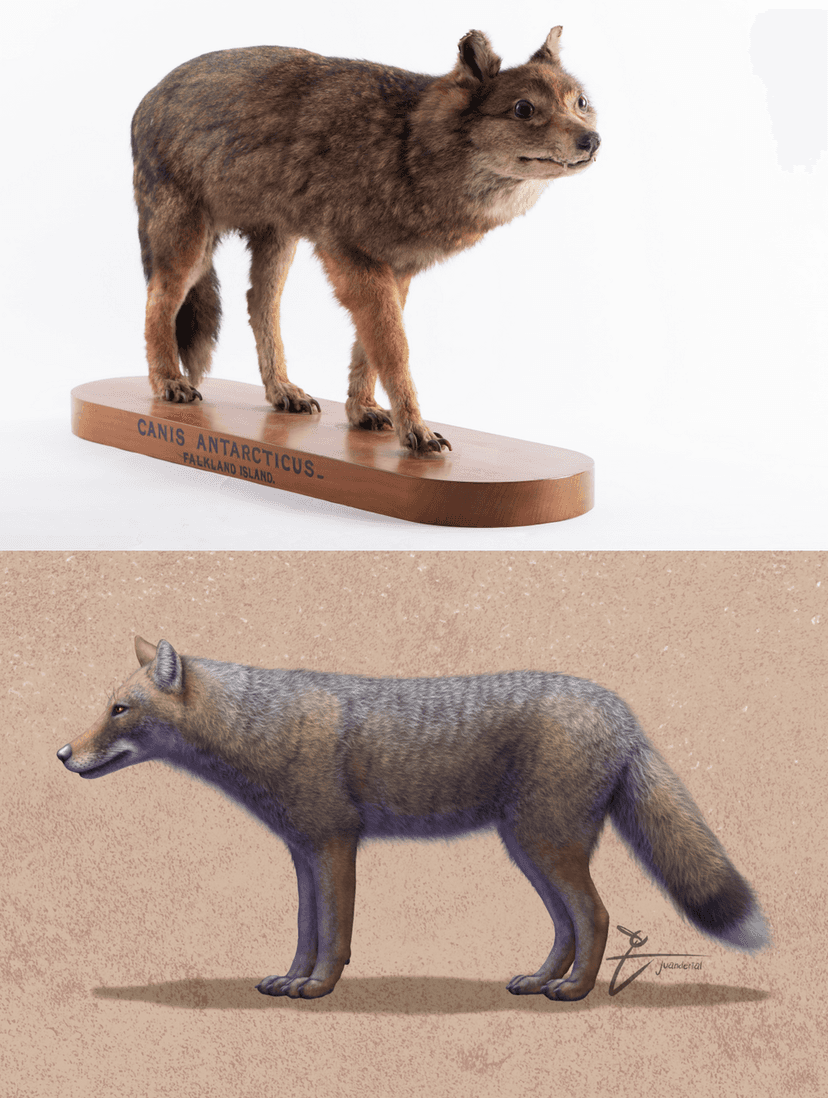
Dusicyon
Dusicyon is an extinct genus of South American canids. The genus, established in 1914, originally included several South American foxes, but these have since been reclassified. The most well-known species, Dusicyon australis, was the Falkland Islands wolf.