
Dusicyon
Dusicyon·carnivorous·Extinct
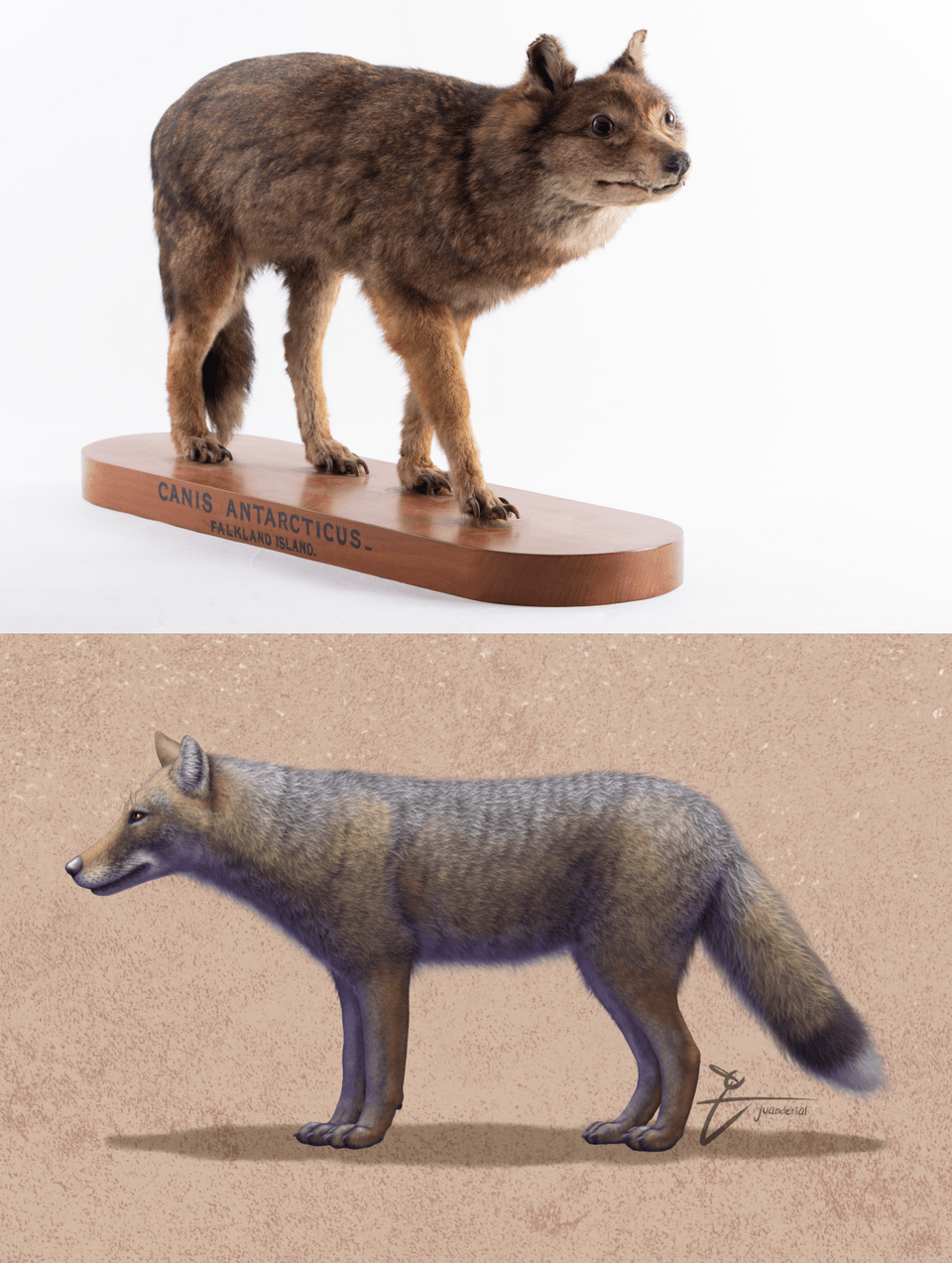
Dusicyon is an extinct genus of South American canids. The genus, established in 1914, originally included several South American foxes, but these have since been reclassified. The most well-known species, Dusicyon australis, was the Falkland Islands wolf.
Key Facts
- ›Extinct genus of South American canids.
- ›Type species is Dusicyon australis, the Falkland Islands wolf.
- ›Dusicyon avus was a close relative, splitting from the Falkland Islands wolf lineage around 16,000 years ago.
- ›Dusicyon avus had a wide distribution across South America.
- ›Recent research suggests later extinction dates for Dusicyon avus than previously estimated.
South American Canids
South America
About Dusicyon
Dusicyon is an extinct genus of canids that originated in South America. This genus is notable for its type species, Dusicyon australis, commonly known as the Falkland Islands wolf, which is now extinct. The genus was established in 1914, initially encompassing several South American foxes, though these have since been reclassified into the genus Lycalopex.
Extinction and Relatives
The species Dusicyon avus was widely distributed across South America during the late Pleistocene, ranging from Uruguay through Buenos Aires Province to the southernmost parts of Chile. This species is recognized as the closest known relative to the Falkland Islands wolf, with their lineages diverging around 16,000 years ago. Previous estimates placed the extinction of Dusicyon avus in the late Holocene, suggesting dates around 2,980 years ago on Tierra del Fuego and nearly 1,700 years ago on the mainland. However, more recent research indicates considerably later extinction dates, with the latest confirmed records in the Pampean Region dating to approximately 700 years before the present (1232–1397 AD) and in southernmost Patagonia around 400 years before the present (1454–1626 AD).
Source: Wikipedia ↗
Frequently Asked Questions
What is Dusicyon?
Dusicyon is an extinct genus of canids that originated in South America. It is known for including the Falkland Islands wolf among its species.
What was the Falkland Islands wolf?
The Falkland Islands wolf, scientifically known as Dusicyon australis, was the type species of the Dusicyon genus. It was native to the Falkland Islands and is now extinct.
When did Dusicyon avus go extinct?
While earlier estimates suggested much older extinction dates, more recent research indicates that Dusicyon avus survived much later. The latest confirmed records place its extinction in the Pampean Region around 700 years before present (1232–1397 AD) and in southernmost Patagonia around 400 years before present (1454–1626 AD).
What is the relationship between Dusicyon australis and Dusicyon avus?
Dusicyon avus is the closest known relative to the Falkland Islands wolf (Dusicyon australis). Their lineages diverged approximately 16,000 years ago.
Related Canid species

Canina
Canina is a taxonomic subtribe within the tribe Canini, encompassing wolf-like canids. Fossils indicate their existence as far back as 9 million years ago, making them an ancient lineage within the dog family. A distinctive characteristic of Canina members is their shared karyotype of 78 chromosomes, which allows for the production of hybrids.

Cuon
The dhole (Cuon alpinus) is a canid native to South, East, and Southeast Asia, distinguished by its unique skull morphology, lack of a third lower molar, and single-cusped upper molars. These highly social animals live in large clans and are diurnal pack hunters, primarily targeting large and medium-sized ungulates. Historically widespread, their range has significantly contracted due to habitat loss, prey depletion, and competition, leading to their current Endangered status.
Lycalopex
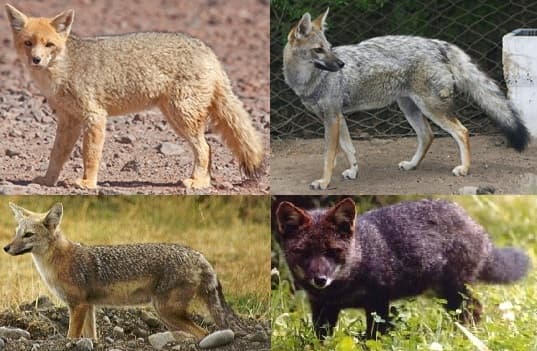
Lycalopex, commonly known as South American foxes or zorros, is a genus of canids native to South America. Despite their common names and resemblance to true foxes, they are more closely related to wolves and jackals, showcasing convergent evolution. The genus is distinguished by its diverse species, each adapted to various South American environments.