
Lycalopex
Lycalopex·carnivorous
Lycalopex, commonly known as South American foxes or zorros, is a genus of canids native to South America. Despite their common names and resemblance to true foxes, they are more closely related to wolves and jackals, showcasing convergent evolution. The genus is distinguished by its diverse species, each adapted to various South American environments.
Key Facts
- ›Lycalopex is a genus of canids found in South America.
- ›They are not true foxes but are more closely related to wolves and jackals.
- ›The genus name Lycalopex is sometimes used interchangeably with Pseudalopex.
- ›Fossils of Lycalopex date back to the Pliocene epoch.
- ›Some species, like Lycalopex culpaeus, have had domesticated forms, such as the Fuegian dog.
- ›Lycalopex species are hunted for their pelts and are sometimes perceived as threats to livestock.
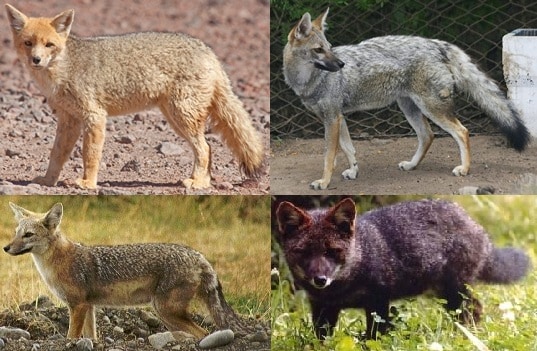
South American Foxes, Raposa, Zorro
South America
Russet-Fringed
Large Ears
About Lycalopex
What is Lycalopex?
Lycalopex, commonly known as South American foxes, raposa in Portuguese, and zorro in Spanish, is a genus of canids native to South America. Despite their common names and superficial resemblance to true foxes, they are not considered true foxes. Instead, they represent a unique canid genus more closely related to wolves and jackals, with their fox-like appearance attributed to convergent evolution.
Evolutionary History and Classification
Fossils attributed to the Lycalopex genus date back to the Pliocene epoch. The oldest known specimens were discovered in the Vorohué Formation of Argentina, with dates extending to the Late Pliocene. Other significant fossil finds in Chile also originate from the mid- to late Pliocene, approximately 2.0 to 2.5 million years ago. Historically, the genus has also been referred to by the name Pseudalopex, meaning "false fox," which is now considered synonymous with Lycalopex. Some species were also once classified under the genus Canis, particularly in the fossil record.
Relationship with Humans
Several species within the Lycalopex genus have had notable interactions with humans. They have been hunted for their pelts, particularly in Argentina, where their durable and soft pelts were valued. Some Lycalopex species have been perceived as predators of livestock, leading to campaigns by ranchers to control their populations. Notably, a domesticated form of the culpeo (Lycalopex culpaeus), known as the Fuegian dog or Yaghan dog, demonstrates an independent domestication event within this canid lineage, distinct from the domestication of other canids like dogs and silver foxes.
Source: Wikipedia ↗
Frequently Asked Questions
What are Lycalopex commonly called?
Lycalopex are commonly referred to as South American foxes or, in Portuguese, raposa, and in Spanish, zorro. The term 'zorro' originally meant 'fox' in Spanish.
Are Lycalopex true foxes?
No, despite their common names and appearance, Lycalopex are not true foxes. They are a distinct genus of canids that are more closely related to wolves and jackals. Their fox-like appearance is a result of convergent evolution.
Where do Lycalopex originate from?
The genus Lycalopex inhabits South America. The oldest known fossils belonging to the genus have been discovered in the Vorohué Formation of Argentina and in Chile, dating back to the Pliocene epoch.
What is the relationship between Lycalopex and humans?
Lycalopex species have historically been hunted for their pelts, particularly in Argentina. Some species have also been labeled as 'lamb-killers,' leading to extermination campaigns by ranchers. Furthermore, a domesticated form of Lycalopex culpaeus, known as the Fuegian dog, highlights an independent domestication event among canids.
What is the scientific classification of Lycalopex?
The genus Lycalopex was formerly sometimes classified under the name Pseudalopex, meaning 'false fox'. In the past, some species were also classified within the genus Canis. The genus Lycalopex is now the accepted scientific name.
How old are the oldest Lycalopex fossils?
The oldest known fossils belonging to the Lycalopex genus have been found in the Vorohué Formation of Argentina and date back to the Late Pliocene. Fossils discovered in Chile are from the mid- to late Pliocene, approximately 2.0 to 2.5 million years ago.
Related Canid species

Canina
Canina is a taxonomic subtribe within the tribe Canini, encompassing wolf-like canids. Fossils indicate their existence as far back as 9 million years ago, making them an ancient lineage within the dog family. A distinctive characteristic of Canina members is their shared karyotype of 78 chromosomes, which allows for the production of hybrids.

Cuon
The dhole (Cuon alpinus) is a canid native to South, East, and Southeast Asia, distinguished by its unique skull morphology, lack of a third lower molar, and single-cusped upper molars. These highly social animals live in large clans and are diurnal pack hunters, primarily targeting large and medium-sized ungulates. Historically widespread, their range has significantly contracted due to habitat loss, prey depletion, and competition, leading to their current Endangered status.
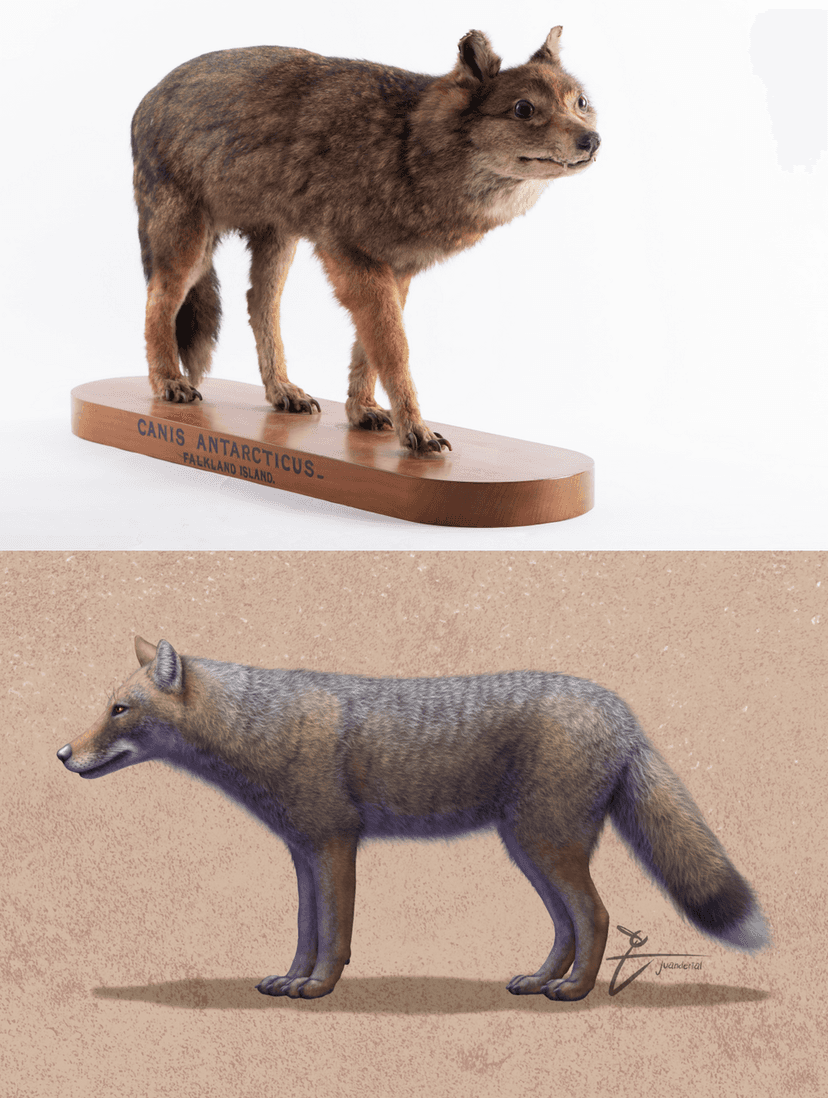
Dusicyon
Dusicyon is an extinct genus of South American canids. The genus, established in 1914, originally included several South American foxes, but these have since been reclassified. The most well-known species, Dusicyon australis, was the Falkland Islands wolf.