
Bicaz Gorge
River Canyon·Romania·Bicaz River
The Bicaz Gorge is a dramatic gorge located in northeast Romania, carved by the Bicaz River. It serves as a significant natural passageway between the historical Romanian provinces of Moldova and Transylvania and is a central feature of the Cheile Bicazului-Hășmaș National Park.
Key Facts
- ›Located in the Hășmaș Mountains, straddling Neamț and Harghita counties in Romania.
- ›Carved by the erosive power of the Bicaz River.
- ›Forms a natural gateway between the Romanian regions of Moldova and Transylvania.
- ›Features national road DN12C traversing its 8-kilometer length.
- ›Includes the notable Lacul Roșu (Red Lake) within its bounds.

Cheile Bicazului, Békás-szoros
River Erosion
Lacul RoșU, Ravines
About Bicaz Gorge
The Bicaz Gorge, known in Hungarian as Békás-szoros and in Romanian as Cheile Bicazului, is a significant natural formation in northeast Romania. It is situated within the central part of the Hășmaș Mountains and forms an integral part of the Cheile Bicazului-Hășmaș National Park.
Formation and Geography
The gorge was sculpted over time by the persistent erosive force of the Bicaz River. This natural process has created a series of deep ravines, making it a dramatic and visually striking landscape. The gorge serves as a vital natural passageway, historically connecting the Romanian provinces of Moldova and Transylvania.
Notable Features and Access
A notable feature within the Bicaz Gorge is Lacul Roșu, commonly referred to as the Red Lake. The national road DN12C traverses the gorge, running along its approximately 8-kilometer length of ravines, providing access and scenic views for travelers.
Source: Wikipedia ↗
Frequently Asked Questions
Where is the Bicaz Gorge located?
The Bicaz Gorge is situated in northeast Romania, within the central part of the Hășmaș Mountains. It spans across Neamț and Harghita counties.
How was the Bicaz Gorge formed?
The gorge was primarily formed by the erosive action of the waters of the Bicaz River. This process carved out the deep ravines over time.
What is the significance of the Bicaz Gorge?
It is a crucial natural passageway connecting the Romanian provinces of Moldova and Transylvania. It is also a key component of the Cheile Bicazului-Hășmaș National Park.
What notable features can be found in the Bicaz Gorge?
The gorge is known for its impressive ravines and the presence of Lacul Roșu, also known as the Red Lake. The national road DN12C also runs through it.
What is the length of the Bicaz Gorge?
The Bicaz Gorge extends for approximately 8 kilometers (5 miles) of ravines.
Related Canyons

Barron Gorge
Barron Gorge is a dramatic gorge located in Queensland, Australia, carved by the Barron River as it descends the eastern escarpment of the Atherton Tablelands. Renowned for its spectacular waterfalls, particularly the Barron Falls which cascade 265 meters, the gorge is a significant natural landmark within the Wet Tropics World Heritage Area. Historically important for Indigenous peoples and later for hydroelectric power generation, it is now a protected national park and a popular tourist destination.

Big Bend National Park
Big Bend National Park is a vast protected area in West Texas, notable for its extensive Chihuahuan Desert topography and ecology. Formed by the erosive power of the Rio Grande and significant geological uplift, the park preserves a rich tapestry of life, including over 1,200 plant species and hundreds of animal species, as well as ancient fossils and diverse rock formations. Its remote location and dramatic landscapes, including the Chisos Mountains and deep river canyons, make it a significant destination for naturalists and adventurers.
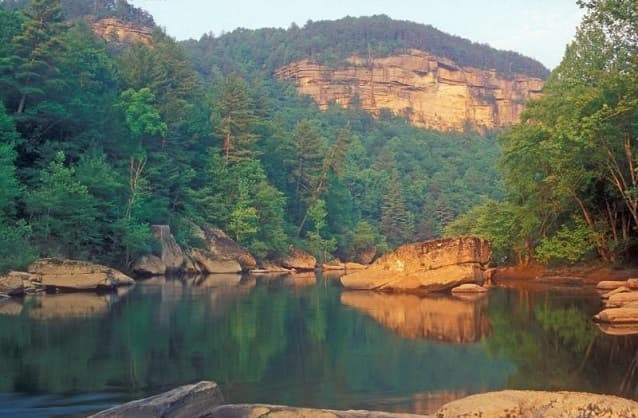
Big South Fork of the Cumberland River
The Big South Fork of the Cumberland River is a significant river system in Tennessee and Kentucky, carved into the Cumberland Plateau. This 76-mile waterway is characterized by rugged terrain with deep gorges, natural arches, and rock shelters, and is the central feature of the Big South Fork National River and Recreation Area. Its formation by river erosion has created a diverse ecosystem and a popular destination for outdoor recreation.