
Red Lake
Red Lake (Crveno jezero) is a significant karst sinkhole in Croatia, renowned for its immense depth and the lake it contains. Its reddish cliffs, colored by iron oxides, give it its name and contribute to its striking appearance. It is recognized as the third largest sinkhole globally and the deepest known collapse doline holding a lake, making it a site of considerable geological interest.
Key Facts
- ›Considered the third largest sinkhole in the world.
- ›Deepest known collapse doline containing a lake.
- ›Surrounding cliffs reach over 241 meters above normal water level.
- ›Total explored depth is approximately 530 meters.
- ›The deepest known point of the lake is 4 meters below sea level.
- ›Inhabited by endemic and endangered fish species, including the spotted minnow and Imotski spined loach.

Crveno jezero
Numerous Caves, High Cliffs, Reddish-Brown Cliffs Colored By Iron Oxides, Inflow Cave-Shaped Canal At 175 Meters Depth
Freshwater
Spotted Minnow, Imotski Spined Loach
About Red Lake
Red Lake, known in Croatian as Crveno jezero, is a remarkable karst sinkhole located near the city of Imotski in Croatia. This geological formation is distinguished by the lake it contains and its towering, reddish-brown cliffs, colored by iron oxides, which soar over 241 meters above the normal water level and extend below it. These impressive cliffs are a defining visual characteristic of the sinkhole.
Geological Significance
Red Lake holds significant geological importance, recognized as the third largest sinkhole in the world and the deepest known collapse doline that encloses a lake. Its total explored depth reaches approximately 530 meters, with a substantial volume estimated between 25 and 30 million cubic meters. The lake's deepest point is recorded at 4 meters below sea level. Water from the basin drains through subterranean waterways that lie beneath the lake floor. The formation of Red Lake is believed to have occurred when the roof of a vast subterranean cave collapsed.
Ecosystem and Exploration
The lake is a vital habitat for endemic and endangered fish species, including the spotted minnow (Delminichthys adspersus) and the Imotski spined loach (Cobitis illyrica). The presence of these fish in surrounding springs and rivers during dry periods suggests an interconnected underground water system. Explorations have uncovered notable features, such as an inflow canal shaped like a cave, measuring around 30x30 meters, discovered in the eastern part of the lake at a depth of 175 meters. The sinkhole has been a subject of study by various researchers over the years.
Source: Wikipedia ↗
Frequently Asked Questions
What is Red Lake?
Red Lake, or Crveno jezero in Croatian, is a large sinkhole containing a karst lake near Imotski, Croatia. It is notable for its extreme depth and the unique geological features surrounding it, including high cliffs and numerous caves.
Why is it called Red Lake?
The sinkhole is named Red Lake due to the reddish-brown color of the surrounding cliffs. This distinctive coloration is caused by the presence of iron oxides in the rock formations.
How deep is Red Lake?
The total explored depth of Red Lake is approximately 530 meters (1,740 ft). The deepest known point of the lake itself is recorded at 4 meters below sea level.
What makes Red Lake geologically significant?
Red Lake is geologically significant as it is the third largest sinkhole globally and the deepest known collapse doline that contains a lake. Its formation is presumed to be the result of the ceiling of a large cave hall collapsing.
Are there any unique species in Red Lake?
Yes, Red Lake is home to endemic and endangered fish species. These include the spotted minnow (Delminichthys adspersus) and the Imotski spined loach (Cobitis illyrica), suggesting underground connections to other water bodies.
Has Red Lake been explored extensively?
Exploration has revealed significant features, such as an inflow cave-shaped canal discovered in the eastern part of the lake at a depth of 175 meters. The sinkhole's total explored depth is approximately 530 meters.
Related Sinkholes

Blue Lake
Blue Lake is a significant karst sinkhole located near Imotski, Croatia. It is known for its dramatic seasonal water level fluctuations and its considerable depth, potentially formed by the collapse of a large cave. The lake is a popular site for tourism and outdoor activities.
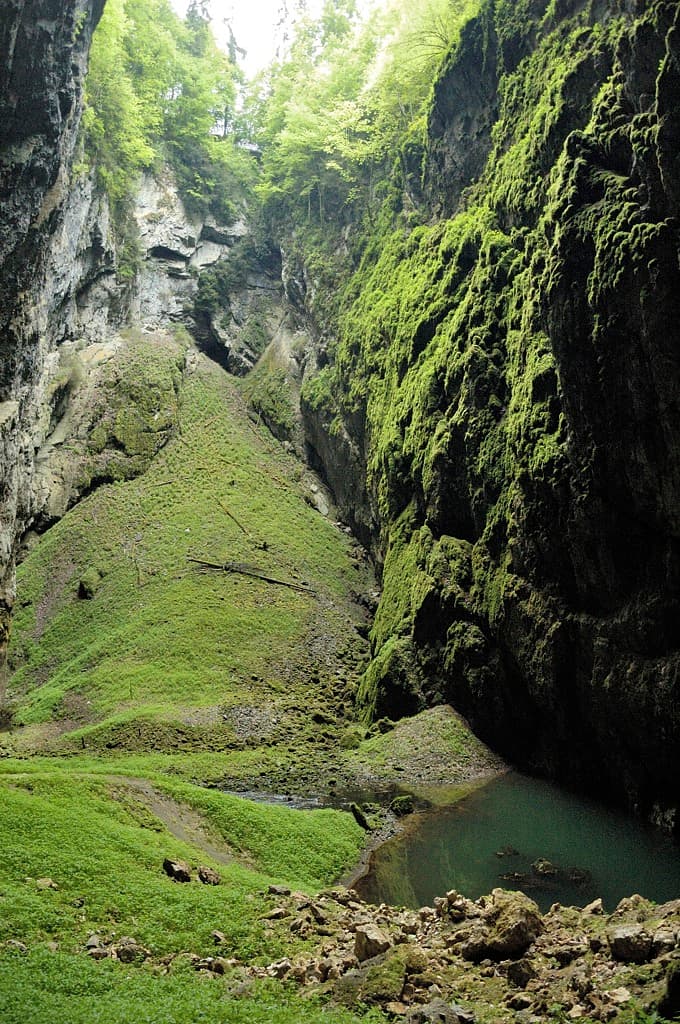
Macocha Gorge
The Macocha Abyss, also known as Macocha Gorge, is a significant sinkhole located within the Moravian Karst cave system in the Czech Republic. It holds the distinction of being the deepest "light hole" type sinkhole in Central Europe, making it a notable geological feature and a popular destination for tourists, cavers, and divers.
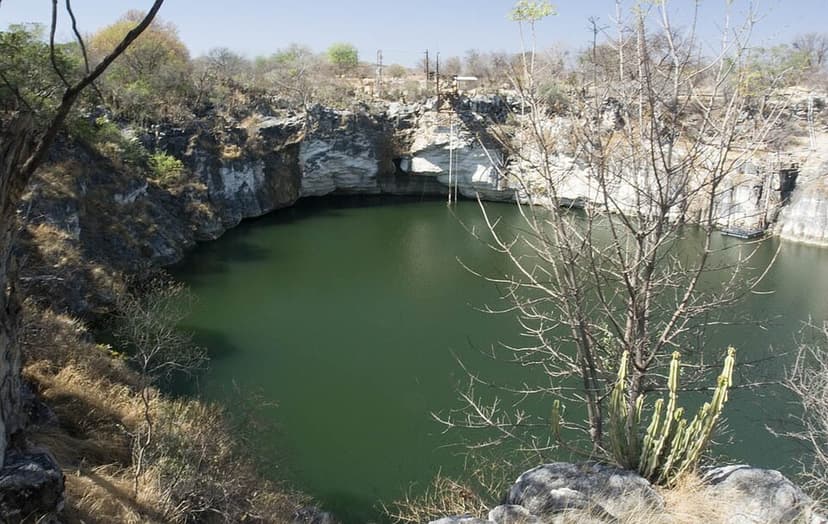
Otjikoto Lake
Otjikoto Lake is one of only two permanent natural lakes in Namibia, formed by a collapsing karst cave. It is notable for its significant depth, historical use as a dumping ground for German troops during World War I, and its unique ecosystem. The lake's name has evolved from the San's "Gaisis" to the Herero's "Otjikoto" (deep hole), which also lent its name to the surrounding region.