
Coaticook Gorge
River Canyon·Canada·Coaticook River
The Coaticook Gorge is a prominent natural feature located in Coaticook, Quebec, within the Estrie region of Canada. Carved by the Coaticook River, this gorge is characterized by its significant depth and length, making it a notable geological site in the area. Its formation is attributed to the erosive power of the river over time.
Key Facts
- ›The gorge is located in Coaticook, Quebec, Canada.
- ›The Coaticook River flows through the gorge.
- ›It has a height of approximately 50 meters (160 ft).
- ›The length of the gorge is approximately 750 meters (2,460 ft).
- ›It is situated in the Estrie region of Quebec.

River Erosion
About Coaticook Gorge
The Coaticook Gorge is a significant natural landmark situated in the town of Coaticook, within the Estrie region of Quebec, Canada. This impressive gorge has been shaped over time by the persistent erosive power of the Coaticook River, which flows directly through its depths.
Geological Characteristics
Geologically, the Coaticook Gorge is characterized by its notable dimensions. It reaches a depth of approximately 50 meters (160 ft) and extends for a length of about 750 meters (2,460 ft). These measurements highlight the substantial impact of river erosion in carving out this natural feature from the surrounding landscape.
Source: Wikipedia ↗
Frequently Asked Questions
Where is the Coaticook Gorge located?
The Coaticook Gorge is located in the town of Coaticook, Quebec, Canada. It is situated within the Estrie region of the province.
What river flows through the Coaticook Gorge?
The Coaticook River is the river that runs through the Coaticook Gorge. The river's erosive action is responsible for shaping the gorge.
How deep is the Coaticook Gorge?
The Coaticook Gorge has a significant depth, reaching approximately 50 meters (160 ft) in height.
What is the length of the Coaticook Gorge?
The Coaticook Gorge extends for a length of approximately 750 meters (2,460 ft).
Related Canyons

Agawa Canyon
Agawa Canyon is a shallow canyon in Ontario, Canada, formed approximately 1.2 billion years ago by faulting and later carved by the Agawa River. It is now a popular tourist destination within the Agawa Canyon Wilderness Park, accessible by train or hiking trail, and is renowned for its natural beauty, waterfalls, and seasonal foliage.
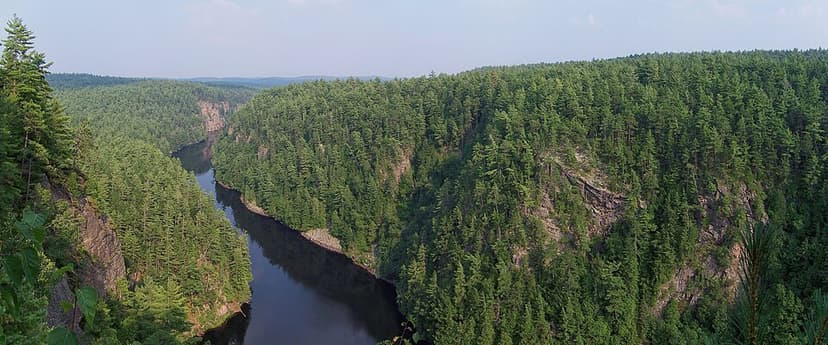
Barron River (Ontario)
The Barron River is a significant waterway in Ontario, Canada, flowing through Algonquin Provincial Park and forming the southern branch of the Petawawa River. It was primarily formed by glacial meltwater approximately 10,000 years ago, carving out the impressive Barron Canyon. Historically, it served as a crucial route for timber transport, with the canyon's towering cliffs known as the "Capes" by loggers.

Coquihalla Canyon
Coquihalla Canyon is a provincial park in southwestern British Columbia, Canada, renowned for its dramatic gorge carved by the Coquihalla River. The canyon features the historic Othello Tunnels, a series of former railway tunnels that are now a popular recreational attraction. Its formation is attributed to the erosive power of the river acting upon granite batholiths, resulting in steep, fragmented walls and a narrow gorge.