
French Bar Canyon
French Bar Canyon is a significant natural feature located on the Fraser River in British Columbia, Canada. It is situated approximately 60 km upstream from Lillooet, near the communities of Big Bar and Jesmond. The canyon gained attention in June 2019 due to a landslide that occurred within its confines, obstructing the migration route for spawning salmon.
Key Facts
- ›Located on the Fraser River in British Columbia, Canada.
- ›Situated approximately 60 km upstream from Lillooet.
- ›Near the communities of Big Bar and Jesmond.
- ›Experienced a significant landslide in June 2019.
- ›The landslide obstructed the passage of spawning salmon.

River Erosion
Spawning Salmon
About French Bar Canyon
French Bar Canyon is a significant natural feature situated along the Fraser River in the province of British Columbia, Canada. It is geographically positioned near the communities of Big Bar and Jesmond, approximately 60 kilometers upstream from the town of Lillooet.
Recent Events
The canyon garnered notable attention in June 2019 due to a substantial landslide. This geological event resulted in the obstruction of the river's passage, posing a critical challenge for migrating spawning salmon.
Source: Wikipedia ↗
Frequently Asked Questions
Where is French Bar Canyon located?
French Bar Canyon is located on the Fraser River in British Columbia, Canada. It is situated near Big Bar and Jesmond, approximately 60 km upstream from Lillooet.
What geological event occurred at French Bar Canyon in 2019?
In June 2019, a landslide took place within French Bar Canyon. This event significantly impacted the local environment.
What was the impact of the 2019 landslide?
The landslide that occurred in French Bar Canyon in June 2019 blocked the passage of spawning salmon. This created a major obstacle for their migration.
Related Canyons
Fraser Canyon
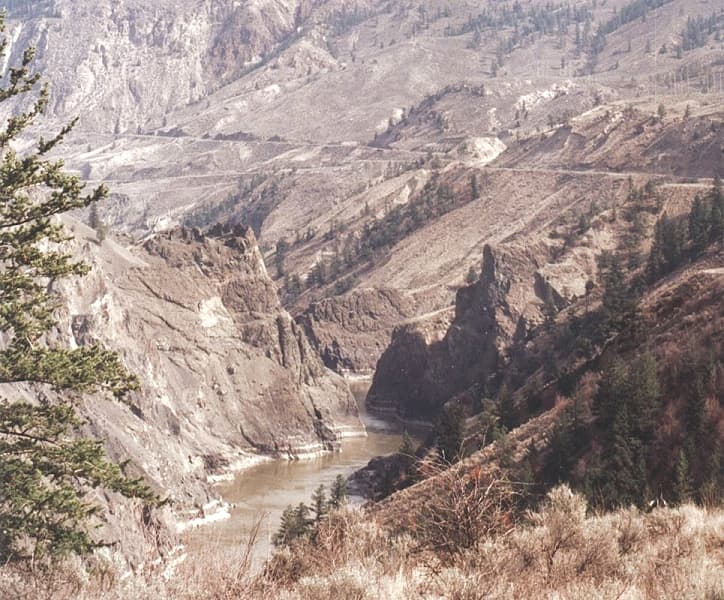
Fraser Canyon is a significant landform carved by the Fraser River as it descends through narrow rock gorges in British Columbia's Coast Mountains. Formed during the Miocene period by river erosion cutting into the uplifting Interior Plateau, it served as a crucial, albeit perilous, transportation corridor during the frontier era and continues to be a vital route for railways and highways. The canyon is characterized by its dramatic cliffs, deep gorges, and historically significant sites like Hells Gate, a major bottleneck for salmon migration and a former gold rush town.

Agawa Canyon
Agawa Canyon is a shallow canyon in Ontario, Canada, formed approximately 1.2 billion years ago by faulting and later carved by the Agawa River. It is now a popular tourist destination within the Agawa Canyon Wilderness Park, accessible by train or hiking trail, and is renowned for its natural beauty, waterfalls, and seasonal foliage.
Barron River (Ontario)
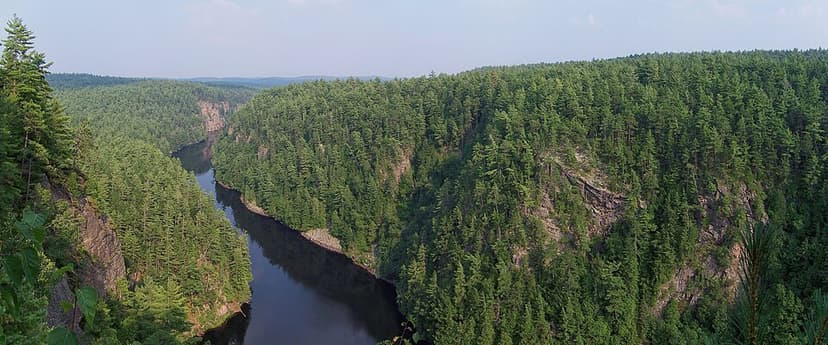
The Barron River is a significant waterway in Ontario, Canada, flowing through Algonquin Provincial Park and forming the southern branch of the Petawawa River. It was primarily formed by glacial meltwater approximately 10,000 years ago, carving out the impressive Barron Canyon. Historically, it served as a crucial route for timber transport, with the canyon's towering cliffs known as the "Capes" by loggers.