
Kaaterskill Clove
River Canyon·North America·Kaaterskill Creek
Kaaterskill Clove is a deep gorge in New York's eastern Catskill Mountains, carved by Kaaterskill Creek over an estimated million years. Initially a hub for the 19th-century tannery industry due to its hemlock forests, it later transformed into a popular tourist destination and a muse for artists, particularly those of the Hudson River School.
Key Facts
- ›Estimated geological age of up to 1 million years.
- ›Depth can reach 2,500 feet in some sections.
- ›Formed by the erosion of Kaaterskill Creek.
- ›Notable for Kaaterskill Falls, often cited as New York's highest waterfall.
- ›Historically significant for the 19th-century tannery industry.
- ›Popular subject for artists, including those of the Hudson River School.

River Erosion
Kaaterskill Falls, Fawn's Leap, Buttermilk Falls, Haines Falls, Inspiration Point, Sunset Rock, Artist Rock, Catskill Escarpment
Hemlock Forests
About Kaaterskill Clove
Kaaterskill Clove is a significant natural landmark situated in the eastern Catskill Mountains of New York. This deep gorge, or valley, lies west of Palenville and near Haines Falls, and is a prominent feature carved by the Kaaterskill Creek. Geologists estimate the formation of this impressive natural landscape to be as old as one million years. The clove is flanked by notable peaks, with Kaaterskill High Peak and Roundtop Mountain to the south, and South Mountain to the north, contributing to its dramatic topography.
Geological Features
The most striking geological feature of Kaaterskill Clove is its depth, which in places can reach an astonishing 2,500 feet. The primary agent of its formation is the erosive force of Kaaterskill Creek, a tributary of Catskill Creek. Within the clove, Kaaterskill Falls is a paramount attraction, plummeting 231 feet and frequently cited as the highest waterfall in New York State. Other waterfalls, such as Fawn's Leap, Buttermilk Falls, and Haines Falls, are also present, though their access trails have largely been reclaimed by nature, making them more challenging to reach.
Historical Significance and Tourism
Prior to 1817, documented history of Kaaterskill Clove is sparse. Its industrial importance emerged with the establishment of tanneries, particularly after the War of 1812, capitalizing on the extensive hemlock forests. However, this era of heavy industry was short-lived due to rapid deforestation. Following the decline of the tannery business, Palenville transitioned into a tourist town, famously associating itself with the legend of Rip van Winkle. The clove became a haven for artists, including painters of the Hudson River School like Asher Brown Durand and Sanford Gifford, who were inspired by its scenic beauty. Artists such as Thomas Cole and Jennie Augusta Brownscombe found creative inspiration here. Twentieth-century artists like Thomas Locker also continued to depict the clove in their work. Numerous grand hotels and mountain houses, including the Laurel House and the Catskill Mountain House, were constructed to accommodate visitors. The development of trails and walkways, most notably the Rip Van Winkle Trail (now Route 23A), further opened the clove to tourism, providing access to its overlooks and waterfalls and solidifying its status as a popular destination in the northern Catskills.
Source: Wikipedia ↗
Frequently Asked Questions
How was Kaaterskill Clove formed?
Kaaterskill Clove was primarily formed by the erosive power of Kaaterskill Creek. Geologists estimate this process has been ongoing for up to one million years, carving a deep gorge into the Catskill Mountains.
What are the main attractions within Kaaterskill Clove?
The most famous attraction is Kaaterskill Falls, a spectacular 231-foot waterfall. The clove also features other waterfalls like Fawn's Leap and Buttermilk Falls, though access to them can be challenging. Numerous hiking trails offer scenic views from the rims and within the gorge.
What kind of activities can I do in Kaaterskill Clove?
Kaaterskill Clove is ideal for hiking, with trails like the Long Path traversing its rims and interior. The area provides opportunities for enjoying scenic vistas and exploring waterfalls. Historically, it was also a significant site for artists and tourists.
What is the geological significance of Kaaterskill Clove?
The clove's deep gorge, estimated to be up to 1 million years old, showcases significant geological processes of erosion. Its depth, reaching as much as 2,500 feet in places, highlights the long-term impact of river carving on the Catskill Mountains.
What is the history of human activity in Kaaterskill Clove?
In the 19th century, Kaaterskill Clove was a center for the tannery industry due to its abundant hemlock forests. Following deforestation, it transitioned into a popular tourist destination, attracting artists and visitors seeking natural beauty.
Related Canyons

Bad Rock Canyon
Bad Rock Canyon is a river canyon located east of Columbia Falls, Montana, through which the Flathead River flows. Historically, it served as a significant buffalo trail for various indigenous tribes and later became a gateway to wilderness areas like the Bob Marshall Wilderness and Glacier National Park. The canyon is also known for frequent rock slides that impact the adjacent BNSF Railway tracks.

Big Bend National Park
Big Bend National Park is a vast protected area in West Texas, notable for its extensive Chihuahuan Desert topography and ecology. Formed by the erosive power of the Rio Grande and significant geological uplift, the park preserves a rich tapestry of life, including over 1,200 plant species and hundreds of animal species, as well as ancient fossils and diverse rock formations. Its remote location and dramatic landscapes, including the Chisos Mountains and deep river canyons, make it a significant destination for naturalists and adventurers.
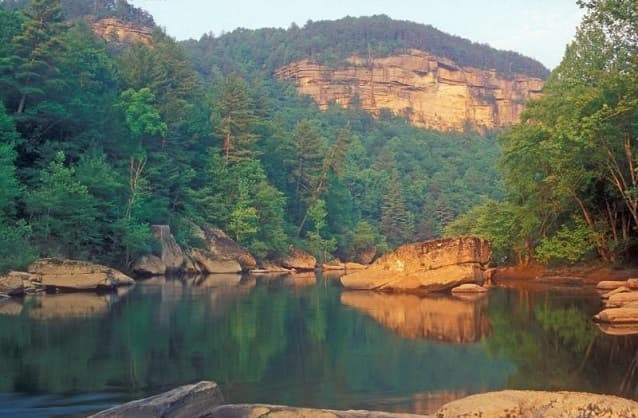
Big South Fork of the Cumberland River
The Big South Fork of the Cumberland River is a significant river system in Tennessee and Kentucky, carved into the Cumberland Plateau. This 76-mile waterway is characterized by rugged terrain with deep gorges, natural arches, and rock shelters, and is the central feature of the Big South Fork National River and Recreation Area. Its formation by river erosion has created a diverse ecosystem and a popular destination for outdoor recreation.