
Kawarau Gorge
River Gorge·New Zealand·Kawarau River
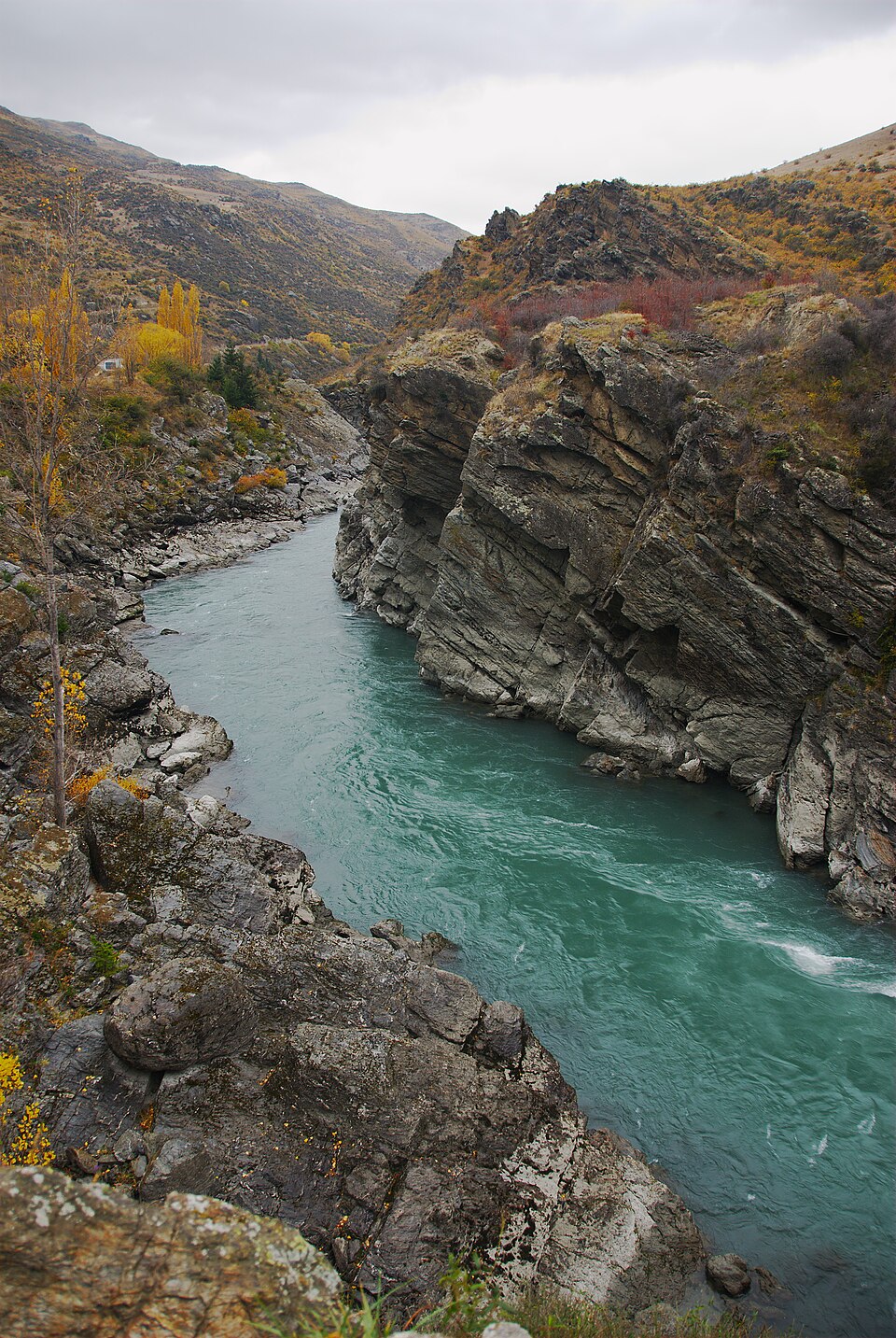
The Kawarau Gorge is a significant river gorge in Central Otago, New Zealand, carved by the Kawarau River. It serves as a vital transportation link between Queenstown and Cromwell, and historically was an important passage for Māori and gold miners. Today, it is renowned for its extreme sports, particularly bungy jumping, and is a habitat for a rare fungus weevil.
Key Facts
- ›The gorge is approximately 25 kilometers long.
- ›It is carved by the Kawarau River in Central Otago, South Island, New Zealand.
- ›State Highway 6 passes through the gorge, connecting Queenstown and Cromwell.
- ›It features a natural bridge called 'Whatatorere,' a narrow point where the river is only 1.2 meters wide.
- ›The gorge is a known habitat for the endangered fungus weevil Cerius otagensis.
- ›It is a prominent location for extreme sports, including bungy jumping and white-water activities.
River Erosion
Whatatorere Natural Bridge, Kawarau Gorge Suspension Bridge, Cerius Otagensis Habitat
Cerius Otagensis
Shrubs
Kawarau
About Kawarau Gorge
The Kawarau Gorge is a significant river gorge located in Central Otago, on New Zealand's South Island, carved by the persistent action of the Kawarau River. This dramatic landscape serves as a critical transportation artery, with State Highway 6 traversing its length to connect the popular tourist destination of Queenstown with the town of Cromwell.
Geological and Geographical Features
The gorge stretches for approximately 25 kilometers, beginning near the wine-growing community of Gibbston and the prominent Nevis Bluff. A unique geological feature within the gorge is the natural bridge known as "Whatatorere," where the river narrows to a mere 1.2 meters. This point was historically crucial for crossing both the Clutha and Kawarau rivers without the need for boats.
Historical Significance
Historically, the Kawarau Gorge held immense importance. For early Māori, it was a key passage on routes leading to the Cardrona Valley and the Haast Pass, essential for accessing valuable pounamu (greenstone). The 1860s Otago gold rush brought a surge of activity to the gorge, and the preserved remains of several miner's cottages, particularly those inhabited by Chinese migrants, stand as testaments to this era. The Goldfields Mining Centre and the Roaring Meg hydro scheme are also situated within the gorge, offering visitors a glimpse into its mining past.
Modern Activities and Ecology
In contemporary times, the Kawarau Gorge has become synonymous with adventure tourism. It is globally renowned as the birthplace of commercial bungy jumping, with the Kawarau Gorge Suspension Bridge being an iconic site for this extreme sport. The gorge also caters to white-water sports enthusiasts, offering opportunities for kayaking and riverboarding. Ecologically, the gorge is notable as one of the few places in the world where the nationally critical endangered fungus weevil, Cerius otagensis, has been found, highlighting its unique biodiversity.
Source: Wikipedia ↗
Frequently Asked Questions
What is the significance of the Kawarau Gorge?
The Kawarau Gorge is historically significant as a travel route for early Māori and goldminers. Today, it is a major transportation corridor and a popular destination for extreme sports enthusiasts.
What are the main activities available in the Kawarau Gorge?
The gorge is a hub for extreme sports, most famously for bungy jumping from the Kawarau Gorge Suspension Bridge. Visitors can also enjoy white-water sports like kayaking and riverboarding.
What is the geological formation of the Kawarau Gorge?
The Kawarau Gorge is a major river gorge created by the erosive power of the Kawarau River over time.
What is the historical importance of the 'Whatatorere' natural bridge?
The 'Whatatorere' natural bridge is a narrow point in the gorge, only 1.2 meters wide, which served as a crucial crossing point for both early Māori traveling to the Cardrona Valley and later for goldminers.
Are there any unique ecological features in the Kawarau Gorge?
Yes, the gorge is one of only two known areas where the nationally critical endangered fungus weevil, Cerius otagensis, has been found.
What historical remnants can be found in the Kawarau Gorge?
The gorge contains preserved remains of miner's cottages, notably those of Chinese migrants, dating back to the Otago gold rush of the 1860s. The Goldfields Mining Centre is also located here.
Related Canyons

Blackwater Canyon
Blackwater Canyon is a rugged, eight-mile gorge in eastern West Virginia, carved by the Blackwater River. Its dramatic landscape features steep cliffs, whitewater rapids, and dense forests, making it a site of both natural beauty and environmental controversy. For years, activists have advocated for its protection against industrial development interests.
Hells Canyon
Hells Canyon is North America's deepest river gorge, carved by the Snake River along the borders of Oregon, Idaho, and Washington. Its dramatic landscape features immense depth and a diverse geological history spanning millions of years, from ancient volcanoes to basalt lava flows. The canyon is a significant natural area, offering abundant recreational opportunities and holding historical importance for indigenous tribes and early explorers.

Rhine Gorge
The Rhine Gorge, also known as the Upper Middle Rhine Valley, is a 65 km long section of the Middle Rhine River in Germany. It was designated a UNESCO World Heritage Site in 2002 due to its stunning cultural landscape, its historical significance as a European transport route, and the unique architectural adaptations to the steep valley slopes. The gorge was carved by the Rhine River during a recent geological uplift, revealing ancient Devonian sedimentary rocks, primarily slate, which are rich in fossils.