
Rhine Gorge
River Gorge·Germany·Devonian·Rhine River
The Rhine Gorge, also known as the Upper Middle Rhine Valley, is a 65 km long section of the Middle Rhine River in Germany. It was designated a UNESCO World Heritage Site in 2002 due to its stunning cultural landscape, its historical significance as a European transport route, and the unique architectural adaptations to the steep valley slopes. The gorge was carved by the Rhine River during a recent geological uplift, revealing ancient Devonian sedimentary rocks, primarily slate, which are rich in fossils.
Key Facts
- ›Extends for 65 km (40 MI) between Koblenz and Rüdesheim.
- ›Walls reach heights of up to 200 M (660 ft).
- ›Formed by the Rhine River carving through uplifted terrain.
- ›Geological foundation comprises Devonian Rhenish Facies sedimentary rocks, mainly slate.
- ›Features approximately 40 hilltop castles, many now in ruins.
- ›Known for its microclimate and its role as a biological corridor.

Upper Middle Rhine Valley
River Erosion, Tectonic Uplift
Loreley Rock, Hilltop Castles, Terraced Slopes For Viticulture, Historic Towns
Vineyards
About Rhine Gorge
The Rhine Gorge, also known as the Upper Middle Rhine Valley, is a significant 65-kilometer (40-mile) section of the Middle Rhine River in Germany, situated between the cities of Koblenz and Rüdesheim. Its inclusion in the UNESCO list of World Heritage Sites in June 2002 highlights its profound importance as a cultural landscape, a vital transport artery across Europe, and a testament to human ingenuity in adapting structures to the challenging steep slopes of the gorge.
Geological Formation and Characteristics
The bedrock of the Rhine Gorge originates from the Devonian period, characterized by sedimentary rocks known as Rhenish Facies, predominantly composed of fossil-rich slate. These rock layers experienced considerable folding during the subsequent Carboniferous period. The gorge itself was carved by the Rhine River through a more recent geological uplift, resulting in walls that reach heights of up to 200 meters (660 feet). A particularly famous natural landmark within the gorge is the Loreley rock.
The gorge fosters its own distinct microclimate, which has historically served as a corridor for species that might not otherwise be found in the surrounding region. The steep slopes have been extensively terraced for agricultural purposes, with viticulture being a prominent practice, especially on south-facing exposures. While most vineyards belong to the Mittelrhein wine region, the southernmost parts of the gorge fall within the Rheingau and Nahe wine regions.
Human History and Cultural Significance
The Rhine River has served as a crucial trade route into central Europe since prehistoric times, leading to the development of numerous small settlements along its banks. Many of these old towns have preserved their historic character. The increasing wealth of the region facilitated the construction of approximately 40 hilltop castles, transforming the valley into a central area of the Holy Roman Empire. The Thirty Years' War significantly impacted these castles, leaving many in ruins, which today are a notable attraction for river cruise ships.
At one point, the valley formed a border of France before becoming part of Prussia in the 19th century. During this time, its landscape became emblematic of Germany. The Rhine Gorge is deeply embedded in folklore, serving as the setting for opera, such as Wagner's 'Götterdämmerung.' Annual events like the 'Rhine in Flames' festivals, featuring spectacular firework displays, further enhance its cultural appeal and draw visitors.
Source: Wikipedia ↗
Frequently Asked Questions
How was the Rhine Gorge formed?
The gorge was carved by the Rhine River during a more recent geological uplift. This process cut through the ancient Devonian rocks, leaving the river contained within steep walls.
What is the significance of the Rhine Gorge?
It is recognized as a UNESCO World Heritage Site for its beauty as a cultural landscape, its importance as a transport route across Europe, and the unique architectural adaptations to the steep slopes. It also possesses a special microclimate and serves as a corridor for species.
What kind of rocks are found in the Rhine Gorge?
The rocks in the region were laid down in the Devonian period and are known as Rhenish Facies. This is a fossil-bearing sedimentary rock type consisting mainly of slate, which underwent folding during the Carboniferous period.
Are there castles in the Rhine Gorge?
Yes, the valley is noted for its numerous hilltop castles, with around 40 having been built. Many of these castles, particularly those left in ruins from the Thirty Years' War, are a significant attraction today.
What are some notable features of the Rhine Gorge?
The most famous geological feature is the Loreley rock. The gorge also features terraced slopes adapted for agriculture, especially viticulture, and a string of old towns that retain a historic feel.
What is the climate like in the Rhine Gorge?
The gorge produces its own microclimate. The south-facing slopes are particularly favorable for viticulture, suggesting a climate that supports plant growth.
Related Canyons
Canyon Sainte-Anne
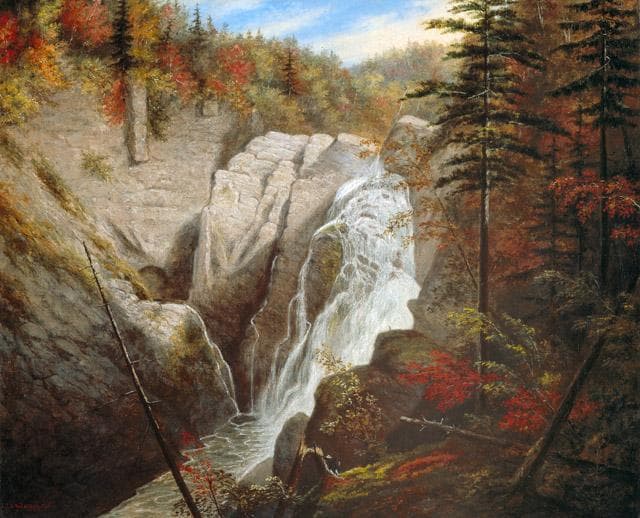
Canyon Sainte-Anne is a steep-sided gorge located east of Beaupré, Quebec, Canada, carved by the Sainte-Anne-du-Nord River. The canyon features a prominent 74-meter waterfall and is situated within the ancient geological formations of the Canadian Shield. It has been a site of natural and cultural interest, drawing visitors for its scenic beauty and recreational activities.

Gulf Hagas
Gulf Hagas is a significant gorge in the northern Maine woods, often called the "Grand Canyon of Maine." Carved by the West Branch of the Pleasant River, its three-mile length features vertically walled slate and numerous waterfalls, with walls reaching up to 130 feet. Designated a National Natural Landmark, it is a popular destination for hiking and challenging whitewater kayaking.

Keystone Canyon
Keystone Canyon is a narrow gorge in Alaska, characterized by its nearly perpendicular slate walls. Carved by the Lowe River, it stretches for approximately 3 miles and serves as a dramatic passage connecting the river's upper and lower valleys. The canyon is notable for its impressive waterfalls, including Horsetail Falls and Bridal Veil Falls, and holds historical significance related to early Alaskan exploration and proposed railroad routes.