
Kitselas Canyon
River Canyon·Canada·Skeena River
Kitselas Canyon is a significant gorge carved by the Skeena River in west central British Columbia, Canada. It served as a vital transportation and trade route for Indigenous peoples for millennia and later became a crucial point for steamboat navigation and railway construction. The canyon's dramatic topography and historical importance have led to its designation as a national historic site.
Key Facts
- ›The canyon is roughly 1.7 kilometers long and cuts through the western extremity of the Hazelton Mountains.
- ›Canyon walls on the east side rise 20 to 30 meters before forming a series of flat terraces.
- ›Several rocky islands divide the Skeena River within the gorge, creating challenging water conditions.
- ›Kitselas Canyon was occupied by Indigenous peoples for approximately 5,000 years, featuring petroglyphs, totem poles, and archaeological remains.
- ›The canyon was a key location for steamboat navigation and railway construction in the late 19th and early 20th centuries.
- ›It was designated a national historic site in 1972.
Big Canyon
River Erosion
Islands Within the Gorge, Flat Terraces On East Side, Petroglyphs, Totem Poles, Culturally Modified Trees, Archaeological Remains, Gitlaxdzawk Settlement Site, Gitsaex Settlement Site, Canoe Passage
Kitselas
About Kitselas Canyon
Kitselas Canyon is a significant river gorge carved into the Skeena region of west central British Columbia, Canada, by the powerful Skeena River. Roughly 1.7 kilometers in length, this north-south oriented gorge cuts through the western edge of the Hazelton Mountains, forming a dramatic natural landmark within the Canadian Cordillera. Its steep eastern walls rise to form a series of distinct flat terraces, while the western side features slopes ascending to Kitselas Mountain. The canyon's topography is further characterized by several rocky islands that divide the Skeena River, creating challenging water conditions with vicious eddies, particularly at high water levels.
Indigenous Significance and History
The name 'Kitselas' itself translates to 'people of the deep gorge or narrows,' highlighting its deep historical connection to the Kitselas First Nation. This area has been a homeland for Indigenous peoples for approximately 5,000 years. Archaeological evidence, including petroglyphs, totem poles, culturally modified trees, and the remains of permanent settlements like Gitlaxdzawk ('people of the ravine') and Gitsaex ('people at the edge of the lake'), underscore its long-term cultural importance. These settlements were vital trade centers, engaging with entities such as the Hudson's Bay Company during the 1800s.
Transportation Hub and Engineering Marvel
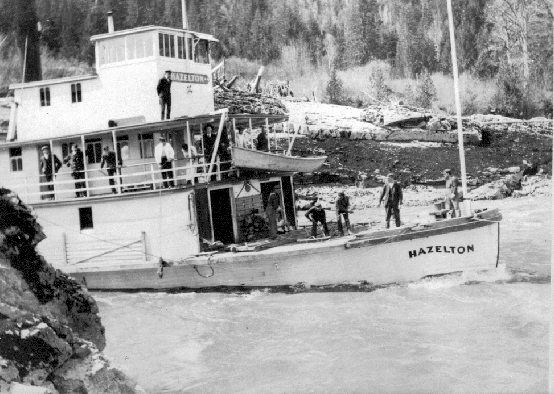
In the late 19th and early 20th centuries, Kitselas Canyon was a pivotal, albeit challenging, point for transportation. Significant efforts were made to facilitate steamboat navigation, including blasting rock ridges and cliffs. Steamboat captains considered it one of the most difficult passages on the river, often requiring winching systems to traverse the turbulent waters. The arrival of the Grand Trunk Pacific Railway brought further transformation, necessitating extensive engineering, including the construction of multiple tunnels and an aerial tramway to transport freight over challenging terrain. Settlements such as Kitselas and Durham emerged to support these activities, though many eventually declined as transportation methods evolved.
Recognition and Modern Context
Recognizing its profound historical and cultural significance, Kitselas Canyon was designated a national historic site in 1972. Although the era of regular steamboat traffic and the intense railway construction boom have passed, the canyon remains a testament to the interplay between natural forces and human endeavor, preserving a rich legacy of Indigenous heritage and early Canadian industrial development.
Source: Wikipedia ↗
Frequently Asked Questions
What is the origin of the name Kitselas Canyon?
The name 'Kitselas' means 'people of the deep gorge or narrows' in the Indigenous language. This name reflects the canyon's distinctive topography and its historical significance to the local First Nations.
What is the geological makeup of Kitselas Canyon?
Kitselas Canyon is situated within the Canadian Cordillera, near the boundary of the Coast Mountains and the Intermontane Belt. The gorge itself cuts through the western part of the Hazelton Mountains, with steep slopes rising to Kitselas Mountain on the west and terraces leading to Bornite Mountain on the east.
What were the historical challenges of navigating Kitselas Canyon?
Steamboat captains considered Kitselas Canyon to be the most difficult and dangerous of the regularly navigated canyons. Vicious eddies were created by the river dividing around rocky islands, and steamboats often had to be winched through turbulent waters using steel cables attached to rings cemented into the canyon walls.
What evidence of Indigenous history is found at Kitselas Canyon?
The area has been occupied for about 5,000 years and contains significant archaeological evidence. This includes petroglyphs, totem poles, culturally modified trees, and the remains of Tsimshian settlements like Gitlaxdzawk and Gitsaex, which were important trade centers.
How did the railway impact Kitselas Canyon?
The construction of the Grand Trunk Pacific Railway involved significant engineering challenges, including the blasting of rock ridges and cliffs, and the tunneling through the canyon walls. The railway also led to the development of settlements like Kitselas and impacted transportation methods, eventually leading to the decline of steamboat traffic.
Is Kitselas Canyon accessible to visitors today?
While the article mentions BC Transit providing passenger transit to the east shore and historical access via train and ferry, current visitor access details are not elaborated upon. However, its designation as a national historic site suggests it is a location of historical interest.
Related Canyons

Agawa Canyon
Agawa Canyon is a shallow canyon in Ontario, Canada, formed approximately 1.2 billion years ago by faulting and later carved by the Agawa River. It is now a popular tourist destination within the Agawa Canyon Wilderness Park, accessible by train or hiking trail, and is renowned for its natural beauty, waterfalls, and seasonal foliage.
Barron River (Ontario)
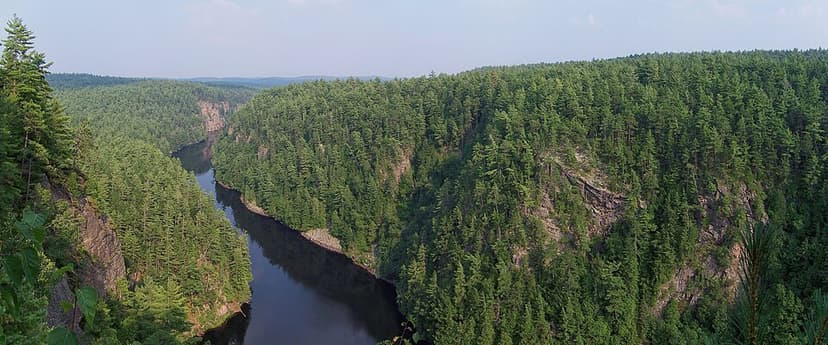
The Barron River is a significant waterway in Ontario, Canada, flowing through Algonquin Provincial Park and forming the southern branch of the Petawawa River. It was primarily formed by glacial meltwater approximately 10,000 years ago, carving out the impressive Barron Canyon. Historically, it served as a crucial route for timber transport, with the canyon's towering cliffs known as the "Capes" by loggers.

Coaticook Gorge
The Coaticook Gorge is a prominent natural feature located in Coaticook, Quebec, within the Estrie region of Canada. Carved by the Coaticook River, this gorge is characterized by its significant depth and length, making it a notable geological site in the area. Its formation is attributed to the erosive power of the river over time.