
Linville Gorge
River Canyon·North America·Linville River
Linville Gorge, often called "The Grand Canyon of North Carolina," is a significant wilderness area in the Southern United States, renowned for its rugged terrain carved by the Linville River. It is one of the few remaining old-growth forests in the Blue Ridge Mountains, largely spared from industrial logging due to its steep and deep topography. The gorge is a vital habitat for diverse plant and animal communities and offers challenging hiking and rock climbing opportunities.
Key Facts
- ›Covers 11,786 acres within Pisgah National Forest.
- ›The river is approximately 1,400 feet below the ridge.
- ›Home to a diverse plant and animal community, including black bears and timber rattlesnakes.
- ›Features popular attractions like Linville Falls, Wiseman's View, and Linville Caverns.
- ›Designated as one of the first Wilderness Areas in the U.S. in 1964.
- ›Has never changed in acreage since its initial designation as a wilderness area.

The Grand Canyon of North Carolina
River Erosion
Linville Falls, Wiseman's View, Linville Caverns, Table Rock, the Amphitheater, the North Carolina Wall, Shortoff Mountain, the Chimneys, Hawksbill Mountain, Gold Coast Cliffs
Bear, Fox, Raccoon, Trout, Grouse, Wild Turkey, Vultures, Owls, Hawks, Copperheads, Timber Rattlesnakes, Peregrine Falcons
Dense Hardwood/Pine Forest, Old Growth Forest
Ee-See-Oh
About Linville Gorge
Linville Gorge, widely recognized as "The Grand Canyon of North Carolina," stands as a remarkable natural landmark and one of the most significant wilderness areas in the Southern United States. It is the third largest wilderness area in North Carolina and is distinguished as one of only two true wilderness gorges in the region, the other being Bald River Gorge Wilderness in Tennessee. Encompassing 11,786 acres within the Pisgah National Forest, the gorge is intricately shaped by the Linville River, which descends approximately 1,400 feet below the surrounding ridges, creating a challenging and rewarding environment for those who explore its depths.
Geological Formation and Significance
The formation of Linville Gorge is a testament to the persistent power of river erosion over vast stretches of time. The formidable topography, characterized by sheer cliffs and deep ravines, was shaped by the Linville River cutting through the landscape. The presence of Jonas Ridge to the east and Linville Mountain to the west further contributed to the gorge's extreme steepness and depth, making much of the interior impractical for settlement. This ruggedness, however, proved to be a crucial factor in its preservation. While logging was a major industry in the surrounding areas in the early 20th century, the forbidding nature of the gorge made industrial extraction unprofitable. Consequently, Linville Gorge is one of the few remaining areas in the Blue Ridge Mountains to boast extensive old-growth forests, with approximately 10,000 acres of virgin timber remaining. The gorge is notable for being remarkably free of man-made structures, and it is the only one of North Carolina's four major gorges without a road traversing its bottom.
Biodiversity and Ecosystem
The Linville Gorge ecosystem is exceptionally diverse, supporting a rich tapestry of plant and animal life. The dense hardwood and pine forests provide habitat for a wide variety of smaller trees and other plants. The fauna is equally varied, with common sightings including black bear, fox, and raccoon. Birdlife is abundant, with grouse, wild turkey, vultures, owls, and hawks inhabiting the area. Reptiles such as copperheads and timber rattlesnakes are also present. The Linville River itself supports a population of trout, including brown, brook, and rainbow varieties, although reaching the prime fishing spots often requires a strenuous descent into the gorge.
Recreation and Access
Linville Gorge offers a range of recreational opportunities, primarily for those seeking a strenuous outdoor experience. Hiking in the gorge is challenging due to the steep terrain, and trails are not as maintained or clearly marked as those found in typical state or national parks. Permits are required for camping on weekends and holidays between May 1 and October 31, with group size limits and duration restrictions in place to preserve the wilderness quality. Rock climbing is permitted throughout the area, with popular climbing spots including Table Rock, The Amphitheater, and Hawksbill Mountain, though certain areas may be temporarily closed due to nesting peregrine falcons.
Historical Context and Protection
Indigenous peoples, specifically the Cherokee, historically inhabited the region, referring to the Linville River as "Ee-see-oh," meaning "river of many cliffs." The river was later named by early European settlers in honor of explorers John and William Linville. The practical impossibility of settlement and resource extraction in the 19th and 20th centuries meant the gorge remained largely untouched. Formal protection efforts began in 1952 with land acquisition funded by John D. Rockefeller. The Linville Gorge Wilderness was officially designated in 1964 as part of the initial National Wilderness Preservation System, and it holds the distinction of being the only gorge or canyon in the United States initially designated as a wilderness area that has maintained its original acreage without alteration. The area is managed by the Grandfather Ranger District of the United States Forest Service.
Source: Wikipedia ↗
Frequently Asked Questions
What is Linville Gorge known for?
Linville Gorge is known as "The Grand Canyon of North Carolina" and is one of only two wilderness gorges in the Southern United States. It is recognized for its extensive old-growth forests, diverse wildlife, and challenging hiking and rock climbing opportunities.
How was Linville Gorge formed?
The gorge was primarily formed by the erosion of the Linville River over a long geological period. The steepness and depth of the gorge are attributed to the challenging topography of the surrounding Jonas Ridge and Linville Mountain.
What kind of activities can I do in Linville Gorge?
Popular activities include strenuous hiking, rock climbing, and photography. Visitors can also explore attractions like Linville Falls and Wiseman's View. Camping is permitted but requires free permits on weekends and holidays.
Is Linville Gorge a protected area?
Yes, Linville Gorge is a designated Wilderness Area, maintained by the United States Forest Service as part of the Pisgah National Forest. It was one of the first areas to be formally protected under the Wilderness Act of 1964.
What is the geology of Linville Gorge?
The gorge is characterized by steep walls and significant depth, with the Linville River flowing approximately 1,400 feet below the surrounding ridges. The area is notable for preserving old-growth forests due to the difficulty of resource extraction in its rugged terrain.
Can I fish or hunt in Linville Gorge?
Fishing for trout in the Linville River is possible, though the terrain makes it challenging. Hunting for game animals like deer and black bear is legal in accordance with local regulations, but is relatively rare due to the inaccessible nature of the gorge.
Related Canyons

Bad Rock Canyon
Bad Rock Canyon is a river canyon located east of Columbia Falls, Montana, through which the Flathead River flows. Historically, it served as a significant buffalo trail for various indigenous tribes and later became a gateway to wilderness areas like the Bob Marshall Wilderness and Glacier National Park. The canyon is also known for frequent rock slides that impact the adjacent BNSF Railway tracks.

Big Bend National Park
Big Bend National Park is a vast protected area in West Texas, notable for its extensive Chihuahuan Desert topography and ecology. Formed by the erosive power of the Rio Grande and significant geological uplift, the park preserves a rich tapestry of life, including over 1,200 plant species and hundreds of animal species, as well as ancient fossils and diverse rock formations. Its remote location and dramatic landscapes, including the Chisos Mountains and deep river canyons, make it a significant destination for naturalists and adventurers.
Big South Fork of the Cumberland River
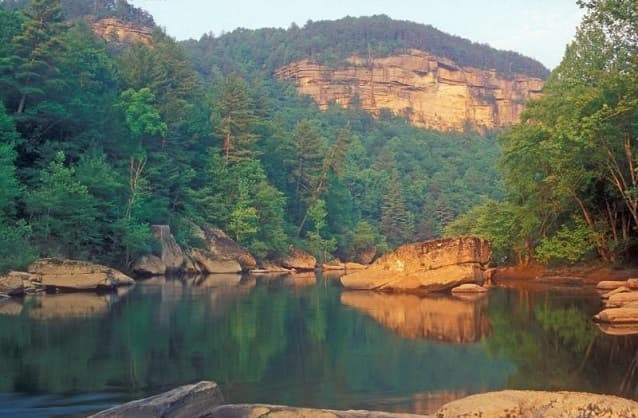
The Big South Fork of the Cumberland River is a significant river system in Tennessee and Kentucky, carved into the Cumberland Plateau. This 76-mile waterway is characterized by rugged terrain with deep gorges, natural arches, and rock shelters, and is the central feature of the Big South Fork National River and Recreation Area. Its formation by river erosion has created a diverse ecosystem and a popular destination for outdoor recreation.