
Little River Canyon
River Canyon·North America·Little River·Sandstone
Little River Canyon is a significant geological feature located on Lookout Mountain in northeast Alabama, carved by the Little River over eons. This mountaintop river and its dramatic canyon are protected as a National Preserve, emphasizing its ecological importance and offering opportunities for recreation and exploration. The canyon is known for its towering sandstone cliffs, pristine waters, and numerous waterfalls.
Key Facts
- ›The canyon is carved by the Little River, sometimes described as the nation's longest mountaintop river.
- ›Its sandstone cliffs can reach up to 600 feet (180 M) in height.
- ›The Little River Canyon Rim Parkway provides scenic views along the canyon's western rim.
- ›Notable waterfalls include Desoto Falls, Little River Falls, and Grace's High Falls, Alabama's highest.
- ›The preserve was established by an Act of Congress in 1992.
- ›The canyon was historically known as "May's Gulf".

May's Gulf
River Erosion
Desoto Falls, Little River Falls, Grace's High Falls, Sandstone Cliffs, Little River Canyon Rim Parkway
About Little River Canyon
Little River Canyon is a significant natural landmark situated atop Lookout Mountain in northeast Alabama, renowned for its dramatic geological formations and the unique mountaintop river that carved it. This expansive canyon, protected as a United States National Preserve since 1992, is a testament to the persistent power of riverine erosion over vast geological timescales. The Little River, often cited as the nation's longest mountaintop river, flows for approximately 74 kilometers, with a substantial portion of its course forming this impressive gorge.
Geological Significance and Features
The canyon's formation is attributed to the Little River's ceaseless work, which has sculpted deep channels into the landscape of Lookout Mountain. The sheer walls of the canyon are composed primarily of sandstone, with cliffs that can ascend to an imposing height of up to 600 feet (180 meters) above the canyon floor. This formidable topography is a key element of its visual appeal and ecological diversity. The river itself is celebrated as one of the cleanest and wildest waterways in the Southern United States. It is largely undammed, contributing to its natural flow and the preservation of its aquatic habitats. Among its most striking features are its waterfalls, including the well-known DeSoto Falls, the cascade at the canyon's entrance known as Little River Falls, and Grace's High Falls, which, at 133 feet (41 meters), is recognized as Alabama's highest waterfall.
Exploration and Access
Visitors can experience the grandeur of Little River Canyon via the 23-mile Little River Canyon Rim Parkway, a scenic drive that skirts the western edge of the canyon, offering numerous vantage points. Access to the canyon floor is possible, with Eberhart Point serving as a convenient, albeit rough, entry point for hikers. This path is a remnant of an older access route. While hiking downstream is more manageable, venturing upstream requires significant bushwhacking skills. The river is also a destination for experienced whitewater enthusiasts. Camping is not currently permitted within the preserve itself, but nearby DeSoto State Park provides lodging and camping options.
Conservation and History
Established to preserve its natural integrity, Little River Canyon National Preserve encompasses 15,288 acres. The area holds historical significance, having been historically referred to as "May's Gulf." Efforts to develop the area for recreation have occurred throughout its history, including a ski-lift and amusement park project in the late 1960s and a "Canyonland Park" in the 1970s and 1980s. These past ventures have left behind some remnants, such as lift pedestals, visible in certain areas. The Jacksonville State University Little River Canyon Center serves as a modern visitor and educational facility within the preserve.
Source: Wikipedia ↗
Frequently Asked Questions
What is Little River Canyon?
Little River Canyon is a deep gorge carved by the Little River on Lookout Mountain in northeast Alabama. It is now protected as a United States National Preserve, recognized for its ecological significance and natural beauty.
How was Little River Canyon formed?
The canyon was formed over vast geologic timescales by the erosive power of the Little River as it winds its way across Lookout Mountain. The river has carved deeply into the mountain's rock layers, creating one of the Southeast's deepest canyons.
What are the main geological features of Little River Canyon?
The canyon is characterized by towering sandstone cliffs that rise up to 600 feet above the canyon floor. It also features several significant waterfalls, including DeSoto Falls, Little River Falls, and Grace's High Falls.
What activities are popular in Little River Canyon National Preserve?
Popular activities include scenic drives along the Little River Canyon Rim Parkway, hiking to the canyon floor (though trails can be challenging), and whitewater paddling for experienced enthusiasts. The day-use area at the mouth of the canyon is popular for picnics and swimming.
Is camping allowed in Little River Canyon National Preserve?
Backcountry camping is no longer permitted within the Little River Canyon National Preserve. However, DeSoto State Park, located within the preserve boundaries, offers various camping facilities.
What is the significance of the Little River itself?
The Little River is notable for being one of the cleanest and wildest waterways in the South. It flows for almost its entire length along the middle of Lookout Mountain, carving the canyon and boasting several major waterfalls.
Related Canyons
Blackhand Gorge
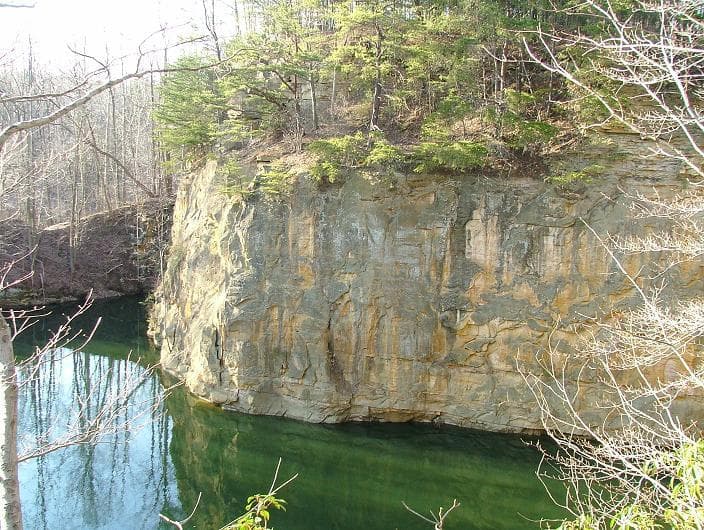
Blackhand Gorge is a 4-mile-long sandstone formation in Licking County, Ohio, carved by the Licking River. Named for a prehistoric petroglyph of a black hand, the gorge has served as a vital transportation corridor for centuries, hosting canal boats, railroads, interurban cars, and automobiles. Designated an Ohio Nature Preserve in 1975, it preserves a unique geological and historical landscape.
Breaks Canyon
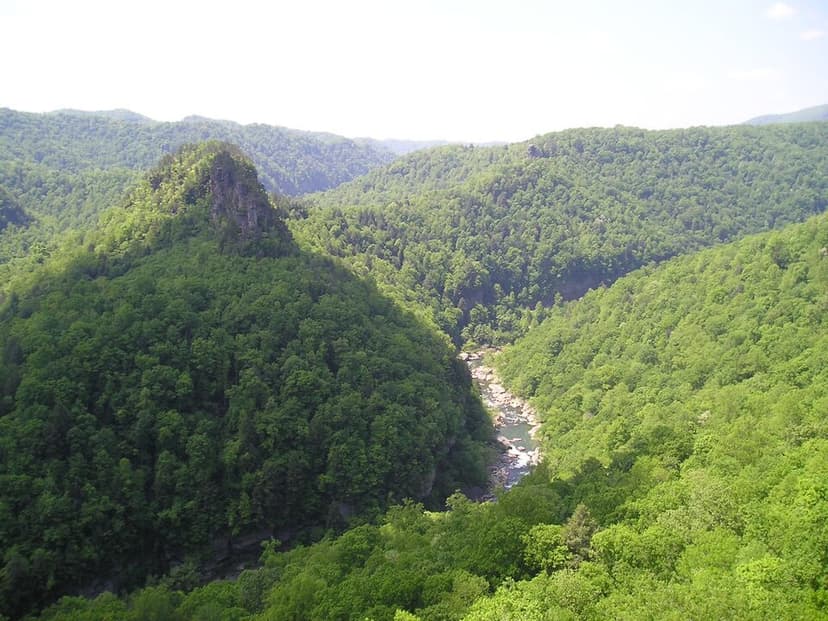
Breaks Canyon, often referred to as "the Breaks" and sometimes called the "Grand Canyon of the South," is a significant gorge carved by the Russell Fork River in southeastern Kentucky and southwestern Virginia. This natural wonder, formed over millions of years of erosion, is a prominent feature within Breaks Interstate Park, a unique bi-state park managed jointly by Virginia and Kentucky.

Canyon de Chelly
Canyon de Chelly National Monument, located in northeastern Arizona, preserves one of North America's longest continuously inhabited landscapes. Established in 1931, it protects the canyons and ruins of indigenous tribes, from the Ancestral Puebloans to the Navajo. The monument is unique as it is entirely owned and cooperatively managed by the Navajo Nation, with approximately 40 Navajo families residing within its boundaries.