
Marble Canyon
Marble Canyon is a dramatic gorge in the Canadian Rockies, British Columbia, carved by Tokumm Creek above its confluence with the Vermilion River. This narrow "box canyon" is characterized by immense boulders wedged across its fissure-like depths, creating a visually striking natural spectacle. Notably, Marble Canyon has gained significant scientific importance due to the discovery of a rich Cambrian fossil site, rivaling the nearby Burgess Shale in its abundance and preservation of soft-bodied organisms.
Key Facts
- ›Located in Kootenay National Park, British Columbia, Canada.
- ›Carved by Tokumm Creek, a tributary of the Vermilion River.
- ›Described as a 'magnificent gorge' or 'box canyon' so narrow that boulders are wedged across it.
- ›A significant Cambrian fossil Lagerstätte has been discovered in or near the canyon.
- ›The fossil site contains numerous species new to science and others previously known only from China.
- ›Fossils found include a wide array of Cambrian soft-bodied organisms, with some species having thousands of specimens recorded.

River Erosion
Boulders Wedged Across the Canyon, Cambrian Fossil LagerstäTte
About Marble Canyon
Marble Canyon is a striking geological formation situated in the Canadian Rockies, within British Columbia's Kootenay National Park. It is defined by the passage of Tokumm Creek as it descends towards its confluence with the Vermilion River. The canyon is characterized by its narrow, fissure-like structure, often referred to as a "box canyon," where enormous boulders have become wedged between the sheer rock walls, creating natural bridges across the gorge. This dramatic topography was noted in early 20th-century geological surveys for its impressive and unique features.
Cambrian Fossil Discoveries
Beyond its scenic grandeur, Marble Canyon has become a site of immense scientific importance due to the discovery of a rich Cambrian fossil Lagerstätte. Announced in 2014, this find includes a remarkable abundance and preservation of soft-bodied organisms, comparable to or even exceeding the renowned Burgess Shale fossil site. Initial excavations revealed that a significant percentage of the observed species were previously unknown to science, with several also identified that were previously only documented in fossil sites in China. The precise location of this valuable paleontological treasure is kept confidential to ensure its protection and integrity for future study.
Source: Wikipedia ↗
Frequently Asked Questions
What is Marble Canyon known for geologically?
Marble Canyon is known for its dramatic gorge, described as a narrow 'box canyon' with large boulders wedged across its depths. It is also a significant site for Cambrian fossils, rivaling the Burgess Shale in the preservation of soft-bodied organisms.
What type of fossils have been found in Marble Canyon?
A rich collection of Cambrian soft-bodied organisms has been discovered in Marble Canyon. Many of these species are new to science, and some were previously only known from fossil sites in China.
Where is Marble Canyon located?
Marble Canyon is situated in the Canadian Rockies of British Columbia, at the north end of Kootenay National Park. It surrounds Tokumm Creek just above its confluence with the Vermilion River.
Is Marble Canyon accessible to visitors?
While the article mentions Numa Falls on the Vermilion River being south of the canyon on Highway 93, it does not provide specific details about visitor access to Marble Canyon itself or the fossil sites.
What is the significance of the Cambrian fossil discoveries at Marble Canyon?
The discoveries at Marble Canyon are significant because they represent a fossil Lagerstätte of comparable importance to the Burgess Shale. The exceptional preservation of soft-bodied organisms provides invaluable insights into early life forms, with a high percentage of newly identified species.
Related Canyons
Canyon Sainte-Anne
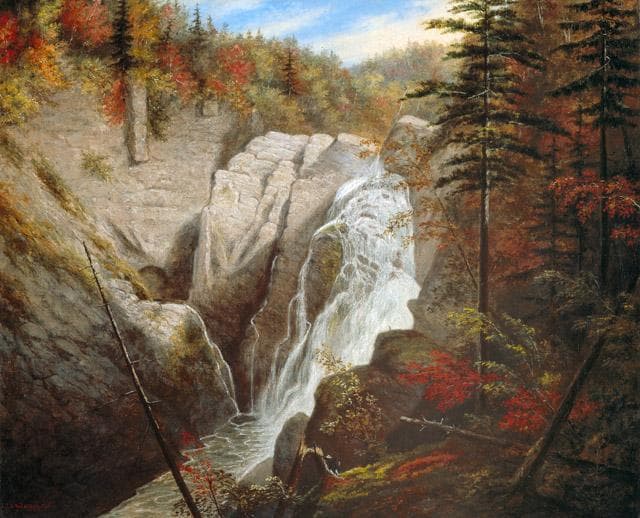
Canyon Sainte-Anne is a steep-sided gorge located east of Beaupré, Quebec, Canada, carved by the Sainte-Anne-du-Nord River. The canyon features a prominent 74-meter waterfall and is situated within the ancient geological formations of the Canadian Shield. It has been a site of natural and cultural interest, drawing visitors for its scenic beauty and recreational activities.

Ouimet Canyon
Ouimet Canyon is a significant gorge located in northwestern Ontario, Canada, protected within Ouimet Canyon Provincial Park. It was formed by the splitting of a billion-year-old diabase sill, likely due to glacial activity and subsequent erosion by wind and rain. The canyon is notable for its depth, width, length, and the presence of rare alpine and arctic plants.
Painted Chasm
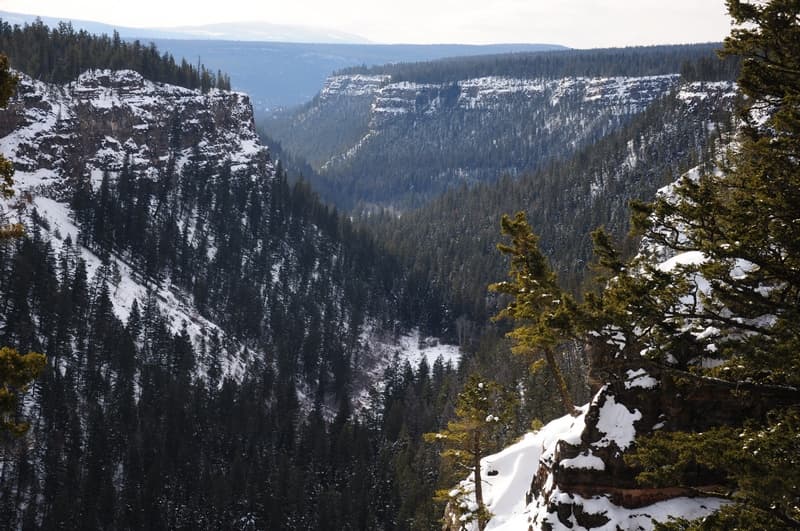
The Painted Chasm is a significant gorge located in British Columbia, Canada, within Chasm Provincial Park. Formed over 10 million years by glacial meltwaters eroding a lava plateau, its colorful walls display a range of red, brown, yellow, and purple hues. The chasm is a protected natural feature, preserving its geological history and supporting diverse wildlife.