
Nazaré Canyon
Submarine Canyon·Portugal
The Nazaré Canyon is a vast submarine canyon located off the coast of Nazaré, Portugal, in the eastern North Atlantic Ocean. As the largest submarine canyon in Europe, it reaches impressive depths of approximately 5,000 meters and extends for about 230 kilometers. Its unique geological formation significantly influences ocean currents and sediment transport, and it is internationally renowned as a premier destination for big wave surfing.
Key Facts
- ›It is the largest submarine canyon in Europe.
- ›Reaches depths of approximately 5,000 meters (16,000 ft).
- ›Extends for about 230 kilometers (140 MI).
- ›Influences ocean circulation and sediment transport between coastal zones and the deep sea.
- ›Known for generating exceptionally large waves, making it a big wave surfing hotspot.
- ›The canyon's V-shaped profile evolves to a flatter floor in its deepest sections.
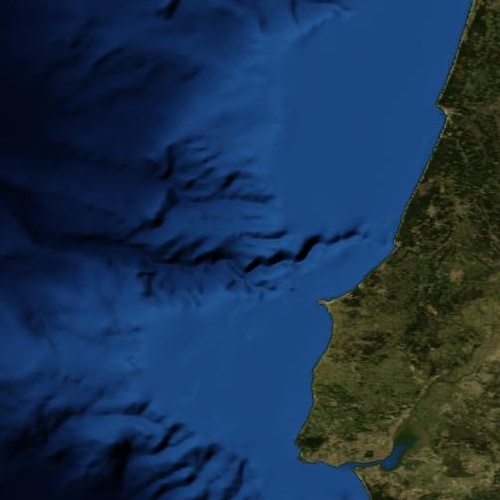
River Erosion, Ocean Currents, Geological Faulting
- V-Shaped Profile In Upper and Middle Sections
- Sinuous Middle Section With Large Ravines
- Flat, Slightly Sinuous Floor In the Deepest Section
- Proximity To the Iberian Abyssal Plain
About Nazaré Canyon
The Nazaré Canyon is a remarkable submarine canyon situated just off the coast of Nazaré, in Portugal's Oeste region, within the eastern North Atlantic Ocean. It holds the distinction of being the largest submarine canyon in Europe, extending approximately 230 kilometers (140 miles) in length and plunging to depths of about 5,000 meters (16,000 feet).
Geological Formation and Structure
The canyon's structure is characterized by distinct sections. The upper portion, extending from about 1 km off Nazaré to the continental shelf edge, features ravines and a V-shaped profile. The middle section, a significant tear in the continental slope, maintains its V-shape and sinuosity, with large ravines leading to the deepest part, the thalweg. The deepest section, extending about 94 km, transitions from a V-shape to a flatter, slightly sinuous floor, ultimately reaching the Iberian Abyssal Plain at over 4,970 meters deep.
Dynamics and Oceanographic Significance
The Nazaré Canyon plays a crucial role in ocean dynamics. It functions as a ripple polarizer, enabling waves to reach the coast with minimal energy loss. This phenomenon is the primary reason why Praia do Norte, adjacent to the canyon, consistently experiences significantly larger waves than other parts of the Portuguese coast. Predominant northern currents act as sedimentary ducts, efficiently transporting particles and sediments between the coastal zone and the deep sea, influencing coastal sedimentary traffic and explaining the absence of extensive sandy beaches south of Nazaré.
Big Wave Surfing Mecca
Beyond its geological and oceanographic importance, the Nazaré Canyon is internationally renowned as a premier destination for big wave surfing. The unique wave-generating capabilities of the canyon have led to numerous world records for the largest waves ever surfed. Athletes such as Garrett McNamara, Rodrigo Koxa, Sebastian Steudtner, and Maya Gabeira have achieved legendary status by riding colossal waves at Nazaré, with wave heights recorded in the tens of meters.
Research and Heritage
The canyon is a subject of ongoing scientific study, including investigations into its specialized ecosystems, sediment transport, and influence on ocean circulation, as part of projects like the EU HERMES initiative. The Portuguese Hydrographic Institute, in collaboration with the Municipality of Nazaré, has established an interpretive center to share the knowledge gained from research in the area. This center also houses information about historical artifacts found in the waters, such as the German submarine U-963, which sank there at the end of World War II.
Source: Wikipedia ↗
Frequently Asked Questions
What is the Nazaré Canyon?
The Nazaré Canyon is a massive submarine canyon situated off the coast of Nazaré, Portugal. It is the largest of its kind in Europe and is notable for its extreme depths and its role in creating world-record-breaking surf waves.
How was the Nazaré Canyon formed?
The canyon is a geological feature formed by processes that carved out the seabed. Its V-shaped profile in shallower sections and the eventual flattening of its floor in deeper parts indicate significant erosion and geological faulting over time.
Why is Nazaré famous for surfing?
Nazaré, particularly Praia do Norte, is world-famous for big wave surfing due to the unique dynamics of the Nazaré Canyon. The canyon acts as a geological feature that channels and amplifies Atlantic swells, allowing waves to travel at greater speeds with less energy dissipation, resulting in enormous wave faces.
What is the maximum depth of the Nazaré Canyon?
The Nazaré Canyon reaches depths of approximately 5,000 meters (16,000 ft). Its deepest end extends to the Iberian Abyssal Plain, with depths exceeding 4,050 meters in its lower section.
What is the significance of the Nazaré Canyon for oceanographic research?
The canyon is a subject of study for projects like the EU HERMES project, investigating its specialized ecosystems, sediment transport, and its influence on and interaction with local ocean circulation patterns. Its role as a 'sedimentary duct' is particularly of interest.
Are there any notable surf records associated with Nazaré Canyon?
Yes, Nazaré Canyon has been the site of numerous world records for the largest waves ever surfed. Surfers like Garrett McNamara, Rodrigo Koxa, Sebastian Steudtner, and Maya Gabeira have set and broken records for riding colossal waves there.
Related Canyons

Avilés Canyon
The Avilés Canyon is a significant submarine canyon system located off the coast of Asturias, Spain, in the Cantabrian Sea. As part of the larger Avilés Canyon System, it extends for approximately 75 kilometers and plunges to depths of nearly 5 kilometers, positioning it among the deepest on the planet. This deep-sea environment is a recognized biodiversity hotspot, supporting a rich array of marine life, including various whale species, numerous starfish, and ancient cold-water coral reefs.
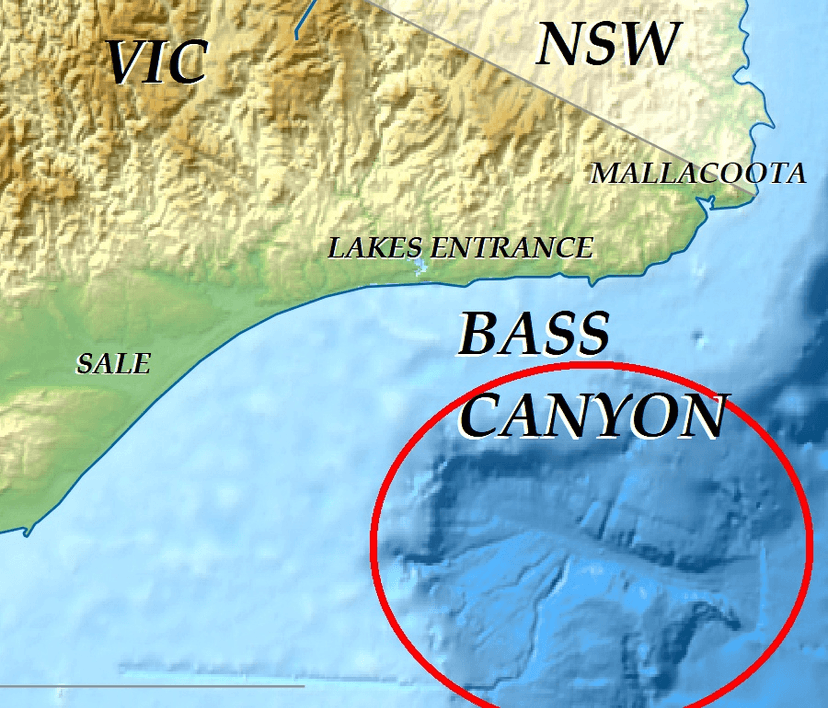
Bass Canyon
Bass Canyon is a vast submarine canyon system located off the coast of eastern Victoria, Australia, in Bass Strait. It is one of the deepest and largest submarine canyons globally, extending over 160 kilometers and reaching depths exceeding 3,000 meters. Its formation is attributed to complex erosional processes involving sediment gravity flows and tectonic activity, with evidence suggesting it has evolved over millions of years.

Bering Canyon
Bering Canyon is the longest submarine canyon in the Bering Sea, stretching approximately 400 km across the continental shelf and slope. It is bordered by the Aleutian Islands to the east and culminates in a submarine channel-lobe system at the Aleutian Basin. Its immense length gives it the largest area among the Bering Sea canyons, despite being narrower at the shelf break than some others.