
Niagara Gorge
River Canyon·North America·Niagara River·Dolomite (Lockport dolomite)
Niagara Gorge is an 11 km long canyon carved by the Niagara River along the Canada-United States border. Its formation is a result of the Niagara Falls' slow erosion of the riverbed's hard dolomite and the rapid erosion of softer underlying layers, causing the falls to recede upstream over thousands of years. The gorge is known for its exceptionally powerful river currents, which have historically posed significant dangers but also offer opportunities for commercial jetboat tours.
Key Facts
- ›The gorge is approximately 11 km (6.8 miles) long.
- ›It was carved by the Niagara River along the Canada-United States border.
- ›The formation is due to the erosive power of Niagara Falls on dolomite and softer underlying rock layers.
- ›The powerful currents within the gorge have led to numerous fatalities.
- ›Commercial jetboat tours offer a way for tourists to experience the rapids.

River Erosion, Waterfall Recession
Niagara Falls, Niagara Escarpment, Niagara Whirlpool, Whirlpool Rapids
About Niagara Gorge
Niagara Gorge is a prominent 11 km (6.8 mile) long canyon that has been sculpted by the relentless flow of the Niagara River along the border between Canada and the United States, specifically between the U.S. state of New York and the Canadian province of Ontario.
Formation and Geology
The gorge originates at the base of the world-renowned Niagara Falls and extends downstream to the edge of the Niagara Escarpment near Queenston, Ontario. The geological formation of the gorge is a direct consequence of the erosive power of Niagara Falls. Over approximately 12,500 years, the falling waters have slowly eroded the riverbed's hard Lockport dolomite, which forms the surface rock of the escarpment. This process is accelerated by the rapid erosion of the softer rock layers situated beneath the dolomite. This continuous cutting action by the river and falls has progressively carved the deep canyon.
Power and Dangers
The Niagara River within the gorge is characterized by some of the most powerful currents found anywhere in the world. These formidable rapids have historically presented extreme dangers, leading to general prohibitions against activities like kayaking. Numerous individuals have lost their lives attempting to navigate these treacherous waters. A notable historical event was the drowning of Captain Matthew Webb, the first person to swim the English Channel, in 1883 while attempting to swim the gorge's rapids as part of a publicity stunt.
Tourism and Access
Despite the inherent dangers, Niagara Gorge is also a significant tourist attraction, offering unique ways for visitors to experience its power. Commercial tours aboard rugged jetboats allow people to traverse the rapids in a controlled and safe manner. These popular tours are accessible from various points, including Niagara-on-the-Lake in Ontario, and Lewiston and Youngstown in New York. During midsummer, tours are also available from the Niagara Glen Nature Centre along the Niagara Parkway in Ontario.
Source: Wikipedia ↗
Frequently Asked Questions
How was Niagara Gorge formed?
Niagara Gorge was formed by the erosive power of the Niagara River, specifically driven by the recession of Niagara Falls. The falls erode the hard Lockport dolomite on the surface while more rapidly eroding the softer layers beneath, gradually carving the canyon over thousands of years.
What are the dangers of Niagara Gorge?
The primary danger of Niagara Gorge is the extremely powerful and fast-moving river currents. These rapids have claimed the lives of individuals attempting to navigate them, leading to general prohibitions on activities like kayaking.
Can I visit Niagara Gorge?
Yes, Niagara Gorge is a significant tourist attraction. Visitors can experience the rapids through commercial jetboat tours that operate from various locations, including Niagara-on-the-Lake, Ontario, and Lewiston, New York.
What is the historical significance of the gorge?
The gorge is historically significant for its role in the recession of Niagara Falls, a natural process that has been occurring for about 12,500 years. It is also remembered for tragic events, such as Captain Matthew Webb's drowning in the rapids while attempting a swim in 1883.
Related Canyons

Bad Rock Canyon
Bad Rock Canyon is a river canyon located east of Columbia Falls, Montana, through which the Flathead River flows. Historically, it served as a significant buffalo trail for various indigenous tribes and later became a gateway to wilderness areas like the Bob Marshall Wilderness and Glacier National Park. The canyon is also known for frequent rock slides that impact the adjacent BNSF Railway tracks.

Big Bend National Park
Big Bend National Park is a vast protected area in West Texas, notable for its extensive Chihuahuan Desert topography and ecology. Formed by the erosive power of the Rio Grande and significant geological uplift, the park preserves a rich tapestry of life, including over 1,200 plant species and hundreds of animal species, as well as ancient fossils and diverse rock formations. Its remote location and dramatic landscapes, including the Chisos Mountains and deep river canyons, make it a significant destination for naturalists and adventurers.
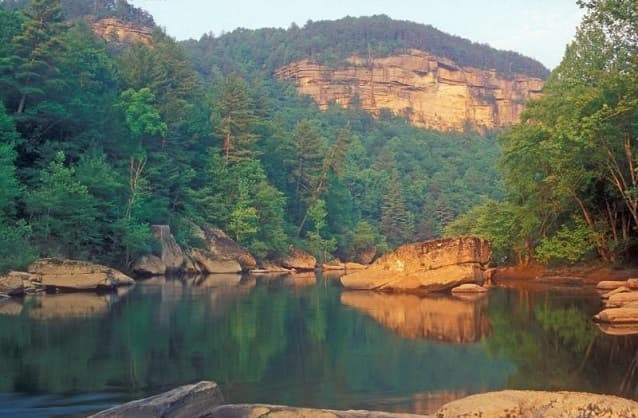
Big South Fork of the Cumberland River
The Big South Fork of the Cumberland River is a significant river system in Tennessee and Kentucky, carved into the Cumberland Plateau. This 76-mile waterway is characterized by rugged terrain with deep gorges, natural arches, and rock shelters, and is the central feature of the Big South Fork National River and Recreation Area. Its formation by river erosion has created a diverse ecosystem and a popular destination for outdoor recreation.