
Olduvai Gorge
Paleoanthropological Site·Tanzania·Pleistocene
Olduvai Gorge is a significant paleoanthropological site located in northern Tanzania within the Great Rift Valley. Its steep-sided ravine exposes sediments from a Pleistocene lake bed, revealing a rich stratigraphic record crucial for understanding early human evolution. The gorge is renowned for the groundbreaking research conducted by Mary and Louis Leakey, who unearthed numerous hominin fossils and stone tools, providing invaluable insights into the development and social complexities of early humans.
Key Facts
- ›Located in the eastern Serengeti Plains within the Ngorongoro Conservation Area, Tanzania.
- ›The gorge is approximately 48 km (30 MI) long and up to 90 M (300 ft) deep.
- ›Named after the Maasai word 'oldupai' meaning 'the place of the wild sisal'.
- ›Key hominin species found include Homo habilis, Paranthropus boisei, and Homo erectus.
- ›Significant for the discovery and classification of the Oldowan stone tool industry.
- ›Recognized as one of the 'Palaeoanthropological Sites of Human Evolution of Laetoli – Olduvai Gorge' by the IUGS.
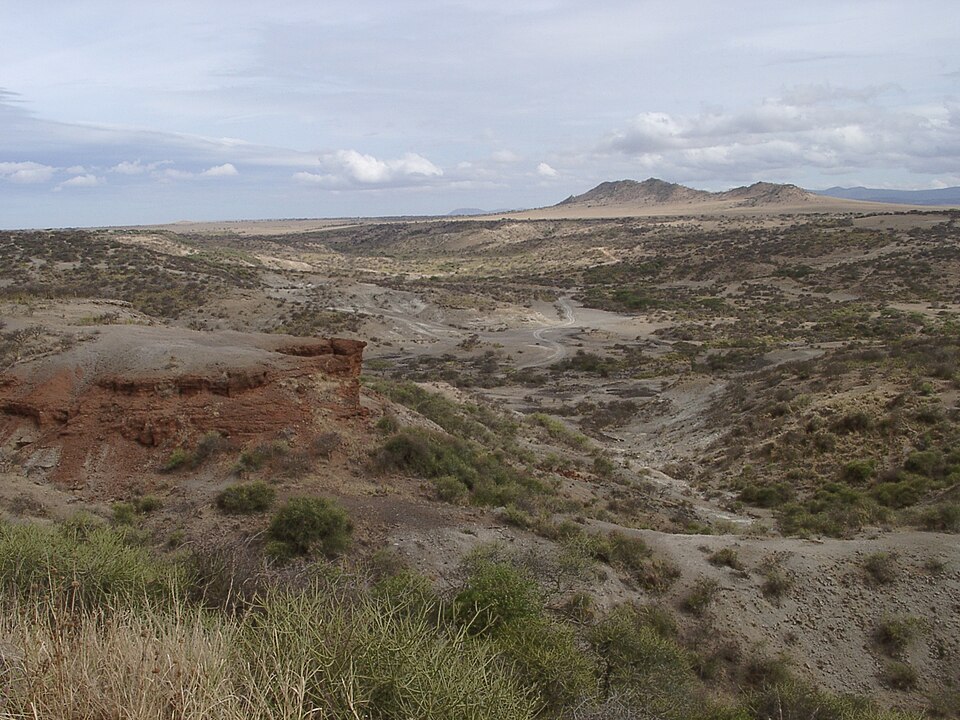
Oldupai Gorge
River Erosion, Pleistocene Lake Bed Sedimentation, Volcanic Ash Deposition
Stratigraphic Sequence of Beds I-V, Fossils of Early Hominins, Oldowan Stone Tool Industry, Volcanic Ash Layers, Prehistoric Lake Shorelines
Birds, Fish, Amphibians, Large Mammals
East African Wild Sisal
Oldupai
About Olduvai Gorge
Olduvai Gorge: A Cradle of Human Evolution
Olduvai Gorge, also known as Oldupai Gorge, is a profoundly significant paleoanthropological site nestled within the Great Rift Valley in northern Tanzania. This steep-sided ravine, stretching approximately 48 kilometers (30 miles) and plunging up to 90 meters (300 feet) in depth, exposes a remarkable stratigraphic sequence of Pleistocene lake bed sediments. These layers have proven invaluable for piecing together the intricate story of early human evolution, providing a window into our ancient past.
The gorge derives its name from the Maasai word 'oldupai,' meaning 'the place of the wild sisal,' a plant that thrives in the region. The geological history of Olduvai Gorge is marked by the deposition of lake sediments and periodic volcanic ash from nearby volcanoes like Olmoti and Kerimasi, which helped preserve the fossils found within. The erosion of these sediments by water has exposed a rich trove of archaeological and paleontological evidence.
A Legacy of Discovery
The site gained international renown through the pioneering research of paleoanthropologists Mary and Louis Leakey. Their meticulous excavations, spanning decades, led to groundbreaking discoveries that revolutionized the understanding of human origins. Among the most significant finds are fossils of early hominin species, including Homo habilis (appearing around 1.9 million years ago), Paranthropus boisei (around 1.8 million years ago), and Homo erectus (around 1.2 million years ago). Evidence suggests Homo sapiens may have occupied sites in the gorge as recently as 17,000 years ago.
The Dawn of Tool Use
Olduvai Gorge is also critically important for its association with the earliest stone tool industries. The Leakeys identified and classified the Oldowan tool industry, characterized by simple choppers and chipped pebbles, which are found in the lower stratigraphic layers (Beds I and II). These tools provide evidence of early hominin cognitive abilities, problem-solving skills, and their increasing reliance on manufactured implements for survival, such as butchering meat and processing plant materials. The development of more sophisticated toolkits, such as the Developed Oldowan and Acheulean industries, is also documented in later layers of the gorge.
Insights into Early Hominin Life
The fossil and artifact record at Olduvai Gorge offers tantalizing glimpses into the lives of early hominins. Evidence of scavenging and hunting, indicated by gnaw marks and cut marks on animal bones, alongside the collection of tools and remains in central areas, suggests developing social interactions and communal activities. The analysis of tool use and faunal remains helps researchers reconstruct early hominin diets, which likely involved a combination of gathered plant foods and scavenged or hunted meat.
Modern Recognition and Access
Olduvai Gorge is recognized as a National Historic Site of Tanzania and is a key component of the Ngorongoro Conservation Area. In 2022, the 'Palaeoanthropological Sites of Human Evolution of Laetoli – Olduvai Gorge' were included in the International Union of Geological Sciences' (IUGS) list of 100 geological heritage sites worldwide, underscoring its international scientific significance. A monument and museum are situated at the site, serving to commemorate its importance and educate visitors about the profound discoveries made there, making it a vital destination for those interested in human evolution.
Source: Wikipedia ↗
Frequently Asked Questions
What is Olduvai Gorge and why is it important?
Olduvai Gorge is a significant paleoanthropological site in Tanzania, famous for its rich fossil record of early human evolution. It has yielded crucial evidence of hominin species, stone tools, and early human behavior, contributing immensely to our understanding of human origins.
What geological processes formed Olduvai Gorge?
The gorge was formed by erosion cutting into the sediments of a Pleistocene lake bed, with its depth reaching up to 90 meters (300 ft). Periodic flows of volcanic ash from nearby volcanoes also played a role in preserving the fossils found within the gorge.
Which early human species have been found at Olduvai Gorge?
Several important early human species have been discovered at Olduvai Gorge, including Homo habilis (around 1.9 million years ago), Paranthropus boisei (around 1.8 million years ago), and Homo erectus (around 1.2 million years ago). Homo sapiens is also thought to have occupied sites in the gorge around 17,000 years ago.
What are the Oldowan tools found at Olduvai Gorge?
The Oldowan stone tool industry, first described by Louis Leakey, consists of simple choppers and chipped pebbles. These tools, found in Beds I-IV, represent some of the earliest evidence of tool-making by early hominins and are crucial for understanding their technological development.
Who were the primary researchers at Olduvai Gorge?
The British/Kenyan paleoanthropologist-archeologist team of Mary and Louis Leakey conducted extensive excavations and made many of the most important discoveries at Olduvai Gorge. Their work significantly advanced the scientific understanding of early human evolution.
Can I visit Olduvai Gorge?
Yes, Olduvai Gorge is a tourist attraction and is accessible to visitors. A monument and museum are located at the site, providing educational exhibits and context for the gorge's significance.
Related Canyons
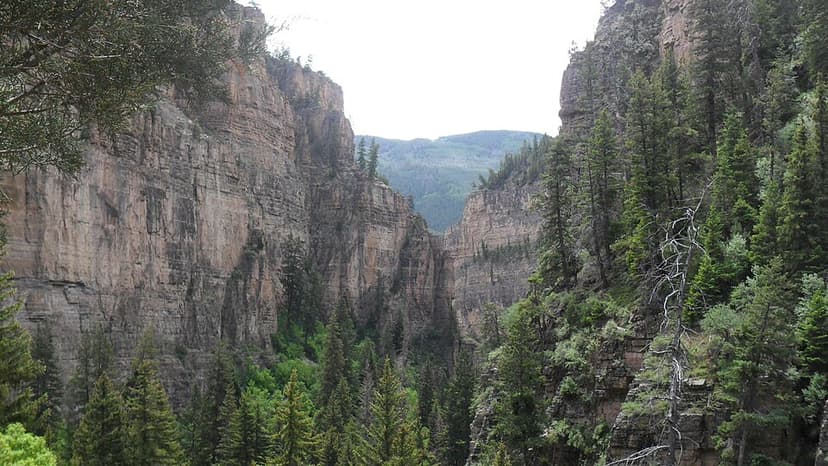
Glenwood Canyon
Glenwood Canyon is a rugged and scenic 20 km canyon in western Colorado, carved by the Colorado River. Its formation during the Pleistocene epoch involved the rapid erosion of sedimentary rock layers, including sandstone and Cambrian rock. Historically significant as a transportation corridor, it currently hosts Interstate 70 and a major railroad line, making it a notable natural feature on the U.S. Interstate Highway System.
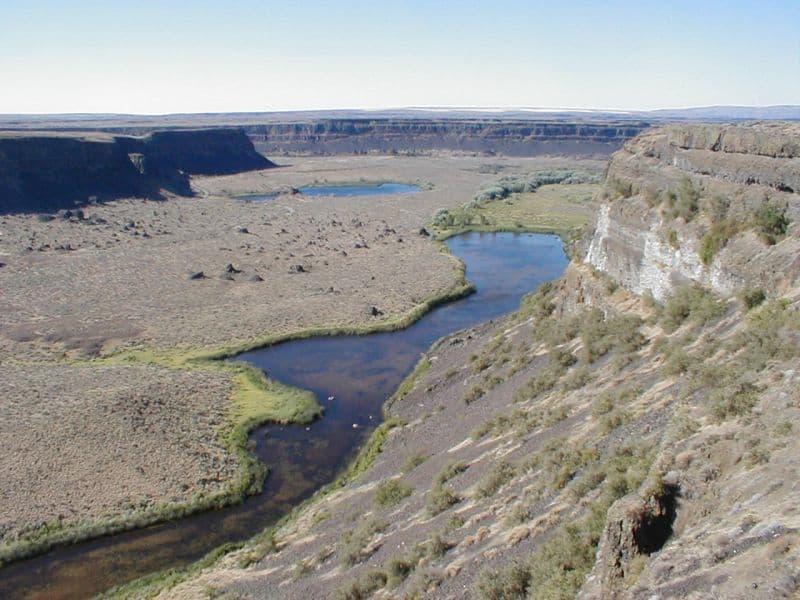
Grand Coulee
Grand Coulee is an ancient, 60-mile-long river bed in Washington State, U.S., bisected by Dry Falls into the Upper and Lower Grand Coulee. This immense geological feature was primarily carved by catastrophic glacial floods originating from Glacial Lake Missoula during the Pleistocene epoch, a process that stripped away soil and carved deep canyons. Today, the Upper Grand Coulee serves as Banks Lake, a vital part of the Columbia Basin Project for irrigation and recreation.

Moses Coulee
Moses Coulee is a significant canyon located in the Waterville Plateau region of Douglas County, Washington. It is the second-largest and westernmost canyon of the Channeled Scablands, believed to have been carved by immense glacial outburst floods during past ice ages, with discharges exceeding 600,000 m3/s. The coulee's formation is attributed to glacial meltwaters, though the precise origins and age of these floods remain debated among researchers, with theories pointing to floods from glacial Lake Missoula or subglacial floods from the Okanogan Lobe.