
Oribi Gorge
River Canyon·South Africa·Proterozoic·Mzimkulwana River
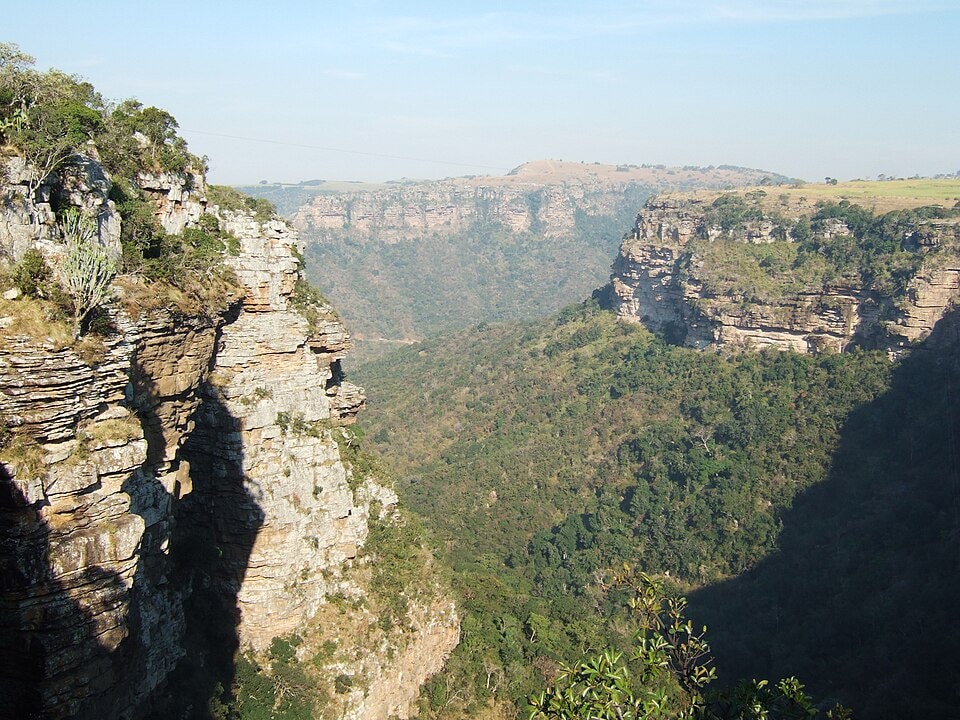
Oribi Gorge is a significant canyon in Kwazulu-Natal, South Africa, carved by the Mzimkulwana River and forming the eastern of two gorges through the Oribi Flats. Its dramatic depths and crags, covered in subtropical vegetation, reveal ancient geological formations, including over a billion-year-old basement rock and sandstone cliffs deposited approximately 365 million years ago. The gorge is named after the oribi antelope and is a protected nature reserve.
Key Facts
- ›Approximately 400 meters deep.
- ›Nearly 5 kilometers wide at its widest point.
- ›Cliffs formed by Msikaba formation sandstones, deposited around 365 million years ago.
- ›Basement rocks are over 1000 million years old.
- ›Named after the oribi antelope.
- ›Part of the Oribi Gorge Nature Reserve, proclaimed in 1950.
River Erosion
Kloofs, Crags, Sandstone Cliffs, Subtropical Vegetation
Oribi Antelope, Monitor Lizards, Bushbuck, Duiker, Reedbuck, Vervet Monkeys, Samango Monkeys, Frogs, Turtles, Small Mammals
Subtropical Vegetation, Dense Forest
About Oribi Gorge
Oribi Gorge is a dramatic canyon situated in southern KwaZulu-Natal, South Africa, approximately 35 kilometers northwest of Port Shepstone. It is the eastern of two significant gorges that traverse the Oribi Flats, an area of flat sugarcane farmland. This impressive natural feature was carved by the Mzimkulwana River, with a parallel western gorge formed by the Mzimkulu River. The gorge plunges to depths of around 400 meters and can reach nearly 5 kilometers in width at its broadest points.
Geological Formation and Age
The erosion by these rivers has sculpted approximately 30 kilometers of spectacular kloofs and crags, now adorned with lush subtropical vegetation. The geological history of Oribi Gorge is ancient. At the base of its towering cliffs lie basement rocks belonging to the Namaqua-Natal Metamorphic Province, which are over a billion years old. The cliffs themselves are predominantly composed of Msikaba formation sandstones, deposited by a fluvial environment around 365 million years ago. Downstream from the gorges, a large surface mine extracts limestone for cement production.
Flora and Fauna
The dense forests that cloak the sandstone slopes within the gorge provide a habitat for various small mammals. Along the riverbanks, large monitor lizards, known locally as leguaans, excavate their burrows. The gorge derives its name from the oribi, a small antelope that inhabits these environments. Other notable vertebrates found in the area include bushbuck, duiker, reedbuck, vervet monkeys, and Samango monkeys, alongside various species of frogs and turtles.
Conservation and Access
Oribi Gorge is largely encompassed by the Oribi Gorge Nature Reserve, established in 1950 as a protected state forest. This reserve is situated along the bottom of the gorge, near the confluence of the Mzimkulu and Mzimkulwana Rivers. The road that winds through Oribi Gorge was notably built by Italian prisoners of war. The area is a significant natural attraction, offering visitors a glimpse into ancient geological processes and a rich biodiversity.
Source: Wikipedia ↗
Frequently Asked Questions
How was Oribi Gorge formed?
Oribi Gorge was primarily carved by the erosive power of the Mzimkulwana River. This process, over millions of years, shaped the spectacular kloofs and crags seen today. The surrounding Oribi Flats also contain a western gorge formed by the Mzimkulu River.
What is the geology of Oribi Gorge?
The basement rocks at the base of the cliffs are part of the Namaqua-Natal Metamorphic Province, dating back over 1000 million years. The prominent cliffs are composed of Msikaba formation sandstones, which were deposited in a fluvial environment approximately 365 million years ago.
What kind of wildlife can be found in Oribi Gorge?
Oribi Gorge is home to various animals, including the oribi antelope, monitor lizards (leguaans), bushbuck, duiker, reedbuck, vervet monkeys, and Samango monkeys. Frogs and turtles are also present, and the dense forest supports small mammals.
Is Oribi Gorge a protected area?
Yes, the area encompassing Oribi Gorge is a protected nature reserve. The Oribi Gorge Nature Reserve was proclaimed a protected state forest in 1950 and is managed by Ezemvelo KZN Wildlife.
What are the dimensions of Oribi Gorge?
Oribi Gorge is approximately 400 meters deep and nearly 5 kilometers wide at its widest point. The nature reserve itself stretches approximately 27 kilometers in length and is about 1 kilometer wide at its widest point.
Related Canyons
Komati Gorge
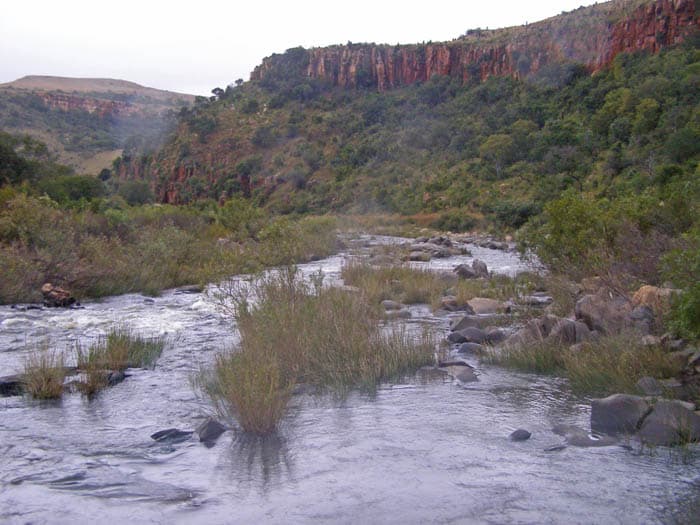
Komati Gorge is a significant river valley in Mpumalanga Province, South Africa, characterized by its striking vertical sandstone cliffs. These geological formations provide a crucial habitat for a diverse array of wildlife, including numerous plant and animal species, some of which are endemic and endangered. The gorge's unique geology, with exposures of ancient formations like the Kromberg Formation, and its rich biodiversity make it a notable natural area.

Agawa Canyon
Agawa Canyon is a shallow canyon in Ontario, Canada, formed approximately 1.2 billion years ago by faulting and later carved by the Agawa River. It is now a popular tourist destination within the Agawa Canyon Wilderness Park, accessible by train or hiking trail, and is renowned for its natural beauty, waterfalls, and seasonal foliage.

Blyde River Canyon
The Blyde River Canyon, located in Mpumalanga, South Africa, is a significant natural wonder renowned as the third-largest canyon globally. Unlike other major canyons, it is characterized as a "green canyon" due to its lush subtropical vegetation. The canyon forms a key part of the Blyde River Canyon Nature Reserve and is a prominent feature along the popular Panorama Route.