
Blyde River Canyon
River Canyon·South Africa·Blyde River (now Motlatse River)
The Blyde River Canyon, located in Mpumalanga, South Africa, is a significant natural wonder renowned as the third-largest canyon globally. Unlike other major canyons, it is characterized as a "green canyon" due to its lush subtropical vegetation. The canyon forms a key part of the Blyde River Canyon Nature Reserve and is a prominent feature along the popular Panorama Route.
Key Facts
- ›Approximately 26 km in length.
- ›Ranked as the third-largest canyon in the world.
- ›Features the "three Rondavels" rock formation, resembling African houses.
- ›Known as a "green canyon" due to its abundant subtropical vegetation.
- ›Home to the Kadishi Tufa waterfall, the second tallest tufa waterfall globally.
- ›Part of the Blyde River Canyon Nature Reserve and the Panorama Route.

Motlatse River Canyon
River Erosion
Three Rondavels, Kadishi Tufa Waterfall
Hippos, Crocodiles, Fish Species, Antelope Species, Greater Bushbabies, Lesser Bushbabies, Vervet Monkeys, Samango Monkeys, Narina Trogon, Cape Vulture, Black Eagle, Crowned Eagle, African Fish Eagle, Gymnogene, Jackal Buzzard, White-Rumped Vulture, Bald Ibis, African Finfoot, Knysna Lourie, Purple-Crested Lourie, Gurney's Sugarbird, Malachite Sunbird, Cinnamon Dove, African Emerald Cuckoo, Red-Backed Mannikin, Golden-Tailed Woodpecker, Olive Bush Shrike, Green Twinspot, Taita Falcons, Cape Eagle Owl, White-Faced Owl, Wood Owl, Peregrine Falcon, Black-Breasted Snake Eagle, Wahlberg's Eagle, Long-Crested Eagle, Lanner Falcon, Red-Breasted Sparrowhawk, Rock Kestrel
Subtropical Vegetation
About Blyde River Canyon
The Blyde River Canyon is a significant natural landmark in Mpumalanga, South Africa, distinguished by its status as the third-largest canyon on Earth. Stretching approximately 26 kilometers, it stands apart from other major canyons like the Grand Canyon and Fish River Canyon by being a "green canyon," characterized by its abundant subtropical vegetation.
Formation and Geology
The canyon's formation is primarily attributed to river erosion by the Blyde River, which now bears the name Motlatse River. Among its notable geological features is the "Three Rondavels," a striking rock formation that resembles three traditional African houses. Another remarkable geological site within the canyon is the Kadishi Tufa waterfall, recognized as the second tallest tufa waterfall globally. Tufa waterfalls form when water flowing over dolomite rock absorbs calcium, leading to rapid deposition of rock formations.
Flora and Fauna
The Blyde River Canyon is a biodiversity hotspot, supporting a wide array of life. Its ecosystem includes numerous species of fish and antelope, as well as hippos and crocodiles. The canyon is also home to all primate species found in South Africa, such as greater and lesser bushbabies, vervet monkeys, and Samango monkeys. The avian diversity is equally impressive, with a multitude of bird species, including sought-after birds like the Narina trogon, and raptors such as the Cape vulture and black eagle.
Tourism and Conservation
Part of the Blyde River Canyon Nature Reserve, the canyon is a central attraction along the popular Panorama Route, which begins in the town of Graskop and includes other notable sites like God's Window and Bourke's Luck Potholes. The canyon and the surrounding Drakensberg escarpment form a highly frequented tourist region with a well-established tourism industry and good infrastructure. Conservation efforts in the broader Blyde River basin, including initiatives within the Kruger to Canyons Biosphere Region, focus on catchment restoration and managing invasive alien plants.
Source: Wikipedia ↗
Frequently Asked Questions
What is the Blyde River Canyon?
The Blyde River Canyon is a large canyon in Mpumalanga, South Africa, recognized as the third-largest canyon on Earth. It is distinguished by its rich subtropical vegetation, earning it the nickname "green canyon."
What geological formations are notable in the Blyde River Canyon?
A prominent feature is the "Three Rondavels," a rock formation that resembles three traditional African houses. Additionally, the Kadishi Tufa waterfall, the second tallest of its kind in the world, is found within the canyon and is known for its striking resemblance to a crying face.
What kind of nature reserve is the Blyde River Canyon part of?
The canyon is a significant component of the Blyde River Canyon Nature Reserve. This reserve is part of a broader conservation effort within the Kruger to Canyons Biosphere Region.
What activities are available for tourists in the Blyde River Canyon area?
The Blyde River Canyon and its surrounding Drakensberg escarpment are very popular tourist destinations. The area boasts a well-developed tourism industry supported by good public infrastructure, and the canyon is part of the scenic Panorama Route.
What is the origin of the name "Blyde River Canyon"?
The canyon is named after the Blyde River, which flows through it. The name "Blyde" is derived from old Dutch, meaning "glad" or "happy." It was given in 1844 by Voortrekkers who returned safely after being presumed dead.
Has the name of the Blyde River or Canyon changed?
Yes, in 2005, the Blyde River was officially renamed the Motlatse River. Following this, the Mpumalanga Provincial Government announced plans to rename the canyon as well.
Related Canyons
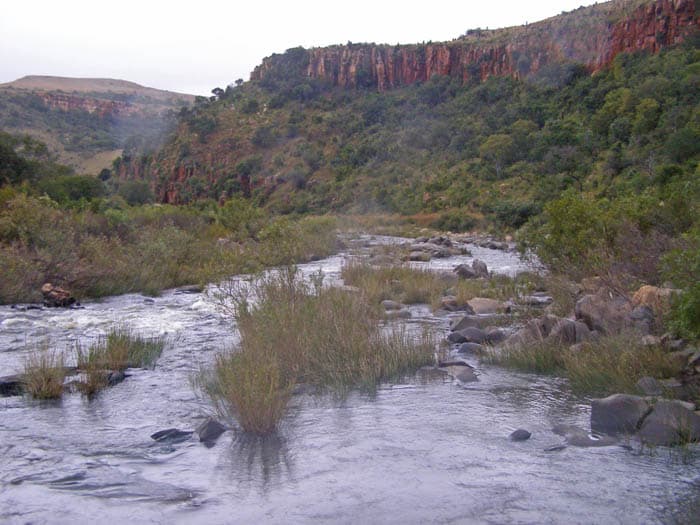
Komati Gorge
Komati Gorge is a significant river valley in Mpumalanga Province, South Africa, characterized by its striking vertical sandstone cliffs. These geological formations provide a crucial habitat for a diverse array of wildlife, including numerous plant and animal species, some of which are endemic and endangered. The gorge's unique geology, with exposures of ancient formations like the Kromberg Formation, and its rich biodiversity make it a notable natural area.
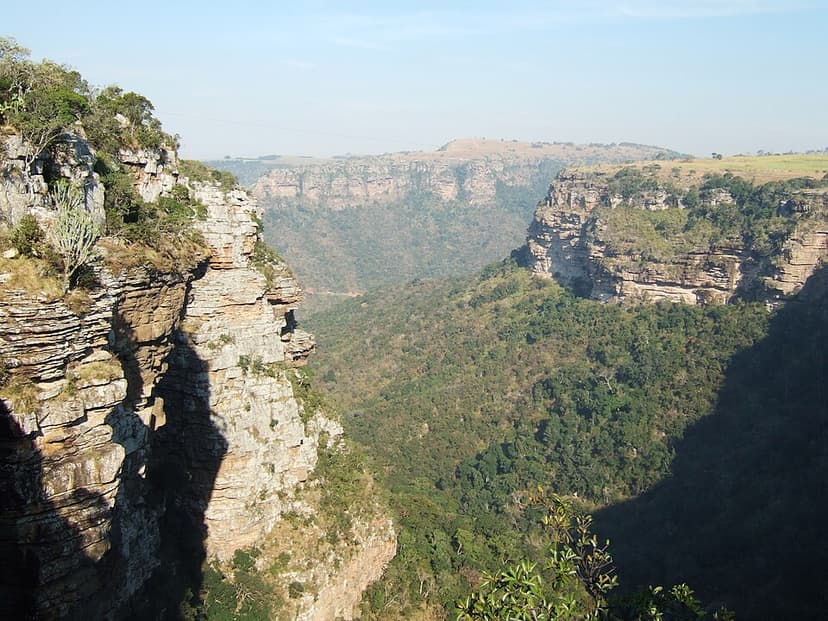
Oribi Gorge
Oribi Gorge is a significant canyon in Kwazulu-Natal, South Africa, carved by the Mzimkulwana River and forming the eastern of two gorges through the Oribi Flats. Its dramatic depths and crags, covered in subtropical vegetation, reveal ancient geological formations, including over a billion-year-old basement rock and sandstone cliffs deposited approximately 365 million years ago. The gorge is named after the oribi antelope and is a protected nature reserve.

Aare Gorge
The Aare Gorge is a dramatic canyon carved through a limestone ridge near Meiringen, Switzerland, by the Aare River. Formed approximately 10,000 years ago by glacial meltwater erosion at the end of the Ice Age, this narrow passage features sheer cliffs and is a significant tourist attraction, partly due to its proximity to the famous Reichenbach Falls.