
Spearfish Canyon
Gorge·North America·Paleogene·Spearfish Creek
Spearfish Canyon is a deep, narrow gorge in Lawrence County, South Dakota, carved by Spearfish Creek. Located in the Black Hills, it is traversed by the Spearfish Canyon Scenic Byway, which follows an old railroad grade. The canyon showcases ancient Precambrian rocks and a diverse ecosystem, making it a significant site for geological study and a popular natural attraction.
Key Facts
- ›Carved by Spearfish Creek in Lawrence County, South Dakota.
- ›Located within the Black Hills, on the northern edge of the Black Hills National Forest.
- ›Traversed by the Spearfish Canyon Scenic Byway (U.S. Route 14A).
- ›Features high walls composed of Deadwood Shale, Englewood Limestone, and Paha Sapa Limestone.
- ›Supports a diverse flora and fauna, including Ponderosa pines, various bird species, deer, and introduced mountain goats.
- ›The canyon's geology includes Precambrian rocks, making it a site of geological study.

River Erosion
Bridal Veil Falls, Precambrian Rocks, Deadwood Shale, Englewood Limestone, Paha Sapa Limestone
Turkey, Bluejay, Woodpecker, Cliff Swallow, Chickadee, Golden Eagle, Bald Eagle, White-Tailed Deer, Mule Deer, Porcupine, Raccoon, Squirrel, Chipmunk, Bobcat, Yellow-Bellied Marmot, Mountain Goat, Pahasapa Mountain Snail
Ponderosa Pine, Rocky Mountain Flora, Eastern Woodland Flora, Northern Forest Flora, Great Plains Flora
Pahasapa
About Spearfish Canyon
Spearfish Canyon: A Geological and Ecological Crossroads
Spearfish Canyon is a notable deep, narrow gorge situated in Lawrence County, South Dakota, U.S., just south of the city of Spearfish. Carved by the persistent flow of Spearfish Creek, this natural wonder is an integral part of the Black Hills region, lying on the northern periphery of the Black Hills National Forest. A significant feature of the canyon is the Spearfish Canyon Scenic Byway, designated as U.S. Route 14A, which guides visitors through its dramatic landscapes, tracing an old railroad grade that was rendered unusable after severe flooding in 1933.
Natural History and Geology
The geological history of Spearfish Canyon is marked by extreme antiquity, with Precambrian rocks exposed along the creek bed offering insights into the Earth's distant past. Approximately 600 million years ago, the area was submerged beneath a sea. Later, between 60 and 30 million years ago, during the Paleocene and Oligocene epochs, as landmasses emerged and tectonic forces shaped the terrain, drainages like Spearfish Canyon began to form through the erosion of softer rock layers. The canyon's imposing walls are characterized by three primary rock types: the Cambrian to Ordovician Deadwood Shale at the base, identifiable by its brown hue and multi-layered appearance; the Englewood Limestone in the middle, presenting pink to red tones; and the thickest layer, the Paleogene Paha Sapa Limestone at the top, which is buff-colored and weathers to gray. This uppermost limestone layer is known for frequently containing caves and fossils.
Flora and Fauna
Spearfish Canyon is a biodiversity hotspot, hosting a rich variety of plant and animal life. It supports a significant portion of the plant species found in South Dakota, with Ponderosa pines being the most prevalent vegetation. The canyon's unique location makes it a crossroads for different ecological zones, allowing trees and plants from the Rocky Mountains, eastern woodlands, northern forests, and the Great Plains to coexist. Bird species such as turkeys, bluejays, woodpeckers, cliff swallows, chickadees, and eagles are common. Mammalian life includes white-tailed and mule deer, porcupines, raccoons, squirrels, chipmunks, bobcats, and yellow-bellied marmots. Notably, mountain goats, introduced in the 1920s, are frequently observed in the vicinity of Bridal Veil Falls. The Pahasapa, or Black Hills, Mountain Snail, a rare and declining species endemic to the Black Hills, also inhabits the area.
Access and Significance
The Spearfish Canyon Scenic Byway provides access to the canyon's splendor, making it a popular destination for tourists and nature enthusiasts. Its geological formations and diverse ecosystems make it a valuable site for scientific study, particularly for geologists examining the ancient rock strata. The canyon's blend of natural beauty, historical significance through its old railroad route, and rich biodiversity solidifies its importance as a key natural attraction within the Black Hills.
Source: Wikipedia ↗
Frequently Asked Questions
How was Spearfish Canyon formed?
Spearfish Canyon was formed through erosion by Spearfish Creek. As land masses emerged between 60 to 30 million years ago, drainages developed, carving through softer rock layers to create the gorge.
What kind of rocks are found in Spearfish Canyon?
The canyon walls are primarily composed of three rock types. At the bottom is the Deadwood Shale, followed by the Englewood Limestone in the middle, and the Paha Sapa Limestone forming the top layer.
What wildlife can be seen in Spearfish Canyon?
Visitors may spot a variety of wildlife, including white-tailed and mule deer, porcupines, raccoons, squirrels, and chipmunks. Mountain goats are commonly seen near Bridal Veil Falls, and various bird species inhabit the area.
What is the Spearfish Canyon Scenic Byway?
The Spearfish Canyon Scenic Byway is a designated route that travels through the canyon along U.S. Route 14A. It follows an old railroad grade and offers scenic views of the canyon's natural beauty.
Are there any unique plant species in Spearfish Canyon?
Spearfish Canyon is home to a wide variety of plant species, with many found within the Black Hills region. Ponderosa pines are a prominent vegetation type, and the canyon supports a mix of flora from different ecological zones.
Related Canyons
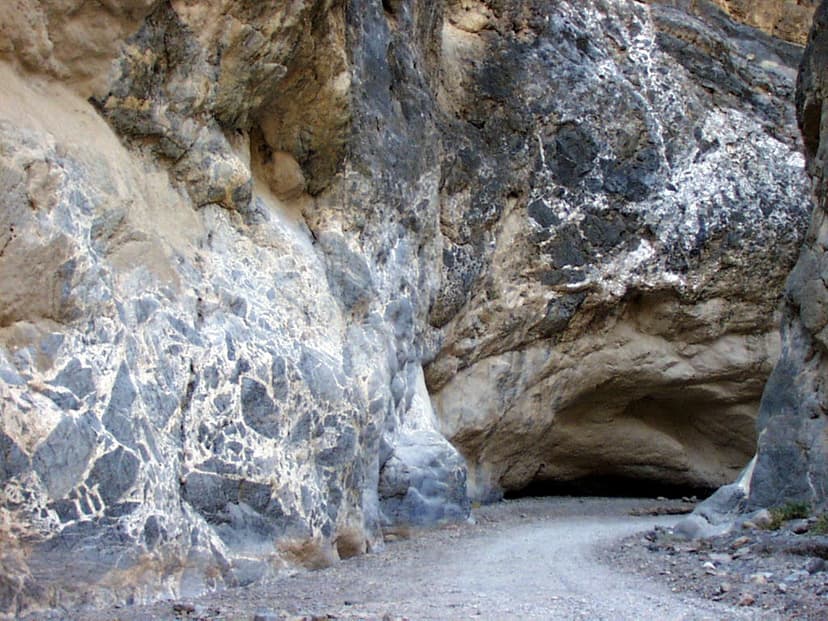
Titus Canyon
Titus Canyon is a deep, narrow gorge situated in the Grapevine Mountains within Death Valley National Park, straddling the border of California and Nevada. Its formation is a result of geological processes that uplifted ancient limestone layers, which were subsequently carved by erosion. The canyon is significant for its unique geological formations, ancient petroglyphs left by indigenous peoples, and its desert ecosystem, making it a notable natural and historical site.
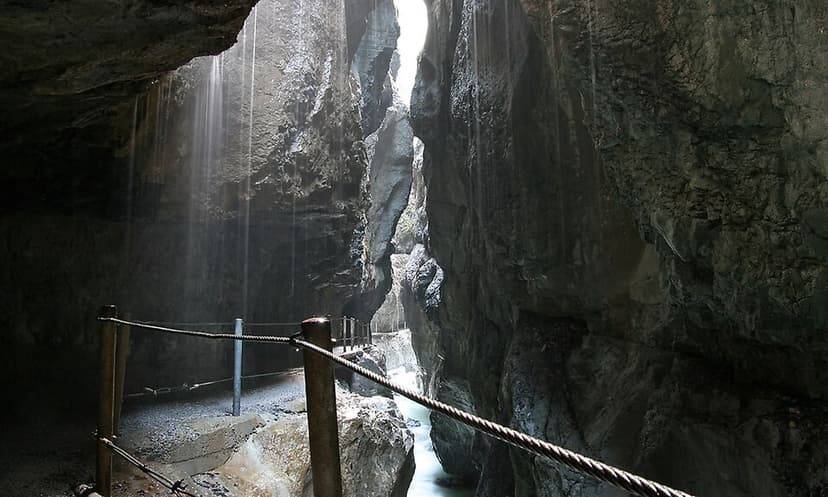
Partnach Gorge
The Partnach Gorge is a deep gorge located near Garmisch-Partenkirchen in Bavaria, Germany. It was formed by the erosive power of the Partnach stream, which cut through layers of muschelkalk and softer marls over millions of years. Designated a natural monument in 1912, it has been developed for tourism and is accessible year-round.

Smoke Hole Canyon
Smoke Hole Canyon is a rugged 20-mile-long gorge carved by the South Branch Potomac River in eastern West Virginia's Allegheny Mountains. Its dramatic landscape is defined by steep cliffs and numerous caves, with its formation involving a significant "river piracy" event that diverted the river's course. Today, it is recognized as a biologically rich area and a site for primitive recreation.