
Titus Canyon
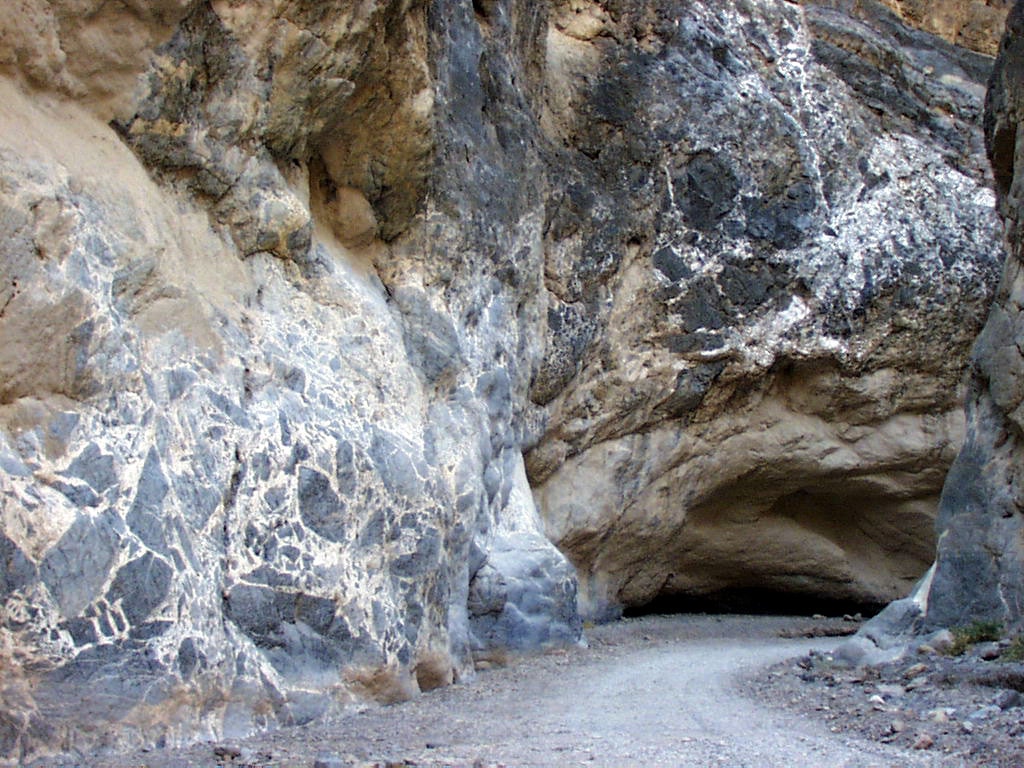
Titus Canyon is a deep, narrow gorge situated in the Grapevine Mountains within Death Valley National Park, straddling the border of California and Nevada. Its formation is a result of geological processes that uplifted ancient limestone layers, which were subsequently carved by erosion. The canyon is significant for its unique geological formations, ancient petroglyphs left by indigenous peoples, and its desert ecosystem, making it a notable natural and historical site.
Key Facts
- ›Features ancient Cambrian age (570–505 million years old) limestone rock formations.
- ›Contains petroglyphs carved by Timbisha Native Americans, particularly near natural springs.
- ›Home to Desert Bighorn Sheep herds, especially in the Klare Spring area.
- ›Accessible by a one-way dirt road traveling east to west, starting near Beatty, Nevada.
- ›Located within Death Valley National Park, on the border of California and Nevada.
River Erosion, Tectonic Activity
Limestone Rock Formations, Petroglyphs, Megabreccia, Ghost Town of Leadfield, Klare Spring
Desert Bighorn Sheep
Flowering Plants, Sacred Datura
Timbisha
About Titus Canyon
Titus Canyon is a significant natural and historical landmark located within the Grapevine Mountains of the Mojave Desert, primarily within Death Valley National Park. It spans the border between southeastern California and southwestern Nevada, characterized by its deep, narrow gorge carved into a steep mountain face. The canyon is renowned for its striking geological features, evidence of ancient indigenous culture, and its desert flora and fauna.
Geology and Formation
The geological makeup of Titus Canyon is ancient, with its walls primarily composed of Cambrian age limestone, dating back 570 to 505 million years. These Paleozoic rocks were formed when the Death Valley region was submerged under tropical seas. Over eons, these thick layers of sedimentary rock, including deposits from algae mats, were subjected to intense geological forces, resulting in upturning, upfolding, and folding back onto themselves. The canyon itself was subsequently carved by erosional forces, likely a combination of water and tectonic activity, creating its deep gorge.
History and Indigenous Heritage
The human history of Titus Canyon is marked by the presence of the Timbisha Native Americans, who left behind petroglyphs on the canyon walls, especially near vital natural springs. These carvings offer a glimpse into the lives and beliefs of the area's original inhabitants. In more recent history, the early 20th century saw a surge of interest from prospectors, leading to the establishment of the mining town of Leadfield, now a ghost town, adjacent to the canyon. The nearby ghost town of Rhyolite, Nevada, also reflects this period of mining activity.
Ecology and Access
Titus Canyon supports a unique desert ecosystem, home to various native plants, including the sacred datura, and wildlife. Notably, herds of Desert Bighorn Sheep inhabit the area, often seen near natural springs like Klare Spring. Access to the canyon is primarily managed by Death Valley National Park, with a rough, one-way dirt road allowing vehicle travel only from east to west. This route begins west of Beatty, Nevada, accessible from Daylight Pass Road (Nevada Highway 374), and concludes in Death Valley, offering visitors a dramatic and immersive experience of the Mojave Desert landscape.
Source: Wikipedia ↗
Frequently Asked Questions
What is the geology of Titus Canyon?
The walls of Titus Canyon are primarily composed of ancient Cambrian age limestone, some of which originated from algal mats (stromatolites) that thrived in prehistoric tropical seas. These sedimentary layers have since been upturned and folded. Megabreccia can also be observed at certain points within the canyon.
What activities are possible in Titus Canyon?
Visitors can explore Titus Canyon by foot or by vehicle. The canyon is known for its scenic beauty, geological formations, and historical petroglyphs. Hiking and observing the native plants and wildlife, such as Desert Bighorn Sheep, are popular activities.
How can I access Titus Canyon?
Access is permitted via a one-way rough dirt road. Vehicle travel is restricted to an east-to-west direction, beginning west of Beatty, Nevada, off Daylight Pass Road (Nevada Highway 374), and concluding in Death Valley on the west side.
Are there any notable historical sites in Titus Canyon?
Yes, Titus Canyon features petroglyphs created by the Timbisha Native Americans, often found near natural springs. Additionally, the ghost town of Leadfield, a former mining town from the 1920s, is located adjacent to the canyon.
What kind of wildlife can be found in Titus Canyon?
The canyon supports native desert wildlife, most notably herds of Desert Bighorn Sheep. These animals are often found in the canyon and its surrounding areas, including near Klare Spring.
Related Canyons

Despeñaperros
Despeñaperros is a significant gorge in Jaén, Spain, carved by the Despeñaperros river. Its steep walls, some over 500 meters high, are composed of ancient Armorican quartzite, revealing millions of years of geological history. Historically, it has served as a crucial natural pass connecting Andalusia with the rest of Spain, a role it continues to fulfill today as a major transportation route.

Mistaya Canyon
Mistaya Canyon is a narrow, deep canyon carved by the Mistaya River in Banff National Park, Alberta, Canada. Located along the Icefields Parkway, it is a roadside attraction showcasing post-glacial river erosion through Paleozoic carbonate rocks. The canyon is known for its steep walls and the potholes formed by the powerful river flow.

Gulf Hagas
Gulf Hagas is a significant gorge in the northern Maine woods, often called the "Grand Canyon of Maine." Carved by the West Branch of the Pleasant River, its three-mile length features vertically walled slate and numerous waterfalls, with walls reaching up to 130 feet. Designated a National Natural Landmark, it is a popular destination for hiking and challenging whitewater kayaking.