
Whittard Canyon
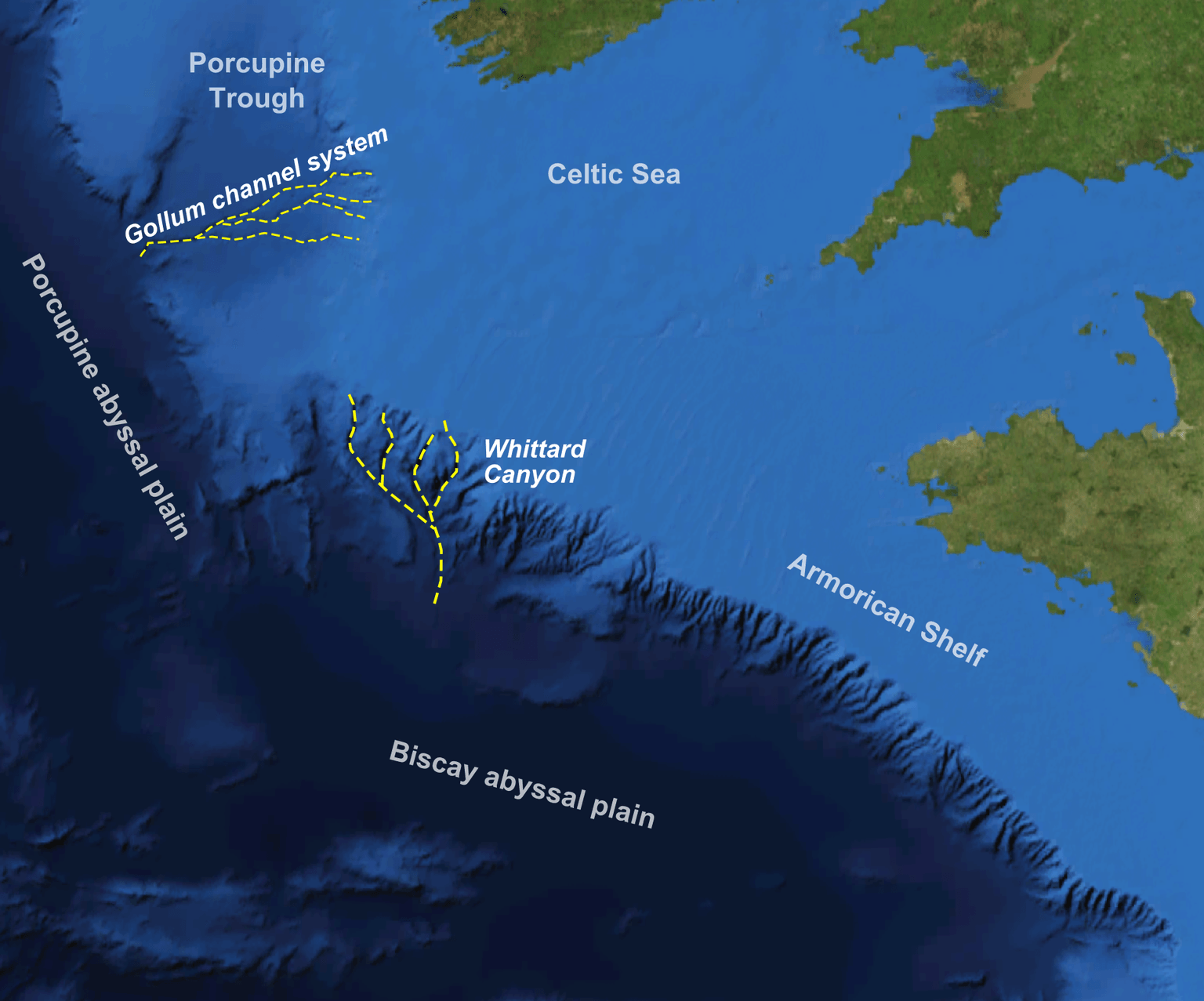
Whittard Canyon is a significant submarine canyon located off the southwest coast of Ireland, situated between the Celtic Sea and the Atlantic Ocean. Its formation is attributed to deep-sea processes, and it has become a focal point for scientific research due to its rich biodiversity and sediment transport mechanisms.
Key Facts
- ›Located off the southwest coast of Ireland between the Celtic Sea and the Atlantic Ocean.
- ›Covers an area of approximately 5,200 square kilometers (2,000 square miles).
- ›Spans over 129 by 32 kilometers (80 by 20 miles).
- ›Has an overall depth below 1,500 meters.
- ›Known for abundant deep-water life, including blue sharks, swordfishes, cold-water corals, clams, and deep-sea oysters.
- ›Nepheloid layers within the canyon contribute significantly to matter transport, supporting high faunal diversity.
Submarine Erosion, Sediment Transport
Nepheloid Layers, Cold-Water Corals
Blue Sharks, Swordfishes, Cold-Water Corals, Clams, Deep-Sea Oysters
About Whittard Canyon
Whittard Canyon is a prominent submarine canyon situated off the southwest coast of Ireland, nestled between the Celtic Sea and the vast Atlantic Ocean. This underwater geological feature is a significant site for marine scientific research, drawing attention for its unique deep-sea environment, varied biodiversity, and the complex processes of sediment transport occurring within its depths.
Dimensions and Characteristics
The canyon spans an impressive area of approximately 5,200 square kilometers (2,000 square miles). Its dimensions are considerable, extending over 129 kilometers (80 miles) in length and 32 kilometers (20 miles) in width. The canyon's overall depth exceeds 1,500 meters, indicative of its substantial underwater topography.
Scientific Research and Biodiversity
Whittard Canyon has been the focus of numerous scientific investigations. Expeditions, such as one by scientists from NERC's National Oceanography Centre in 2015, have spent significant time studying its ecosystems. These studies have revealed an abundance of deep-water life, including species such as blue sharks, swordfishes, cold-water corals, clams, and deep-sea oysters. Notably, the cold-water corals found here possess the remarkable ability to thrive in complete darkness, deriving nourishment from the water currents, a stark contrast to their tropical counterparts that rely on sunlight.
Geological Processes
Further research, including work by teams from NIOZ, has highlighted the role of 'nepheloid layers' within the canyon. These are layers characterized by high concentrations of suspended particles and are recognized as significant contributors to the transport of matter. This process is crucial in creating and maintaining the conditions that support the canyon's rich and diverse fauna.
Source: Wikipedia ↗
Frequently Asked Questions
What is Whittard Canyon?
Whittard Canyon is a submarine canyon located off the southwest coast of Ireland, in the Atlantic Ocean. It is a significant area for scientific study due to its unique deep-sea environment and biodiversity.
Where is Whittard Canyon located?
Whittard Canyon is situated off the southwest coast of Ireland, in the region between the Celtic Sea and the Atlantic Ocean.
What kind of life is found in Whittard Canyon?
The canyon hosts abundant deep-water life, including species like blue sharks, swordfishes, cold-water corals, clams, and deep-sea oysters. The cold-water corals found here can survive in darkness, deriving sustenance from passing water.
What is the significance of nepheloid layers in Whittard Canyon?
Nepheloid layers, which are layers with high concentrations of suspended particles, are significant in Whittard Canyon. They play a crucial role in the transport of matter, creating favorable conditions for the canyon's diverse fauna.
Has Whittard Canyon been the subject of scientific research?
Yes, Whittard Canyon has been the focus of numerous scientific research expeditions. These studies have investigated its sediment transport, biodiversity, and the unique ecological processes occurring within it.
Related Canyons

Gap of Dunloe
The Gap of Dunloe is a striking 11-kilometer mountain pass in County Kerry, Ireland, recognized for its dramatic scenery and popularity as a tourist destination. Formed approximately 25,000 years ago by glacial erosion during the last ice age, the pass carves a U-shaped valley between the Macgillycuddy's Reeks and the Purple Mountain Group mountain ranges.
Mizen Head
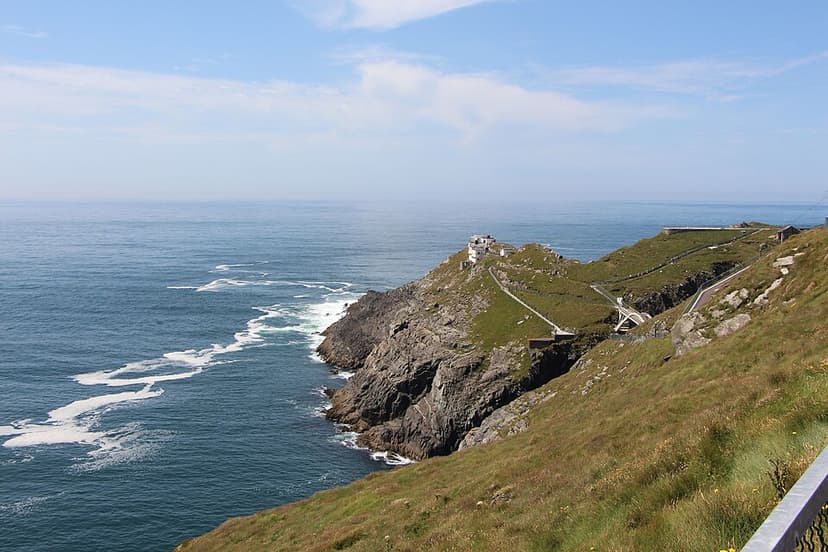
Mizen Head is a prominent coastal promontory in County Cork, Ireland, traditionally considered the country's most southerly point, though Brow Head is geographically further south. Its dramatic cliffs and historical significance as a landmark for transatlantic voyagers make it a major tourist attraction. The site features an old signal station, now a museum, accessible via a bridge over a chasm and a series of steps and paths.
The Scalp
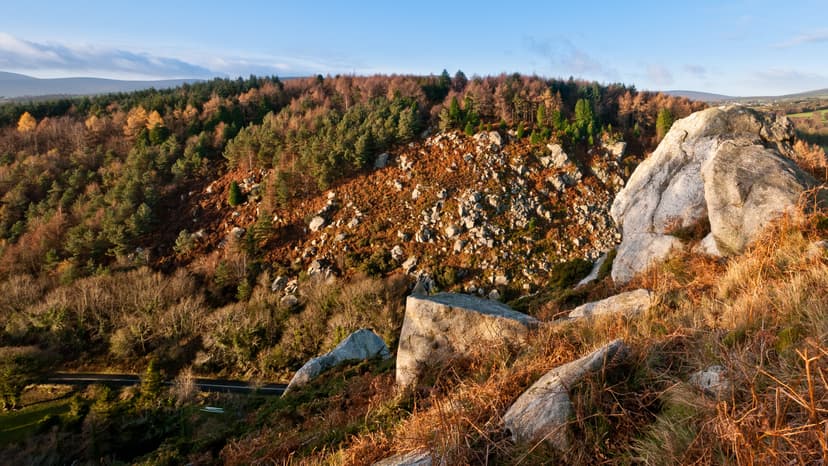
The Scalp is a deep natural chasm located west of Barnaslingan hill in County Dublin, Ireland. It was formed by powerful meltwater erosion during deglaciation approximately 12,000 years ago, serving as a subglacial and then surface channel for glacial outwash. This geological feature is recognized for its significance and is a habitat for various wildlife.