
Wintergreen Gorge
River Canyon·U.S.A.·Devonian·Fourmile Creek
Wintergreen Gorge is a six-mile-long canyon in Erie County, Pennsylvania, carved by Fourmile Creek. Its formation began approximately 11,000 years ago through the erosion of glacial debris and Devonian shale. The gorge is known for its diverse plant and animal life, as well as its namesake wintergreen plants, and is partially located on the campus of Penn State Behrend.
Key Facts
- ›Extends for six miles in length.
- ›Reaches a maximum depth of 250 feet (76 M).
- ›Carved by Fourmile Creek through glacial debris and Devonian shale.
- ›Partially situated on the campus of Penn State Behrend.
- ›Named for the abundance of wintergreen plants found within the canyon.

River Erosion, Glacial Debris Deposition
Wintergreen Plants, Forests, Glacial Debris, Devonian Shale
Forests, Wintergreen Plants
About Wintergreen Gorge
Wintergreen Gorge is a significant natural feature located in Harborcreek Township, Erie County, Pennsylvania. This six-mile-long canyon is a testament to the geological forces that shaped the region, primarily carved by the persistent erosion of Fourmile Creek.
Formation and Geology
The formation of Wintergreen Gorge began approximately 11,000 years ago. Fourmile Creek played a crucial role by eroding through substantial glacial debris left behind from the last ice age, which had retreated about 20,000 years ago. Further deepening of the gorge occurred as the creek cut into the underlying shale bedrock, which dates back to the late Devonian period. At its deepest point, the canyon reaches an impressive 250 feet (76 m), gradually becoming shallower as it extends northward.
Ecology and Naming
The gorge is named for the wintergreen plant, which is commonly found growing within its ecosystem, contributing to its distinct character. Beyond the namesake plant, Wintergreen Gorge supports wide expanses of forest and a variety of plant and animal life, reflecting a healthy natural environment.
Access and Infrastructure
To facilitate exploration while promoting responsible use, a network of trails has been developed within the canyon. These trails allow visitors to experience the natural beauty of Wintergreen Gorge. A notable piece of infrastructure, the Bayfront Connector, spans the gorge overhead via the Wintergreen Gorge Bridge, integrating modern transportation with the natural landscape. A portion of the gorge is also situated on the campus of Penn State Behrend, making it an accessible natural laboratory and recreational area for students and the public alike.
Source: Wikipedia ↗
Frequently Asked Questions
How was Wintergreen Gorge formed?
Wintergreen Gorge was formed approximately 11,000 years ago by Fourmile Creek. The creek eroded through glacial debris left behind from the last ice age and also cut into shale dating from the late Devonian period.
What are the dimensions of Wintergreen Gorge?
The canyon is six miles long and reaches a maximum depth of 250 feet (76 m) at its highest point. The depth gradually decreases as the gorge extends northward.
What is the significance of the name Wintergreen Gorge?
The gorge was named for the wintergreen plant, which was commonly found growing within its boundaries. This plant is a notable part of the canyon's ecosystem.
Can I visit Wintergreen Gorge?
Yes, access to the canyon is facilitated by a series of trails that have been created. These trails are designed to allow visitors to explore the gorge while promoting sustainable practices.
Where is Wintergreen Gorge located?
Wintergreen Gorge is located in Harborcreek Township, Erie County, in the U.S. state of Pennsylvania. It is situated along Fourmile Creek and is partially on the campus of Penn State Behrend.
Related Canyons

Genesee River Gorge
Letchworth State Park is a vast New York State Park carved by the Genesee River, renowned for its deep gorge and three prominent waterfalls. Often called the "Grand Canyon of the East," the park's geological features were shaped by glacial activity and river erosion over Devonian bedrock, and it holds significant cultural and historical importance, including the legacy of its founder, William Pryor Letchworth, and the ancestral lands of the Seneca people.
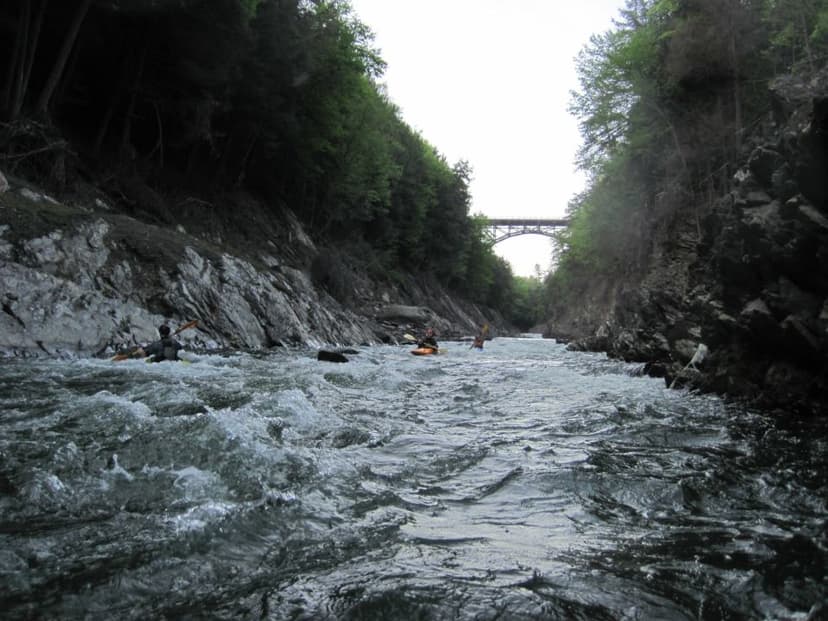
Quechee Gorge
The Quechee Gorge in Vermont is the state's deepest gorge, carved approximately 13,000 years ago by the Ottauquechee River during the retreat of the Laurentide Ice Sheet. It is a significant geological feature, cutting through Devonian bedrock, and is a popular tourist destination offering scenic views and recreational opportunities along the river.

Windjana Gorge
Windjana Gorge, also known as Bandiln͟gan, is a significant gorge located in the Kimberley region of Western Australia, within Windjana Gorge National Park. It was formed by the Lennard River eroding a 3.5-kilometer section of the ancient Devonian limestone Napier Range, which is over 300 million years old. The gorge is renowned for its easily accessible hiking trails during the dry season, permanent waterholes, and the visible marine fossils embedded in its walls, making it a popular tourist attraction.