
Genesee River Gorge
River Canyon·North America·Devonian·Genesee River
Letchworth State Park is a vast New York State Park carved by the Genesee River, renowned for its deep gorge and three prominent waterfalls. Often called the "Grand Canyon of the East," the park's geological features were shaped by glacial activity and river erosion over Devonian bedrock, and it holds significant cultural and historical importance, including the legacy of its founder, William Pryor Letchworth, and the ancestral lands of the Seneca people.
Key Facts
- ›The park spans approximately 14,427 acres along the Genesee River.
- ›Features three major waterfalls: Upper Falls, Middle Falls, and Lower Falls.
- ›Gorge walls rise up to 550 feet in places, with a width of 400 feet above the Middle Falls.
- ›Bedrock is Devonian shale, limestone, and sandstone, containing marine fossils.
- ›Formed by the Genesee River cutting a new valley after being diverted by the last continental glacier.
- ›Administered by New York State Parks, Recreation and Historic Preservation.

Grand Canyon of the East
Glacial Diversion, River Erosion
Upper Falls, Middle Falls, Lower Falls, Glen Iris Estate, Mary Jemison's Grave, Portage Viaduct, Mount Morris Dam
Wild Turkey, Deer
Woodlands
Sehgahunda
About Genesee River Gorge
Letchworth State Park: The Grand Canyon of the East
Letchworth State Park, a sprawling 14,427-acre New York State Park, is celebrated for its dramatic gorge carved by the Genesee River and its three majestic waterfalls: the Upper, Middle, and Lower Falls. This natural wonder, often referred to as the "Grand Canyon of the East," showcases rock walls that ascend up to 550 feet, with a notable width of 400 feet above the Middle Falls. The park's geological story is one of recent formation, with the Genesee River cutting a new valley after being diverted by the last continental glacier. The exposed bedrock consists primarily of Devonian-age shales, interspersed with layers of limestone and sandstone, which are rich in ancient marine fossils, offering a glimpse into a bygone era.
Geological Formation and Features
The gorge itself is a testament to the erosive power of the Genesee River, which was compelled to carve a new path following glacial activity. This process shaped the dramatic topography of the park. Beyond the three main waterfalls, the park is home to numerous cascades on tributary streams, adding to its scenic beauty. The Middle Falls stands out as the highest of the three major falls. The bedrock, predominantly shale with limestone and sandstone elements, provides a clear stratigraphy of the region's ancient inland sea environment. The park's physical features are a direct result of glacial diversion and subsequent river erosion, making it a geologically young yet profoundly impressive landscape.
Human History and Cultural Significance
Long before its designation as a state park, the land was ancestral territory of the Seneca people, who knew it as Sehgahunda, or "Vale of the three falls." Their cultural heritage is a significant part of the park's narrative. The modern park owes much to William Pryor Letchworth, a Buffalo industrialist who began acquiring land in 1859, envisioning a sanctuary that would preserve the natural beauty of the gorge. His Glen Iris Estate became the heart of his conservation efforts. In 1906, Letchworth generously bequeathed his estate and surrounding lands to New York State, establishing Letchworth State Park and ensuring its protection from commercial development. The park also serves as the final resting place for Mary Jemison, known as the "White Indian of the Genesee," an influential pioneer figure adopted by the Seneca. The park's development was further enhanced by work from the Civilian Conservation Corps in the 1930s, who contributed to the construction of various park amenities.
Activities and Modern Amenities
Letchworth State Park offers a wealth of recreational opportunities for visitors throughout the year. Its 66 miles of hiking trails provide access to stunning overlooks and varied terrain. Popular activities include biking, fishing, whitewater rafting, kayaking, and during colder months, snowmobiling, cross-country skiing, and snow tubing. The park also features cabins, campsites, picnic areas, and playgrounds, catering to families and outdoor enthusiasts. Hot air ballooning is available, weather permitting, offering a unique perspective of the gorge and surrounding landscape. The historic Glen Iris Inn provides lodging and dining, while the William Pryor Letchworth Museum and the Humphrey Nature Center offer insights into the region's natural and cultural history.
Source: Wikipedia ↗
Frequently Asked Questions
What are the main geological features of Letchworth State Park?
The park's most prominent geological feature is the deep gorge carved by the Genesee River, with rock walls reaching up to 550 feet. Within this gorge are three major waterfalls: the Upper, Middle, and Lower Falls. The bedrock exposed in the gorge is Devonian in age, consisting mainly of shales with some limestone and sandstone layers, and it contains numerous marine fossils.
How was Letchworth State Park formed?
The landform of the Genesee River valley within the park is geologically young. It was formed by the diversion of the river from its old valley by the last continental glacier, which subsequently forced the river to cut a new, deep gorge through the existing bedrock.
What activities can visitors enjoy in Letchworth State Park?
Visitors can engage in a wide range of activities, including hiking, biking, fishing, whitewater rafting, kayaking, and geocaching. During winter, the park offers snowmobiling, cross-country skiing, snow tubing, and horse-drawn sleigh rides. Hot air ballooning is also available, weather permitting.
What is the significance of the waterfalls in the park?
The park is most famous for its three large waterfalls on the Genesee River: Upper, Middle, and Lower Falls. The Middle Falls is the highest, and the area's dramatic gorge and falls have earned it the nickname "Grand Canyon of the East." Additionally, numerous smaller waterfalls are found on tributaries flowing into the Genesee.
What is the historical significance of Letchworth State Park?
Historically, the land was part of the homeland of the Seneca people, who called it Sehgahunda. The park's development began with William Pryor Letchworth's purchase of land in 1859, where he built his Glen Iris Estate. He later bequeathed the land to New York State, forming the core of the park, and it also serves as the burial site for Mary Jemison, an important historical figure in the region.
Are there any notable man-made structures in the park?
Yes, the park features the historic Glen Iris Inn, which was William Pryor Letchworth's former residence and now serves as a hotel. The Mount Morris Dam, a significant flood control structure, is located at the north end of the park. The Portage Viaduct, a historic rail bridge, has been replaced by a modern steel arch bridge.
Related Canyons

Wintergreen Gorge
Wintergreen Gorge is a six-mile-long canyon in Erie County, Pennsylvania, carved by Fourmile Creek. Its formation began approximately 11,000 years ago through the erosion of glacial debris and Devonian shale. The gorge is known for its diverse plant and animal life, as well as its namesake wintergreen plants, and is partially located on the campus of Penn State Behrend.
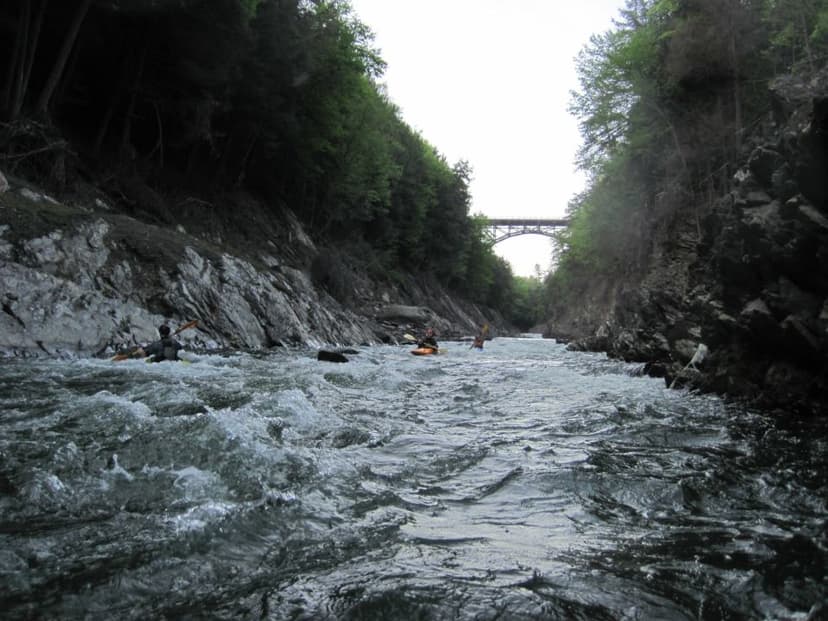
Quechee Gorge
The Quechee Gorge in Vermont is the state's deepest gorge, carved approximately 13,000 years ago by the Ottauquechee River during the retreat of the Laurentide Ice Sheet. It is a significant geological feature, cutting through Devonian bedrock, and is a popular tourist destination offering scenic views and recreational opportunities along the river.

Windjana Gorge
Windjana Gorge, also known as Bandiln͟gan, is a significant gorge located in the Kimberley region of Western Australia, within Windjana Gorge National Park. It was formed by the Lennard River eroding a 3.5-kilometer section of the ancient Devonian limestone Napier Range, which is over 300 million years old. The gorge is renowned for its easily accessible hiking trails during the dry season, permanent waterholes, and the visible marine fossils embedded in its walls, making it a popular tourist attraction.