
Zhemchug Canyon
Zhemchug Canyon, translating to "pearl" in Russian, is an immense underwater canyon situated in the Bering Sea between the Siberian and Alaskan coastlines. It is recognized as the deepest submarine canyon globally, characterized by its extraordinary size and a unique, highly productive marine environment that supports a vast array of life.
Key Facts
- ›It is the deepest submarine canyon in the world, with a vertical relief of 2,600 meters (8,530 feet).
- ›The canyon extends for approximately 160 kilometers (99 miles) in length.
- ›Its immense cross-sectional area, drainage area (11,350 km2), and volume (5,800 km3) contribute to its status as the world's largest submarine canyon.
- ›Zhemchug Canyon creates unique hydrographic conditions, including nutrient-rich upwelling, which sustains its active marine wildlife.
- ›It hosts a rich biodiversity, including phytoplankton, zooplankton, numerous fish species, deep-sea sharks, cephalopods, marine mammals, and seabirds.
- ›Significant communities of cold-water corals and sponges are found within the canyon, providing essential habitat for other marine animals.

Oceanographic Processes, Underwater Currents
Cold-Water Corals, Sponges, Upwelling Zones, Deep-Sea Habitats
Phytoplankton, Zooplankton, Aleutian Flounder, Bering Skate, Pacific Cod, Deep-Sea Sharks, Giant Pacific Octopus, Whales, Seals, Dolphins, Gray Whales, Northern Fur Seals, Short-Tailed Albatross, Puffins
Phytoplankton Blooms
About Zhemchug Canyon
Zhemchug Canyon, whose name is derived from the Russian word for "pearl," is a remarkable underwater geological formation situated in the Bering Sea. Located between the Siberian and Alaskan coastlines, it holds the distinction of being the deepest submarine canyon in the world. Its extraordinary dimensions and the unique marine conditions it creates make it a significant feature of the Bering Sea's ecosystem, contributing to its high biological productivity and serving as a vital habitat for a diverse array of marine species.
Geography and Formation
The geography of Zhemchug Canyon is defined by its immense scale. It features a vertical relief of 2,600 meters (8,530 feet), dropping from the shallower continental shelf to the depths of the Aleutian Basin, and extends for approximately 160 kilometers (99 miles). The canyon's considerable cross-sectional area, drainage area of 11,350 km², and volume of 5,800 km³ establish it as the world's largest submarine canyon. Its complex topography fosters distinct hydrographic conditions, including the upwelling of nutrient-rich waters from deeper ocean regions. This upwelling is amplified by interaction with ocean currents like the Bering Slope Current, which brings nutrient-laden water from the Arctic, thereby supporting the canyon's abundant marine life.
Ecology and Biodiversity
The ecological significance of Zhemchug Canyon is profound, driven by its unusual physical structure and oceanographic conditions. The favorable upwelling within the canyon leads to significantly higher phytoplankton densities compared to surrounding waters. These primary producers form the base of a complex food web, supporting a large population of zooplankton, which in turn sustains various fish species, including the Aleutian Flounder, Bering Skate, and Pacific Cod. Deeper regions of the canyon are inhabited by species adapted to high pressure and cold, such as deep-sea sharks and cephalopods like the Giant Pacific Octopus. Marine mammals, including whales, seals, and dolphins, are frequently observed due to the abundant food supply. Notably, the endangered short-tailed albatross and puffins rely on the canyon's waters for feeding. A spectacular aspect of its ecology is the rich community of cold-water corals and sponges, such as bubblegum coral and Hexactinellid sponges, which provide critical habitat, shelter, and breeding grounds for numerous other marine animals.
Exploration
Human exploration of Zhemchug Canyon has provided insights into its deep-sea environment. In 2016, an expedition sponsored by Greenpeace saw Michelle Ridgeway pilot an eight-foot submarine within the canyon. This exploration reached a shelf at a depth of 536 meters (1,757 feet), offering a glimpse into the canyon's challenging and unique environment.
Source: Wikipedia ↗
Frequently Asked Questions
What is Zhemchug Canyon and where is it located?
Zhemchug Canyon is a massive underwater canyon located in the Bering Sea, approximately midway between the coastlines of Siberia and Alaska. It is renowned for its exceptional depth and the unique marine environment it harbors.
How deep is Zhemchug Canyon compared to other canyons?
Zhemchug Canyon is the deepest submarine canyon in the world, with a vertical relief of 2,600 meters (8,530 feet). This depth significantly exceeds that of terrestrial canyons like the Grand Canyon.
What makes Zhemchug Canyon so important ecologically?
The canyon's complex topography causes nutrient-rich waters to upwell from the deep seafloor, leading to a high density of phytoplankton. This forms the base of a rich food web supporting diverse marine life, including fish, mammals, and seabirds.
What types of marine life are found in Zhemchug Canyon?
The canyon supports a wide variety of marine fauna, including zooplankton, fish like the Aleutian Flounder and Pacific Cod, deep-sea sharks, cephalopods such as the Giant Pacific Octopus, and marine mammals like whales, seals, and dolphins. Seabirds such as short-tailed albatrosses and puffins also frequent the area.
Are there any notable geological features within Zhemchug Canyon?
A striking feature of Zhemchug Canyon is the presence of extensive communities of cold-water corals and sponges, including bubblegum coral and bamboo coral. These invertebrates are crucial for the ecosystem, providing habitat and shelter for many other marine animals.
Has Zhemchug Canyon been explored?
Yes, Zhemchug Canyon has been explored. In 2016, an expedition sponsored by Greenpeace involved piloting an eight-foot submarine to a depth of 536 meters (1,757 feet) within the canyon.
Related Canyons

Bering Canyon
Bering Canyon is the longest submarine canyon in the Bering Sea, stretching approximately 400 km across the continental shelf and slope. It is bordered by the Aleutian Islands to the east and culminates in a submarine channel-lobe system at the Aleutian Basin. Its immense length gives it the largest area among the Bering Sea canyons, despite being narrower at the shelf break than some others.

Avilés Canyon
The Avilés Canyon is a significant submarine canyon system located off the coast of Asturias, Spain, in the Cantabrian Sea. As part of the larger Avilés Canyon System, it extends for approximately 75 kilometers and plunges to depths of nearly 5 kilometers, positioning it among the deepest on the planet. This deep-sea environment is a recognized biodiversity hotspot, supporting a rich array of marine life, including various whale species, numerous starfish, and ancient cold-water coral reefs.
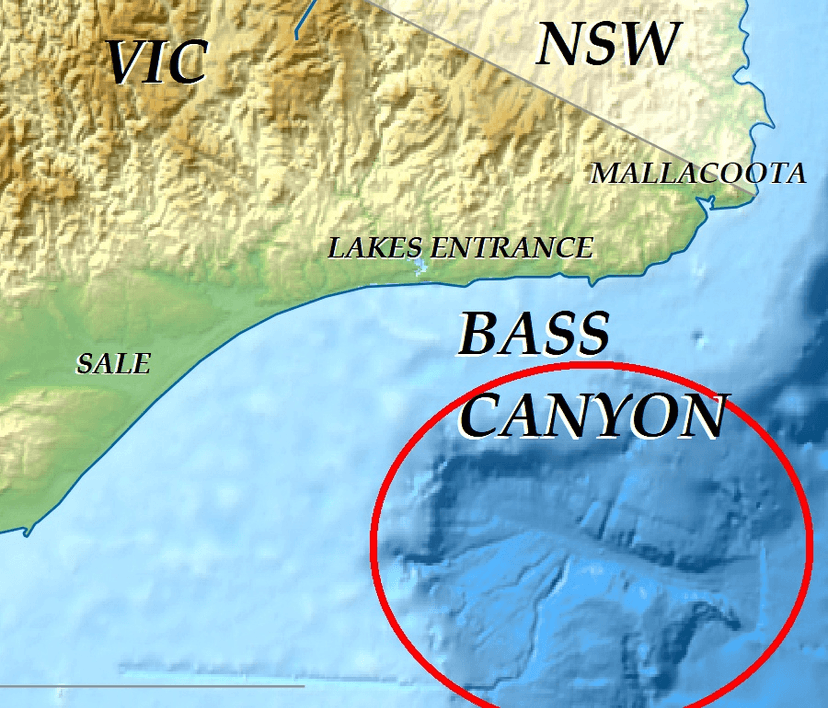
Bass Canyon
Bass Canyon is a vast submarine canyon system located off the coast of eastern Victoria, Australia, in Bass Strait. It is one of the deepest and largest submarine canyons globally, extending over 160 kilometers and reaching depths exceeding 3,000 meters. Its formation is attributed to complex erosional processes involving sediment gravity flows and tectonic activity, with evidence suggesting it has evolved over millions of years.