
Amazon river dolphin
Endangered
The Amazon river dolphin, also known as the boto or pink river dolphin, is a species of toothed whale endemic to South America's river systems. It is distinguished by its unique pink coloration, particularly prominent in males, and its exceptional maneuverability in flooded forests due to its flexible neck and large fins. This species is the largest of the river dolphins and possesses a diverse diet, making it an apex predator in its freshwater habitat.
Key Facts
- ›The Amazon river dolphin is the largest species of river dolphin.
- ›Adults can develop a pink coloration, more pronounced in males.
- ›It has a unique ability to turn its head up to 90 degrees, unlike most toothed whales.
- ›Their diet is exceptionally diverse, including up to 53 different species of fish.
- ›The species is classified as endangered by the IUCN due to various threats.
- ›They utilize echolocation extensively for navigation and hunting in murky waters.
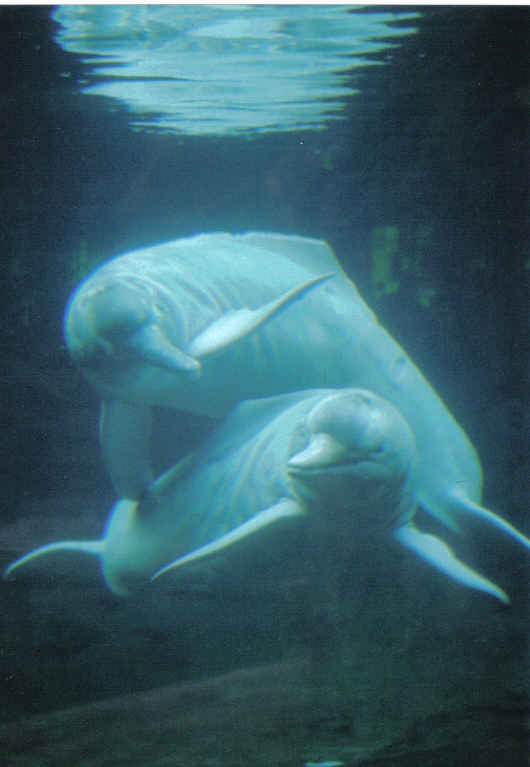
Boto, Bufeo, Pink River Dolphin
Dark Grey, Light Grey, Pink, Mottled Pink, Darker Dorsal Surface In Some Adults
Fish, River Turtles, Aquatic Frogs, Freshwater Crabs
River Systems, Amazon Basin, Orinoco Basin, Flooded Forests, River Channels, Main Rivers, Lakes, Blackwater Rivers, Whitewater Rivers
- Curious
- Remarkable Lack of Fear of Foreign Objects
- Playful
- Slow Swimmers
- Can Jump Out of Water
- Less Social Than Bottlenose Dolphins
- Object-Carrying As Socio-Sexual Display
- Aggressive Sexual Behavior In Males
- High Level of Parental Care
- Diurnal and Nocturnal Feeding, Predominantly Crepuscular
South America, Bolivia, Brazil, Colombia, Ecuador, Peru, Venezuela, Amazon Basin, Orinoco Basin
Pink Coloration, Flexible Neck Allowing Head Rotation, Long, Keel-Shaped Dorsal Fin, Large, Paddle-Shaped Pectoral Fins, Long, Thin Snout, Heterodont Dentition, Melon For Biosonar
About Amazon river dolphin
The Amazon river dolphin, scientifically known as Inia geoffrensis and also called the boto or pink river dolphin, is a unique species of toothed whale found exclusively in the freshwater river systems of South America. It is the largest of all river dolphin species and is renowned for its distinctive pink coloration, which becomes more pronounced in adult males. This coloration is thought to result from skin abrasion, with males exhibiting it more due to inter-species aggression.
Physical Characteristics and Adaptations
This species possesses a robust yet flexible body, adapted for navigating its complex aquatic environment. Unlike many other toothed whales, its cervical vertebrae are unfused, allowing its head to turn up to 90 degrees. This, combined with its long, keel-shaped dorsal fin and large, paddle-shaped pectoral fins, grants it exceptional maneuverability, crucial for swimming through flooded forests and capturing elusive prey. The Amazon river dolphin has a long, thin snout filled with numerous teeth adapted for grasping and crushing a wide variety of food items. Despite relatively small eyes, they are believed to have good vision both in and out of the water, and they possess a melon organ used for biosonar.
Diet and Hunting
The Amazon river dolphin boasts one of the most diverse diets among toothed whales, feeding on at least 53 species of fish, as well as river turtles, frogs, and crabs. Their dentition is suited to capturing prey ranging from small fish to larger crustaceans. They are active feeders throughout the day and night, with a predilection for dawn and dusk. Occasionally, they exploit disturbances caused by boats to catch disoriented prey and have been observed to hunt cooperatively with tucuxi dolphins and giant otters.
Echolocation and Communication
In the often murky waters of its habitat, the Amazon river dolphin relies heavily on echolocation for navigation and hunting. It emits clicks and interprets the returning echoes to locate objects and prey. Their vocalizations include whistling tones used for communication, though these differ in structure from those of other dolphin species. An unusual social behavior observed in males involves aerial urination, where they position themselves upside down to eject urine into the air, which another male may investigate, suggesting a form of chemical communication.
Social Structure and Reproduction
Amazon river dolphins are typically seen alone or in pairs, though they can form larger pods, especially in areas with abundant food. Social bonds are strongest between mothers and calves, but other group formations exist. During the rainy season, there is segregation, with males often in river channels and females and young in flooded areas. Reproduction is seasonal, with births usually occurring in May and June, coinciding with the flood season, which may offer advantages for the young. Gestation lasts approximately eleven months, and calves receive significant parental care, with lactation lasting about a year. Young dolphins are estimated to become independent within two to three years.
Conservation Status and Distribution
The Amazon river dolphin is the most widespread of the river dolphins, found across six South American countries in an area of about 7 million square kilometers. Their distribution is influenced by geographical barriers such as waterfalls and rapids. In 2018, the species was classified as endangered by the International Union for Conservation of Nature (IUCN) due to significant population decline. Primary threats include incidental capture in fishing gear, direct hunting, habitat degradation from dams, and pollution. Its ability to survive in captivity has been limited, with a high mortality rate observed in individuals kept in aquariums.
Source: Wikipedia ↗
Frequently Asked Questions
What is the Amazon river dolphin's most distinctive feature?
The Amazon river dolphin is most famously recognized for its pink coloration, which becomes more prominent in adult males. This vibrant hue, along with its large fins and flexible neck, contributes to its unique appearance and adaptability in its freshwater environment.
What do Amazon river dolphins eat?
These dolphins have one of the most varied diets among toothed whales, consuming up to 53 different species of fish, including croakers, catfish, tetras, and piranhas. They also supplement their diet with other aquatic animals like river turtles, frogs, and freshwater crabs.
Why are Amazon river dolphins pink?
The pink coloration of adult Amazon river dolphins is believed to result from repeated abrasion of the skin's surface. Males tend to be pinker than females, possibly due to more frequent injuries sustained during aggressive interactions with other males.
What are the main threats to the Amazon river dolphin population?
The Amazon river dolphin faces significant threats, including incidental capture in fishing gear, direct hunting for bait or predator control, habitat degradation from dam construction, and pollution of their riverine environments. These factors have led to a declining population.
How do Amazon river dolphins navigate and hunt in their environment?
Given that their Amazonian river habitats are often very murky, these dolphins rely heavily on echolocation. They emit clicks and interpret the returning echoes to navigate and locate prey. Their ability to turn their heads also aids in maneuvering through complex flooded forest environments to capture prey.
Are there different types of Amazon river dolphins?
Three subspecies are currently recognized: Inia geoffrensis geoffrensis (Amazon river dolphin), Inia geoffrensis boliviensis (Bolivian river dolphin), and Inia geoffrensis humboldtiana (Orinoco river dolphin). However, there is ongoing debate regarding their exact classification and distinctness.
Related Cetacean species

Australian humpback dolphin
The Australian humpback dolphin (Sousa sahulensis) is a species of humpback dolphin found in the waters of northern Australia and southern New Guinea, specifically around the Sahul Shelf. It is distinguished from other humpback dolphin species by its lower, wider dorsal fin, its dark gray coloration with a distinctive cape-like marking, and its dentition and vertebral count. Despite being scientifically described in 2014, this vulnerable species faces significant threats from habitat destruction and human activities.
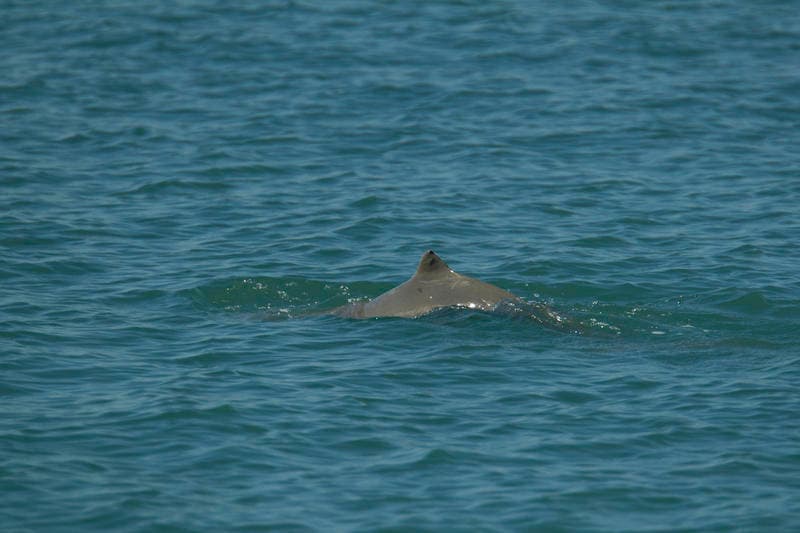
Australian snubfin dolphin
The Australian snubfin dolphin (Orcaella heinsohni) is a distinct dolphin species found along the northern coasts of Australia, scientifically described in 2005. It is distinguished from its close relative, the Irrawaddy dolphin, by its three-toned coloration, a rounded forehead, and a very small dorsal fin. This species is endemic to Australia and faces significant threats from human activities.

Atlantic spotted dolphin
The Atlantic spotted dolphin is a medium-sized dolphin inhabiting warm temperate and tropical waters of the Atlantic Ocean. It is distinguished by its unique spotted coloration, which develops and changes significantly as the dolphin matures through different age-dependent phases. These highly social animals are known for their cooperative hunting strategies and complex vocalizations.