
Australian snubfin dolphin
The Australian snubfin dolphin (Orcaella heinsohni) is a distinct dolphin species found along the northern coasts of Australia, scientifically described in 2005. It is distinguished from its close relative, the Irrawaddy dolphin, by its three-toned coloration, a rounded forehead, and a very small dorsal fin. This species is endemic to Australia and faces significant threats from human activities.
Key Facts
- ›Distinct from the Irrawaddy dolphin with three-toned coloration (brown top, lighter brown sides, white belly).
- ›Possesses a rounded forehead and a very small, "snubby" dorsal fin.
- ›Feeds on a variety of fish, shrimp, and cephalopods, often using water-spitting as a hunting strategy.
- ›Found in small groups, typically 2–6 individuals, though larger groups have been observed.
- ›Endemic to Australia, ranging from Broome, Western Australia, to the Brisbane River in Southeast Queensland.
- ›Listed as "vulnerable" by the IUCN due to threats like entanglement in fishing gear and habitat degradation.
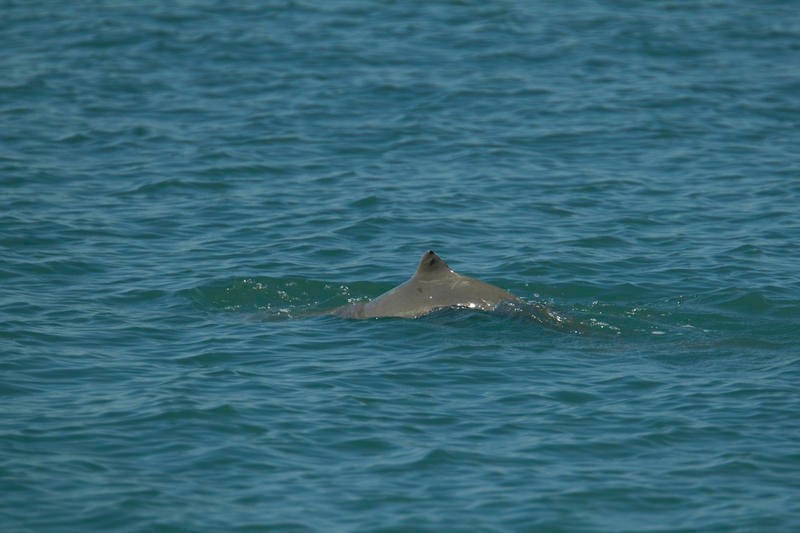
Snubfin Dolphin
Brownish On the Top, Lighter Brown Along the Sides, White Belly
Fish, Shrimp, Cephalopods
Coastal Waters, Estuarine Waters, Areas Near Rivers, Reef-Associated Waters
- Spit Jets of Water As A Potential Feeding Strategy
- Opportunistic Feeders
- Congregate To Feed
- Long-Term Sociability Observed
- Grouping Associations Strongest Among Males
Northern Coasts of Australia, Western Australia, Queensland, Papua New Guinea
Rounded Forehead, Very Small, "Snubby" Dorsal Fin, Three-Toned Coloration, Lack of A Groove On Each Side of the Back, Presence of A Neck Crease, Jagged Trailing Edge of Tail Flukes
About Australian snubfin dolphin
The Australian snubfin dolphin, scientifically known as Orcaella heinsohni, is a species of dolphin that inhabits the northern coastal waters of Australia. It was formally described as a distinct species in 2005, having previously been confused with the closely related Irrawaddy dolphin. This unique cetacean is characterized by its subtle three-toned coloration—brown on its back, lighter brown on its sides, and a white belly—contrasting with the Irrawaddy dolphin's two-toned appearance. Further distinguishing features include a rounded forehead and a notably small, "snubby" dorsal fin, along with a lack of a neck crease and a jagged trailing edge on its tail flukes.
Taxonomy and Discovery
The Australian snubfin dolphin belongs to the genus Orcaella, which includes only one other species, the Irrawaddy dolphin. Its scientific name, heinsohni, honors Australian biologist George Heinsohn for his pioneering research on northeastern Australian odontocetes. The species' existence became known to Western scientists in 1948 with the discovery of a skull, though it wasn't formally identified as a new species until much later. The description of Orcaella heinsohni was a rare event, marking the first new dolphin species described in 56 years, highlighting the ongoing discoveries within marine mammal science.
Description and Life History
Orcaella heinsohni can reach lengths of up to 2.7 meters, with females slightly smaller than males. The species is subtly tricolored, a key difference from the Irrawaddy dolphin's uniform slate grey. The distinctive small dorsal fin and rounded head are crucial identification markers. Limited data suggests an approximate lifespan of around 30 years, with a gestation period estimated at 11 months, based on comparisons with similar species. Much about their life history remains unknown due to the rarity of sightings and the challenges in studying them.
Behavior and Diet
Much of the Australian snubfin dolphin's ecology and behavior is still being uncovered. They are known to have a varied diet consisting of fish, shrimp, and cephalopods, and have been observed employing a unique feeding strategy of spitting jets of water to startle prey. They are social animals, typically found in small groups of 2 to 6 individuals, though larger aggregations have been seen. Vocalizations, including click trains and whistles, are used for echolocation in navigation and foraging. They share vocal repertoires with the Australian humpback dolphin, and hybrid individuals have been documented.
Range and Conservation
The Australian snubfin dolphin is endemic to Australia, with its range extending along the northern coasts from Broome, Western Australia, to the Brisbane River in Southeast Queensland, and potentially into Papua New Guinea. Despite its discovery, the species is considered uncommon and is listed as "vulnerable" by the IUCN. Major threats include entanglement in fishing gear, habitat degradation from coastal development and pollution, and the impacts of climate change. Conservation efforts are underway, including listing on Appendix II of the Convention on the Conservation of Migratory Species of Wild Animals (CMS).
Source: Wikipedia ↗
Frequently Asked Questions
How is the Australian snubfin dolphin different from the Irrawaddy dolphin?
The Australian snubfin dolphin has a three-toned coloration, with a brown back, lighter brown sides, and a white belly, whereas the Irrawaddy dolphin is uniformly slate grey with a white belly. Minor differences in skull structure and fins also distinguish the two species.
What do Australian snubfin dolphins eat?
Their diet is varied and includes a range of fish, shrimp, and cephalopods such as squid and cuttlefish. They are opportunistic feeders and have been observed congregating to feed and following fish trawlers.
What are the main threats to Australian snubfin dolphins?
The primary threats include entanglement in fishing gear, particularly gillnets and shark nets, leading to drowning. Habitat degradation due to coastal development, pollution from industrial and agricultural runoff, and climate change also pose significant risks.
Where are Australian snubfin dolphins found?
They are endemic to Australia and inhabit the northern coasts, ranging from Broome in Western Australia to the Brisbane River in Southeast Queensland. Their range is expected to extend to Papua New Guinea.
What is the conservation status of the Australian snubfin dolphin?
The Australian snubfin dolphin is listed as "vulnerable" by the International Union for Conservation of Nature (IUCN). It is also listed on Appendix II of the Convention on the Conservation of Migratory Species of Wild Animals (CMS).
Do Australian snubfin dolphins live in groups?
Yes, Australian snubfin dolphins are social and are typically found in small groups of about 2 to 6 individuals. Larger groups of up to 14 individuals have also been documented.
Related Cetacean species

Australian humpback dolphin
The Australian humpback dolphin (Sousa sahulensis) is a species of humpback dolphin found in the waters of northern Australia and southern New Guinea, specifically around the Sahul Shelf. It is distinguished from other humpback dolphin species by its lower, wider dorsal fin, its dark gray coloration with a distinctive cape-like marking, and its dentition and vertebral count. Despite being scientifically described in 2014, this vulnerable species faces significant threats from habitat destruction and human activities.

Atlantic spotted dolphin
The Atlantic spotted dolphin is a medium-sized dolphin inhabiting warm temperate and tropical waters of the Atlantic Ocean. It is distinguished by its unique spotted coloration, which develops and changes significantly as the dolphin matures through different age-dependent phases. These highly social animals are known for their cooperative hunting strategies and complex vocalizations.

Araguaian river dolphin
The Araguaian river dolphin, also known as the Araguaian boto, is a South American freshwater dolphin found in the Araguaia-Tocantins basin of Brazil. It was recognized as a distinct species in 2014 based on genetic and morphological differences, though this classification is still debated. This dolphin is characterized by its pinkish-gray coloration, a dorsal ridge instead of a fin, and unfused neck vertebrae allowing for head rotation.