
Australian humpback dolphin
The Australian humpback dolphin (Sousa sahulensis) is a species of humpback dolphin found in the waters of northern Australia and southern New Guinea, specifically around the Sahul Shelf. It is distinguished from other humpback dolphin species by its lower, wider dorsal fin, its dark gray coloration with a distinctive cape-like marking, and its dentition and vertebral count. Despite being scientifically described in 2014, this vulnerable species faces significant threats from habitat destruction and human activities.
Key Facts
- ›The Australian humpback dolphin was scientifically described as a distinct species in 2014.
- ›Its dorsal fin is lower and wider than those of the Atlantic and Indian Ocean humpback dolphins.
- ›Coloration is primarily dark gray with a cape-like marking extending from the neck to the urogenital area.
- ›They are opportunistic, generalist feeders, consuming a variety of coastal-estuarine and inshore reef fish.
- ›Vulnerable to threats such as gill net captures, habitat loss, vessel strikes, and pollution.
- ›Mating and calving occur year-round, with a gestation period of 10-12 months.

- Dark Gray Body
- Flanks Shading To Light Gray
- Diagonal Dark Cape Line From Eye/Neck To Urogenital Area
- White Scarring
- Dark Flecking On Head, Back, Dorsal Fin, and Tail Stock
Coastal-Estuarine Fish, Inshore Reef Fish
Coastal Waters, Estuaries, Mangroves, Seagrass Meadows, Inshore Coral Reefs
- Opportunistic Feeders
- Generalist Feeders
- Strand Feeding
- Shy
- Elusive
- Keep Distance From Boats
- Display Mating Courtship With Australian Snubfin Dolphins
Sahul Shelf
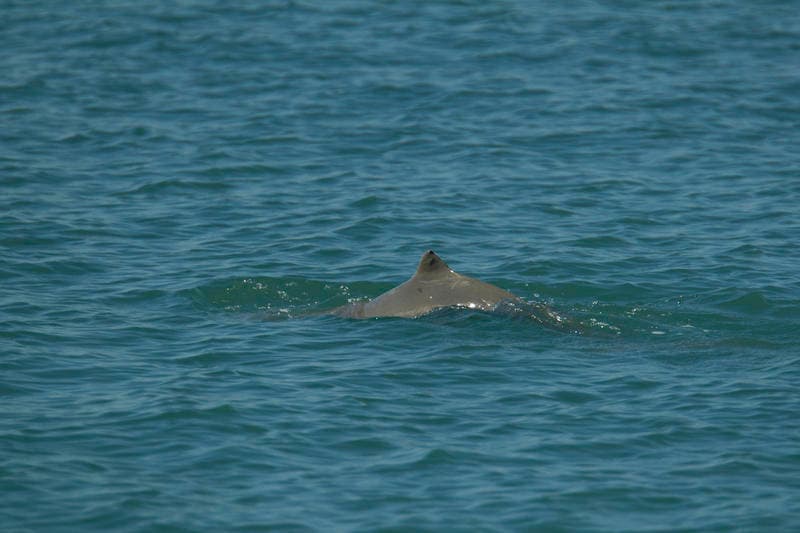
- Lower and More Wide-Based Dorsal Fin Than Atlantic and Indian Ocean Humpback Dolphins
- Short, Triangular Dorsal Fin
- Absence of Dorsal 'Hump' Typical of Atlantic and Indian Humpback Dolphins
- Distinctive Dark Dorsal Feature Resembling A Cape
About Australian humpback dolphin
The Australian humpback dolphin, scientifically known as Sousa sahulensis, is a species of humpback dolphin found in the waters of the Sahul Shelf, located between northern Australia and southern New Guinea. This species was formally described in 2014, making it the fourth recognized species of humpback dolphin. Its discovery was confirmed through extensive DNA analysis, which identified unique genetic markers distinguishing it from other humpback dolphins.
Appearance and Identification
Australian humpback dolphins possess distinct physical characteristics. Their dorsal fin is notably lower and more wide-based compared to their relatives in the Atlantic and Indian Oceans, and it lacks the typical hump. The body is primarily a dark gray, with the flanks often lightening to a paler gray. A striking feature is a diagonal dark marking, resembling a cape, that extends from just above the eye and neck down to the urogenital area, separating the darker back from the lighter belly. Adults commonly display white scarring and dark flecking across their head, back, dorsal fin, and tail stock. Adult lengths typically range from 1 to 2.7 meters (3.5 to 9 feet), with weights between 230 and 250 kg (507-550 lb). Newborns weigh between 40 and 50 kg (88-110 lb).
Life History and Reproduction
Reproduction in Australian humpback dolphins occurs year-round. The gestation period lasts approximately 10 to 12 months, and mothers may nurse their young for over two years. Calving intervals are estimated to be around three years. These dolphins are known to live for at least 30 years.
Diet and Foraging Behavior
As opportunistic and generalist feeders, Australian humpback dolphins consume a varied diet of coastal-estuarine and inshore reef fish. They forage across a range of habitats, including mangroves, sandy-bottom estuaries, seagrass meadows, and inshore coral reefs. Their feeding strategies can involve individuals dispersed over large areas or tight groups concentrating on localized prey. They have been observed engaging in strand feeding, a behavior where they chase fish into shallow waters, sometimes beaching themselves to capture their meal.
Conservation Status and Threats
The Australian humpback dolphin is classified as Vulnerable. Their coastal distribution makes them susceptible to numerous threats, including incidental capture in gill nets and shark nets, habitat loss and degradation due to coastal development and pollution, collisions with vessels, and the impacts of climate change. The official recognition of Sousa sahulensis as a distinct species is expected to aid in its conservation efforts, potentially leading to more targeted protection measures.
Behavior
These dolphins are generally characterized as shy and elusive, often maintaining a distance from boats. They have been observed interacting with other cetacean species, including displays of mating courtship with Australian snubfin dolphins.
Source: Wikipedia ↗
Frequently Asked Questions
What makes the Australian humpback dolphin different from other humpback dolphins?
The Australian humpback dolphin has a lower and wider dorsal fin compared to the Atlantic and Indian Ocean humpback dolphins. Its coloration is dark gray, and it features a distinctive dark dorsal marking that resembles a cape, setting it apart from its relatives like the white Chinese white dolphin.
What is the typical size and appearance of an Australian humpback dolphin?
Australian humpback dolphins range in length from approximately 1 to 2.7 meters (3.5 to 9 feet). They are predominantly dark gray, with flanks that lighten to a pale gray. Adults may exhibit white scarring and dark flecking on their head, back, dorsal fin, and tail stock.
What do Australian humpback dolphins eat and how do they hunt?
These dolphins are opportunistic and generalist feeders, consuming a wide array of coastal-estuarine and inshore reef fish. They forage in diverse habitats and have been observed chasing fish into shallow waters, sometimes beaching themselves to catch their prey.
What are the main threats to the Australian humpback dolphin population?
Due to their coastal distribution, Australian humpback dolphins are vulnerable to incidental capture in fishing nets, habitat loss and degradation, vessel strikes, pollution, and the impacts of climate change. These factors contribute to their declining population numbers.
How long do Australian humpback dolphins live and what is their reproductive cycle?
Individuals can live for at least 30 years. Mating and calving occur throughout the year, with a gestation period lasting between 10 and 12 months. Lactation may extend for over two years, and calving intervals are likely around three years.
Related Cetacean species
Australian snubfin dolphin
The Australian snubfin dolphin (Orcaella heinsohni) is a distinct dolphin species found along the northern coasts of Australia, scientifically described in 2005. It is distinguished from its close relative, the Irrawaddy dolphin, by its three-toned coloration, a rounded forehead, and a very small dorsal fin. This species is endemic to Australia and faces significant threats from human activities.

Atlantic spotted dolphin
The Atlantic spotted dolphin is a medium-sized dolphin inhabiting warm temperate and tropical waters of the Atlantic Ocean. It is distinguished by its unique spotted coloration, which develops and changes significantly as the dolphin matures through different age-dependent phases. These highly social animals are known for their cooperative hunting strategies and complex vocalizations.

Araguaian river dolphin
The Araguaian river dolphin, also known as the Araguaian boto, is a South American freshwater dolphin found in the Araguaia-Tocantins basin of Brazil. It was recognized as a distinct species in 2014 based on genetic and morphological differences, though this classification is still debated. This dolphin is characterized by its pinkish-gray coloration, a dorsal ridge instead of a fin, and unfused neck vertebrae allowing for head rotation.