
Araguaian river dolphin
Not officially listed by IUCN, but authors suggest 'Vulnerable or worse'
The Araguaian river dolphin, also known as the Araguaian boto, is a South American freshwater dolphin found in the Araguaia-Tocantins basin of Brazil. It was recognized as a distinct species in 2014 based on genetic and morphological differences, though this classification is still debated. This dolphin is characterized by its pinkish-gray coloration, a dorsal ridge instead of a fin, and unfused neck vertebrae allowing for head rotation.
Key Facts
- ›Native to the Araguaia-Tocantins basin in Brazil.
- ›Distinguished from other river dolphins by skull morphology and tooth count.
- ›Possesses a dorsal ridge instead of a dorsal fin.
- ›Has unfused neck vertebrae, enabling significant head rotation.
- ›Relies on echolocation to hunt fish in turbid waters.
- ›Population estimated between 600 to 1500 individuals with limited genetic diversity.

Araguaian Boto
Gray To Pink
Fish
Freshwater River Basins, Turbid Waters
- Less Active Than Marine Dolphins
- Use Echolocation For Hunting
- Exhibit Complex Acoustic Communication, Especially Between Mothers and Calves
Araguaia–Tocantins Basin, Brazil
Dorsal Ridge Instead of A Dorsal Fin, Unfused Neck Vertebrae Allowing Head Rotation, Wider Skull Compared To Amazon River Dolphin, Prominent Forehead, Longer Snout Than Most Marine Dolphins, Smaller Eyes Than Marine Dolphins
About Araguaian river dolphin
The Araguaian river dolphin, scientifically known as Inia araguaiaensis and sometimes referred to as the Araguaian boto, is a species of freshwater dolphin native to the Araguaia-Tocantins river basin in Brazil. Its recognition as a distinct species, established in January 2014, is based on genetic data and differences in skull morphology, including a generally wider skull, when compared to the closely related Amazon river dolphin (Inia geoffrensis). However, this classification remains a subject of debate within the scientific community, with some experts questioning the conclusions drawn from limited specimen studies.
Description and Behavior
These dolphins are characterized by their gray to pink coloration and a body length typically ranging from 1.53 to 2.6 meters. Instead of a dorsal fin, they possess a dorsal ridge. A unique anatomical feature is their unfused neck vertebrae, which grants them exceptional flexibility to turn their heads sharply. Like other river dolphins, they have a prominent forehead and a notably long snout, coupled with smaller eyes, reflecting adaptations to their often turbid aquatic environment where vision is less critical than other senses. Their diet consists mainly of fish, which they locate and capture using echolocation. River dolphins are generally less active than their marine counterparts.
Communication and Taxonomy
River dolphins exhibit a sophisticated system of acoustic calls that provide insights into their social interactions and individual behaviors. Research has identified a complex array of sound-types, with particularly frequent emissions observed when young are present, indicating a strong mother-calf bond. These vocalizations are comparable in complexity to those of social marine dolphins like orcas and pilot whales. Genetically, the Araguaian river dolphin is most closely related to the Amazon river dolphin, with an estimated divergence of approximately 2.08 million years ago, coinciding with the geographical separation of their respective river basins.
Conservation Concerns
The Araguaian river dolphin faces significant conservation challenges. The estimated population size is between 600 and 1500 individuals, and the species suffers from limited genetic diversity. Their habitat is under considerable pressure from agricultural, ranching, and industrial activities, as well as from the construction of hydroelectric dams that fragment their riverine environment. Commercial fishermen pose a direct threat, sometimes killing dolphins to protect their catch or by using poisoned bait. Authors of the discovery paper suggest that the species' likely future IUCN conservation status will be Vulnerable or worse.
Source: Wikipedia ↗
Frequently Asked Questions
Is the Araguaian river dolphin a recognized species?
The Araguaian river dolphin was described as a distinct species in 2014 based on DNA and skull morphology. However, its status as a separate species is still debated by some scientific bodies due to limited specimen examination in the initial study.
What are the physical characteristics of the Araguaian river dolphin?
These dolphins are typically gray to pink in color and range from 1.53 to 2.6 meters in length. They have a prominent forehead, a long snout, and smaller eyes than marine dolphins, along with a dorsal ridge instead of a fin. Their neck vertebrae are unfused, allowing them to turn their heads sharply.
What does the Araguaian river dolphin eat?
The Araguaian river dolphin primarily feeds on fish. They utilize echolocation to help them locate and capture their prey, especially in the often turbid waters of their habitat.
What are the threats facing the Araguaian river dolphin?
Major threats include habitat degradation from agricultural, ranching, and industrial activities, as well as the impact of hydroelectric dams fragmenting their riverine environment. Commercial fishermen also pose a threat, sometimes killing them to prevent them from stealing fish from nets or by using poisoned bait.
How complex is the communication of Araguaian river dolphins?
River dolphins, including the Araguaian species, possess a complex set of acoustic calls. Studies have identified numerous sound-types, with particularly notable and frequent sounds emitted when calves are present, suggesting a complex mother-calf relationship.
Related Cetacean species

Australian humpback dolphin
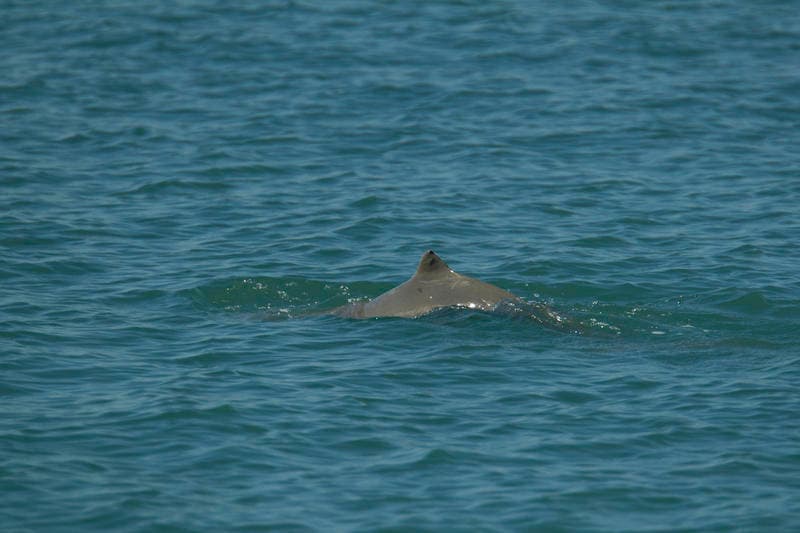
The Australian humpback dolphin (Sousa sahulensis) is a species of humpback dolphin found in the waters of northern Australia and southern New Guinea, specifically around the Sahul Shelf. It is distinguished from other humpback dolphin species by its lower, wider dorsal fin, its dark gray coloration with a distinctive cape-like marking, and its dentition and vertebral count. Despite being scientifically described in 2014, this vulnerable species faces significant threats from habitat destruction and human activities.
Australian snubfin dolphin
The Australian snubfin dolphin (Orcaella heinsohni) is a distinct dolphin species found along the northern coasts of Australia, scientifically described in 2005. It is distinguished from its close relative, the Irrawaddy dolphin, by its three-toned coloration, a rounded forehead, and a very small dorsal fin. This species is endemic to Australia and faces significant threats from human activities.

Atlantic spotted dolphin
The Atlantic spotted dolphin is a medium-sized dolphin inhabiting warm temperate and tropical waters of the Atlantic Ocean. It is distinguished by its unique spotted coloration, which develops and changes significantly as the dolphin matures through different age-dependent phases. These highly social animals are known for their cooperative hunting strategies and complex vocalizations.