
Atlantic white-sided dolphin
The Atlantic white-sided dolphin is a medium-sized dolphin inhabiting the cool to temperate waters of the North Atlantic Ocean. It is distinguished by a unique white to pale-yellow patch behind its dorsal fin, a feature that sets its coloration apart from other pelagic cetaceans. These dolphins are social, often found in large pods, and are known for their acrobatic displays and interaction with boats.
Key Facts
- ›Found in cool to temperate waters of the North Atlantic Ocean.
- ›Distinctive white to pale-yellow patch behind the dorsal fin.
- ›Adults typically measure 2.5-2.8 meters and weigh 180-230 kg.
- ›Diet primarily consists of fish like herring and hake, and squid.
- ›Pods can range from dozens to several hundred individuals.
- ›Conservation status is 'Least Concern' by the IUCN.

White-Sided Dolphin
- White To Pale-Yellow Patch Behind the Dorsal Fin
- White Chin, Throat, and Belly
- Dark-Grey To Black Flippers, Dorsal Fin, and Back
- Grayish Stripe Running From the Beak, Above the Eye, Down To the Tail Stock
Herring, Hake, Squid, Mackerel, Various Bottom-Dwelling Fish
- Cool To Temperate Waters of the North Atlantic Ocean
- Continental Shelf Waters
- Areas of Steep Slopes and Canyons
- Colder, Slightly Less Saline Waters
- Fairly Acrobatic
- Keen To Interact With Boats
- Social Animals
- Display Aerial Behaviors
- Cooperative Hunting
- Can Display Violent Behavior Towards Harbor Porpoises
North Atlantic Ocean, Norwegian Sea, Davis Strait, Coastal North Carolina, Celtic Sea, Azores, Newfoundland, Cape Cod, Gulf of St. Lawrence, United Kingdom, Iceland, Greenland, Northern North Sea
- White To Pale-Yellow Patch Behind the Dorsal Fin
- Sharply Pointed Dorsal Fin
About Atlantic white-sided dolphin
The Atlantic white-sided dolphin, scientifically known as Lagenorhynchus acutus (and recently moved to the genus Leucopleurus), is a striking inhabitant of the cool to temperate waters of the North Atlantic Ocean. It is recognized for its distinct coloration, which includes a prominent white to pale-yellow patch situated behind its dorsal fin, a unique characteristic among many pelagic cetaceans. These dolphins are social creatures, frequently observed in pods that can range from dozens to several hundred individuals, and are known for their acrobatic behaviors and curiosity towards boats.
Description and Biology
Adult Atlantic white-sided dolphins typically reach lengths of about 2.5 to 2.8 meters (8.2 to 9.2 feet) and weigh between 180 and 230 kilograms (400-510 lb). Calves are born at just over a meter in length. Females mature sexually between 6 and 12 years of age, while males mature between 7 and 11 years. The species has a gestation period of approximately 11 months, followed by a lactation period of about 18 months, and are known to live for at least 17 years. Their coloration is well-defined: the chin, throat, and belly are white, contrasting with dark-grey to black flippers, dorsal fin, and back. A distinguishing white patch is present behind the dorsal fin, above a lighter gray stripe that extends from the beak down to the tail stock.
Geographic Range and Habitat
This species is endemic to the northern Atlantic Ocean. Its distribution spans from the Norwegian Sea in the northeast, the Davis Strait in the northwest, coastal North Carolina in the southwest, and the Celtic Sea in the southeast, with potential extensions to the Azores. Areas with high population densities include the shores of Newfoundland and Cape Cod, the region between the United Kingdom, Iceland, and Greenland, and the northern North Sea. They typically inhabit continental shelf waters, around 100 meters deep, often preferring areas with steep slopes and canyons, and are associated with colder, less saline waters compared to some other dolphin species.
Behavior and Diet
Atlantic white-sided dolphins are social animals that often travel in large pods, exhibiting aerial behaviors during travel. While they can number in the hundreds, studies suggest there may not be strong familial bonds within these groups, functioning more as aggregations for safety. They are known to engage in cooperative hunting and their vocal repertoire includes squeals, whistles, clicks, and buzzes, which are thought to be used for communication, particularly during social interactions. They are generally docile and have been observed interacting non-violently with other cetacean species, though they have also been known to exhibit aggressive behavior towards harbor porpoises. Their diet primarily consists of fish like herring and hake, along with squid, but they are opportunistic and consume a variety of prey.
Migration and Reproduction
These dolphins do not undertake strict seasonal migrations but rather move within their home range in response to prey availability. For instance, they may move southwards in winter and spring along the eastern North American coast. Reproduction is likely seasonal, with most calves born around June and July. The gestation period lasts about 11 months, followed by an 18-month lactation period, with birth intervals varying between 1 to 3 years.
Conservation Status and Threats
The Atlantic white-sided dolphin is currently classified as 'Least Concern' by the IUCN. However, certain populations, particularly those in the North and Baltic Seas, are listed on Appendix II of the Convention on the Conservation of Migratory Species of Wild Animals, necessitating international cooperation for their conservation. Historically, they were hunted in drives, and while these have largely ceased, some whaling still occurs in the Faroe Islands. They are also vulnerable to entanglement and bycatch in fishing gear, and face threats from anthropogenic underwater noise and pollution, including persistent organic pollutants and heavy metals.
Source: Wikipedia ↗
Frequently Asked Questions
What are the key physical characteristics of the Atlantic white-sided dolphin?
The Atlantic white-sided dolphin is a relatively small dolphin with a distinctive coloration. A key feature is a white to pale-yellow patch located behind the dorsal fin on both sides of its body. Its chin, throat, and belly are white, while the flippers, dorsal fin, and back are dark-grey to black, with an additional white patch below the dorsal fin.
Where are Atlantic white-sided dolphins found?
This species is endemic to the northern Atlantic Ocean. Their distribution extends from the Norwegian Sea in the northeast to the Davis Strait in the northwest, and from coastal North Carolina in the southwest to the Celtic Sea in the southeast, with possible extensions to the Azores.
What do Atlantic white-sided dolphins eat?
The primary diet of the Atlantic white-sided dolphin includes fish such as herring and hake, as well as squid. They are opportunistic carnivores and will also consume smaller fish like mackerel and various bottom-dwelling fish.
How large are Atlantic white-sided dolphin pods?
Pod sizes for Atlantic white-sided dolphins can vary significantly by location. Groups averaging around 60 individuals have been observed near the Newfoundland coastline, while groups east of Iceland are somewhat smaller. The pod size can range from several dozen to several hundred individuals.
What is the conservation status of the Atlantic white-sided dolphin?
The International Union for Conservation of Nature (IUCN) currently classifies the Atlantic white-sided dolphin as 'Least Concern.' However, populations in the North and Baltic Seas are listed on Appendix II of the Convention on the Conservation of Migratory Species of Wild Animals due to an unfavorable conservation status or potential benefit from international cooperation.
Do Atlantic white-sided dolphins migrate seasonally?
Atlantic white-sided dolphins do not undertake specific seasonal migrations. Instead, they move within their home range primarily following the distribution of their prey. For instance, in the waters off eastern North America, they tend to move southwards during winter and spring.
Related Cetacean species

Atlantic spotted dolphin
The Atlantic spotted dolphin is a medium-sized dolphin inhabiting warm temperate and tropical waters of the Atlantic Ocean. It is distinguished by its unique spotted coloration, which develops and changes significantly as the dolphin matures through different age-dependent phases. These highly social animals are known for their cooperative hunting strategies and complex vocalizations.

Australian humpback dolphin
The Australian humpback dolphin (Sousa sahulensis) is a species of humpback dolphin found in the waters of northern Australia and southern New Guinea, specifically around the Sahul Shelf. It is distinguished from other humpback dolphin species by its lower, wider dorsal fin, its dark gray coloration with a distinctive cape-like marking, and its dentition and vertebral count. Despite being scientifically described in 2014, this vulnerable species faces significant threats from habitat destruction and human activities.
Australian snubfin dolphin
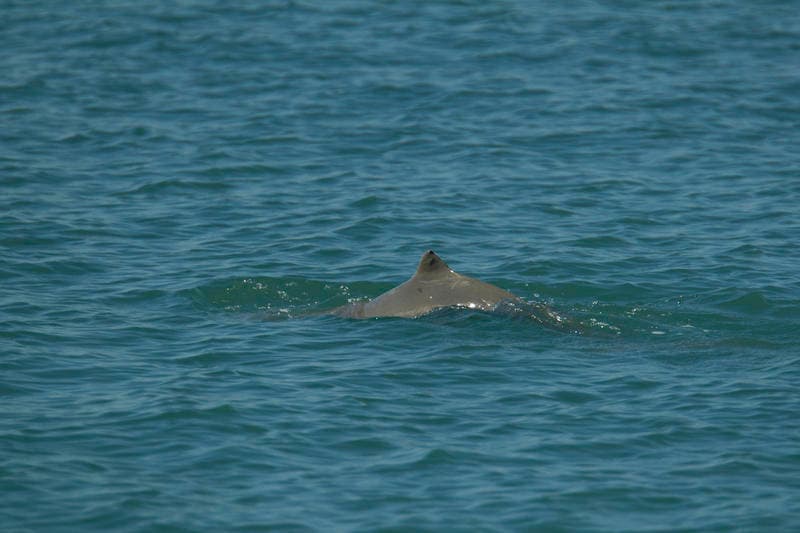
The Australian snubfin dolphin (Orcaella heinsohni) is a distinct dolphin species found along the northern coasts of Australia, scientifically described in 2005. It is distinguished from its close relative, the Irrawaddy dolphin, by its three-toned coloration, a rounded forehead, and a very small dorsal fin. This species is endemic to Australia and faces significant threats from human activities.