
Cycas apoa
Wet lowland forest in modestly seasonally flooded areas.·Erect stems·Least Concern
Cycas apoa is a species of cycad native to northern New Guinea and Halmahera Island, thriving in wet lowland forests, particularly in seasonally flooded areas along the Sepik River basin. This species is characterized by erect stems, long, glossy green leaves with spiny petioles, and distinctive orange cones. Its scientific name originates from the vernacular name used by the Kaka tribe of the Sepik River estuary.
Key Facts
- ›Native to northern New Guinea and Halmahera Island.
- ›Found in wet lowland forests, including seasonally flooded areas.
- ›Features erect stems up to 2.5 meters tall.
- ›Leaves are long (1.8-2.5 m) and glossy green, with spiny petioles.
- ›Male cones are orange and narrowly ovoid; female cones are grey with orange hairs.
- ›Not currently considered threatened due to large populations and remote habitat.

Northern New Guinea, Halmahera Island
Erect stems up to 2.5 m tall
- Hairy and orange at first, soon losing hair
- Becoming glossy bright green
- Numerous and spreading
- 1.8-2.5 m long
- Petiole armed with spines nearly over its entirety
- Glabrous, glossy green leaflets angled forward about 70-80 degrees
- Female cones are open, grey with orange hairs, with each sporophyll containing 6-8 ovules.
- Male cones are orange, narrowly ovoid.
About Cycas apoa
Cycas apoa is a species of cycad recognized for its distinctive appearance and its native habitat in the tropical lowlands of Southeast Asia and Oceania. It is found in northern New Guinea and on Halmahera Island, thriving in wet forest environments, particularly in areas that experience seasonal flooding along the Sepik River basin.
Botanical Characteristics
This cycad species typically features erect stems that can reach heights of up to 2.5 meters. Its leaves are noteworthy for their size, measuring between 1.8 and 2.5 meters in length. Initially covered in fine hairs and appearing orange, the leaves soon become smooth and develop a glossy, bright green color. The petioles, which are the stalks supporting the leaves, are armed with spines along most of their length. The leaflets themselves are glabrous (smooth and hairless) and present a glossy green hue, angled forward at approximately 70 to 80 degrees.
Reproductively, Cycas apoa exhibits separate male and female cones. The male cones are described as orange and narrowly ovoid in shape. The female cones are open and grey, adorned with orange hairs, with each sporophyll bearing between six and eight ovules.
Origins and Conservation
The scientific name, Cycas apoa, originates from the local vernacular name used by the Kaka tribe, indigenous to the Sepik River estuary in New Guinea. Previously, plants of this species were thought to be a variant of Cycas circinalis. It is closely related to Cycas rumphii and shares a portion of its geographical distribution with this species. Despite its specific habitat requirements, Cycas apoa is not currently considered threatened. This positive conservation outlook is attributed to its substantial population size, its relatively fast growth rate for a cycad, and its occurrence in remote, less accessible habitats.
Source: Wikipedia ↗
Frequently Asked Questions
Where is Cycas apoa found naturally?
Cycas apoa is naturally found in northern New Guinea and on Halmahera Island. It specifically occurs in the Sepik River basin, inhabiting wet lowland forests that experience seasonal flooding.
What do the leaves of Cycas apoa look like?
The leaves of Cycas apoa are long, typically ranging from 1.8 to 2.5 meters. Initially hairy and orange, they quickly lose their hair to become glossy and bright green. The petioles are armed with spines, and the leaflets are angled forward.
What are the reproductive cones of Cycas apoa like?
Cycas apoa produces distinct male and female cones. The male cones are orange and narrowly ovoid, while the female cones are grey and covered in orange hairs, with each sporophyll bearing 6-8 ovules.
What is the conservation status of Cycas apoa?
Cycas apoa is not presently considered threatened. This is attributed to its large population size, rapid growth rate, and the remote nature of its habitat, which contributes to its stability.
What does the name 'Cycas apoa' mean?
The scientific name 'Cycas apoa' is derived from the plant's vernacular name. This name is used in the language of the Kaka tribe, who reside in the Sepik River estuary region of New Guinea.
Related Cycad species

Lepidozamia hopei
Lepidozamia hopei, commonly known as Hope's cycad or zamia palm, is a cycad species endemic to a small region of Queensland, Australia. It is renowned for its impressive stature, reputed to be the tallest cycad species, growing as an understorey tree in rainforest environments. Botanically, it is characterized by its tall, single trunk, long fronds with numerous leaflets, and exceptionally large reproductive cones.
Cycas thouarsii
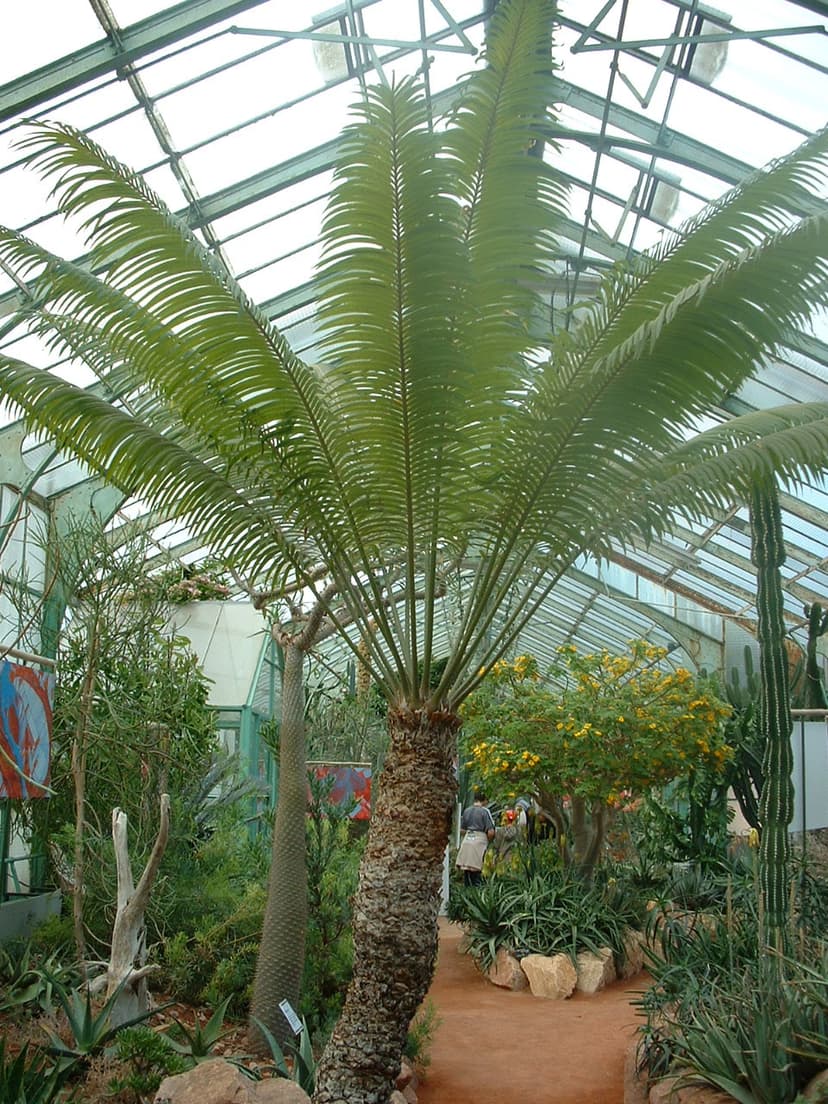
Cycas thouarsii, also known as the Madagascar cycad, is a large, evergreen, arborescent cycad native to Madagascar and surrounding islands, as well as coastal East Africa. It is characterized by its palm-like stem, long, pinnate, dark-green leaves, and distinctive pollen cones. The species thrives in coastal areas and light forests, and while its seeds contain toxins, they can be rendered edible through processing.
Macrozamia miquelii
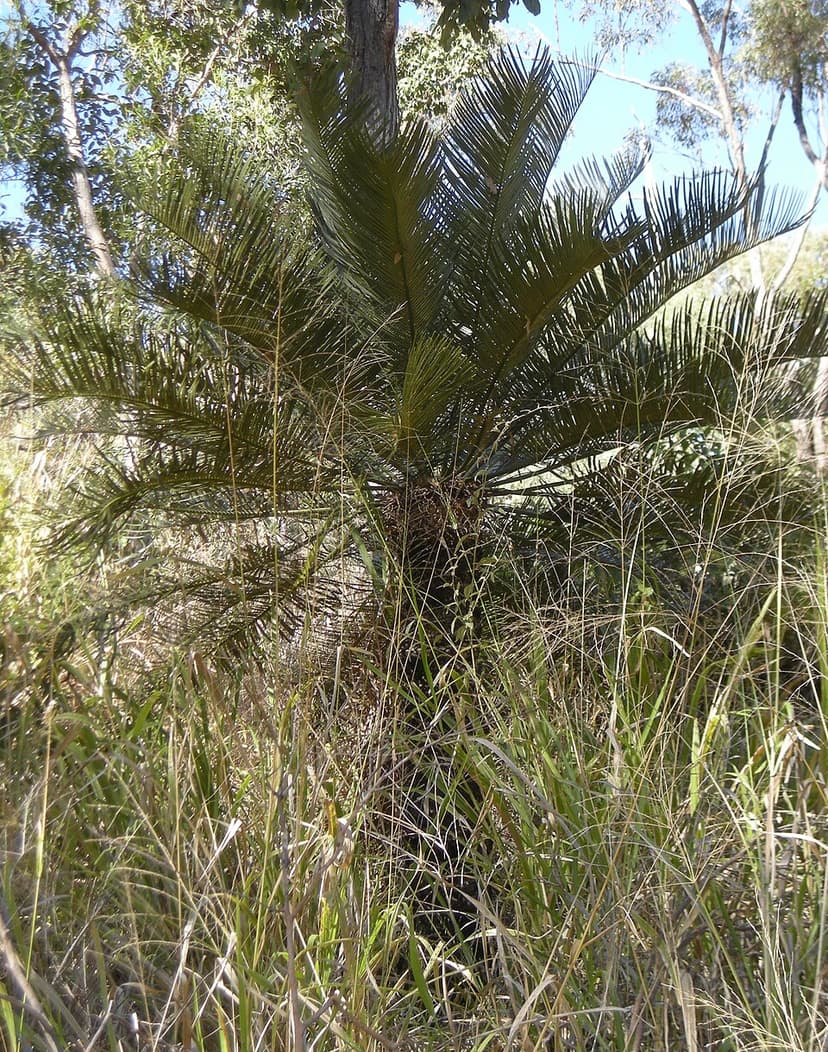
Macrozamia miquelii is a species of cycad native to eastern Australia, specifically Queensland and New South Wales. It is characterized by its medium height, intermediate cone sizes, and lighter green leaves compared to other Zamiaceae members. The plant's seeds, with an attractive orange-red sarcotesta, play a role in mutualistic seed dispersal with fauna, and are edible for humans when properly prepared to remove toxins.