
Cycas thouarsii
Light forests and their borders, near coastal sites on sandy soil or coral formations.·Arborescent·Least Concern
Cycas thouarsii, also known as the Madagascar cycad, is a large, evergreen, arborescent cycad native to Madagascar and surrounding islands, as well as coastal East Africa. It is characterized by its palm-like stem, long, pinnate, dark-green leaves, and distinctive pollen cones. The species thrives in coastal areas and light forests, and while its seeds contain toxins, they can be rendered edible through processing.
Key Facts
- ›Native to Madagascar, Comoros, Mayotte, Seychelles, Kenya, Mozambique, and Tanzania.
- ›Possesses a palm-like stem that can grow 4-10 meters tall.
- ›Leaves are pinnate, dark-green, glossy, and can reach lengths of 150-300 cm.
- ›Seeds have a red-brown fleshy coat and a characteristic spongy endocarp that allows them to float.
- ›Classified as Least Concern on the IUCN Red List.
- ›Seeds are toxic but edible after processing, holding cultural significance in some regions.
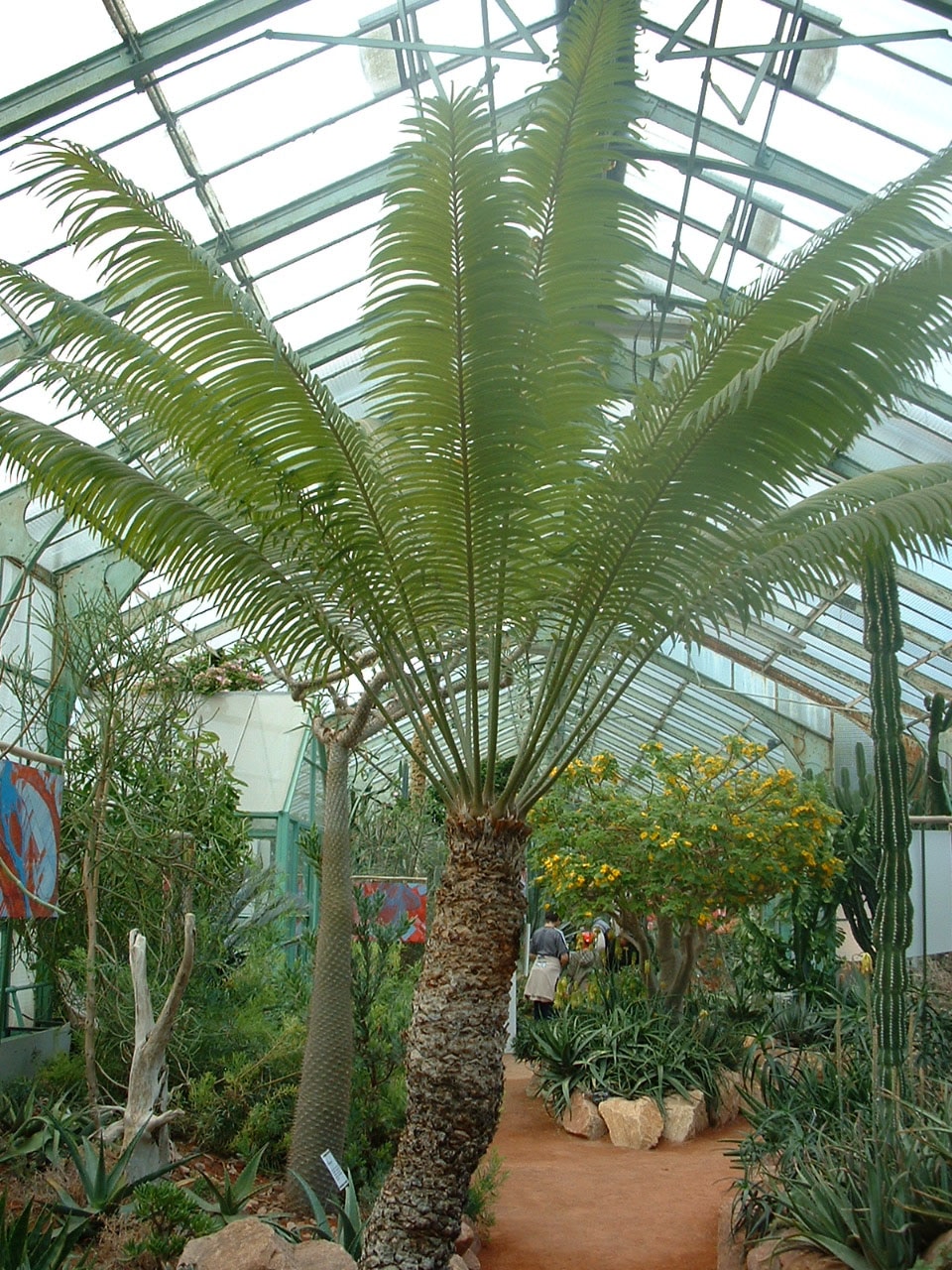
Madagascar Cycad
Madagascar, Comoros, Mayotte, Seychelles, Kenya, Mozambique, Tanzania
Resembles That of A Palm, Grows 4–10 Meters Tall, Up To 45 cm In Diameter
- Pinnate
- Dark-green
- Somewhat glossy
- 150—300 centimeters long
- 60-120 leaflets per side
- Leaflets are c. 17 cm long, lanceolate, with a slightly bent margin
- Leaflets have a more prominent midrib on the paler lower surface
- Leaf-stalk is 40–50 cm long, with two rows of spines
- Emerging leaves are hairy
- Young leaves have a distinct bluish tint
- Pollen cone is spindle-shaped, 30–60 cm high and 10–15 cm in diameter
- Pollen cone varies in color from orange to pale brown
- Pollen cone scales have a sharp apical spine
- Ovulate cones are composed of overlapping, yellow, hairy megasporophylls
- Megasporophylls are 29—32 centimeters long, with 5-13 marginal teeth per side
- Megasporophylls bear 4-10 ovules along their edges
Ovoid, 50—60 Millimeters In Size, Red-Brown Fleshy Seed Coat, Spongy Endocarp
Ornamental Plant, Food Source
Collectors, Growth of Seaside Resorts, Agriculture Development
About Cycas thouarsii
Cycas thouarsii, commonly referred to as the Madagascar cycad, is a striking evergreen cycad species that grows in an arborescent form, resembling a palm tree. It is distinguished by its robust, palm-like stem, which can reach heights of 4 to 10 meters and a diameter of up to 45 cm. The plant's most prominent features are its large, pinnate leaves, which are a deep, glossy green and can extend from 150 to 300 centimeters in length, each comprised of numerous leaflets. Emerging leaves display a unique bluish tint and are covered in fine hairs, setting them apart from closely related species.
Botanical Characteristics
The leaves of Cycas thouarsii are arranged spirally on the stem and are interspersed with numerous brown, hairy, scale-like leaves. The leaflets themselves are lanceolate, measuring approximately 17 cm in length, with a slightly recurved margin. The leaf stalk, which is 40–50 cm long, is notable for bearing two rows of spines along most of its extent. The reproductive structures include spindle-shaped pollen cones, typically 30–60 cm tall, which range in color from orange to pale brown and possess scales with sharp apical spines. The ovulate cones are formed from overlapping megasporophylls, which are yellow, hairy, and adorned with 5–13 marginal teeth, each bearing 4–10 ovules.
The seeds of Cycas thouarsii are ovoid, measuring 50–60 mm, and feature a red-brown fleshy seed coat. A key characteristic is their spongy endocarp, which aids in seed dispersal by allowing them to float. Despite the presence of toxic cyanotoxins in the seeds, they are consumed on the Comorian island of Ngazidja after undergoing a traditional process of repeated washing, fermentation, and drying, where the plant, known locally as 'ntsamu', holds cultural significance.
Habitat and Conservation
Cycas thouarsii is found across a range of locations, including Madagascar, the Comoros, Mayotte, Seychelles, and along the coastal regions of Kenya, Mozambique, and Tanzania. It typically inhabits areas up to 200 meters above sea level, preferring light forests, their edges, or coastal sites with sandy soil or coral formations. These environments generally receive between 1000 to 3000 millimeters of annual precipitation. While historically impacted by collectors and the expansion of seaside resorts and agriculture, the species is currently classified as Least Concern on the IUCN Red List, indicating no immediate threats to its overall survival. The plant is noted for being relatively fast-growing for a cycad and is occasionally cultivated as a specimen plant, requiring moist yet well-drained soil and tolerating a variety of light conditions.
Source: Wikipedia ↗
Frequently Asked Questions
What is Cycas thouarsii?
Cycas thouarsii, commonly known as the Madagascar cycad, is an evergreen, arborescent cycad belonging to the genus Cycas. It is recognized for its palm-like stem and long, pinnate leaves.
Where is Cycas thouarsii found naturally?
This cycad is indigenous to Madagascar and the nearby islands of Comoros, Mayotte, and the Seychelles. It also occurs along the coasts of Kenya, Mozambique, and Tanzania.
What are the characteristics of its leaves?
The leaves of Cycas thouarsii are pinnate, dark-green, somewhat glossy, and typically measure 150-300 centimeters in length. Each leaf has 60-120 leaflets per side, which are lanceolate and have a slightly bent margin.
What is the conservation status of Cycas thouarsii?
Cycas thouarsii is currently classified as Least Concern on the IUCN Red List. While populations have been impacted by collectors and development, there is no immediate threat to the species' survival.
Are the seeds of Cycas thouarsii edible?
The seeds of Cycas thouarsii contain cyanotoxins and are toxic in their raw state. However, on the Comorian island of Ngazidja, they are traditionally rendered edible through a process of repeated washing, fermentation, and drying.
What kind of habitat does Cycas thouarsii prefer?
The Madagascar cycad grows up to 200 meters above sea level, typically found in light forests and their borders, or near coastal sites. It prefers sandy soil or coral formations and areas with annual precipitation ranging from 1000 to 3000 millimeters.
Related Cycad species

Lepidozamia hopei
Lepidozamia hopei, commonly known as Hope's cycad or zamia palm, is a cycad species endemic to a small region of Queensland, Australia. It is renowned for its impressive stature, reputed to be the tallest cycad species, growing as an understorey tree in rainforest environments. Botanically, it is characterized by its tall, single trunk, long fronds with numerous leaflets, and exceptionally large reproductive cones.
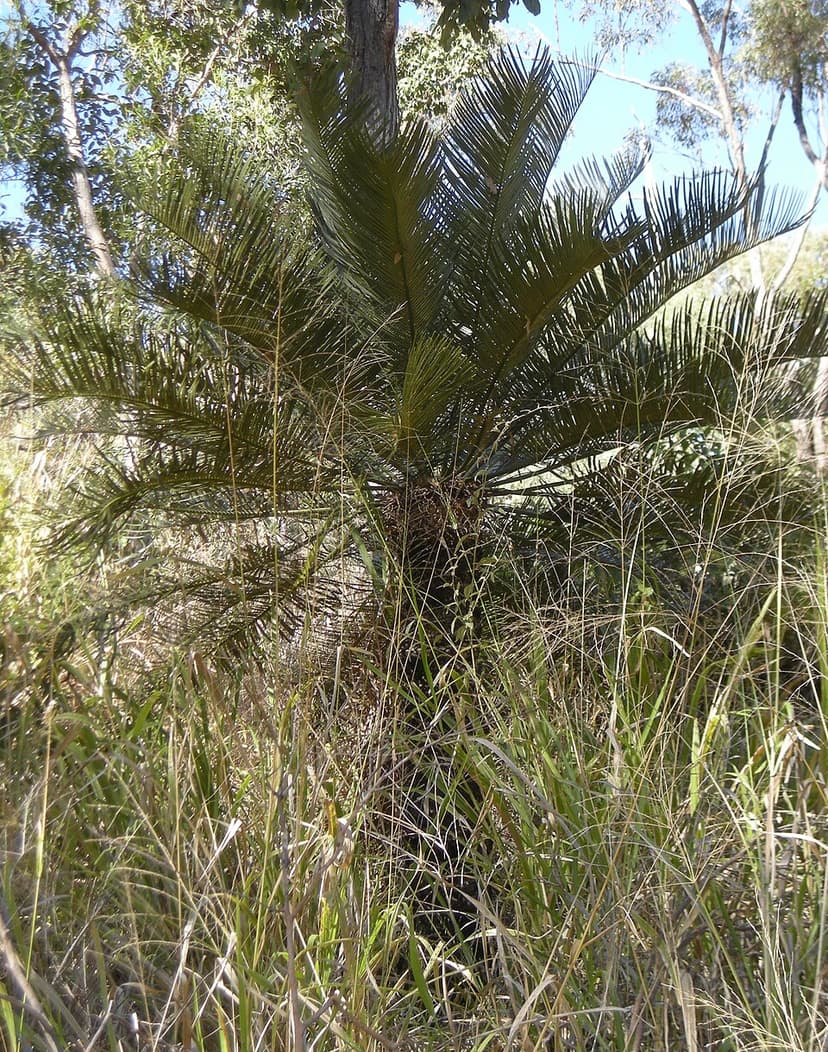
Macrozamia miquelii
Macrozamia miquelii is a species of cycad native to eastern Australia, specifically Queensland and New South Wales. It is characterized by its medium height, intermediate cone sizes, and lighter green leaves compared to other Zamiaceae members. The plant's seeds, with an attractive orange-red sarcotesta, play a role in mutualistic seed dispersal with fauna, and are edible for humans when properly prepared to remove toxins.

Cycas apoa
Cycas apoa is a species of cycad native to northern New Guinea and Halmahera Island, thriving in wet lowland forests, particularly in seasonally flooded areas along the Sepik River basin. This species is characterized by erect stems, long, glossy green leaves with spiny petioles, and distinctive orange cones. Its scientific name originates from the vernacular name used by the Kaka tribe of the Sepik River estuary.