
Cycas balansae
Dense mountain rainforests·Subterranean stem with above-ground leaves
Cycas balansae is a species of cycad indigenous to the dense mountain rainforests of southwestern China and adjacent northern Vietnam. This species is characterized by its subterranean, unbranched stem and long, pinnate leaves adorned with spines along the petiole. Its reproductive cones are notable, with female cones bearing ovules and male cones being erect and yellow.
Key Facts
- ›Native to southwestern China (Guangxi) and northern Vietnam.
- ›Features a subterranean, unbranched stem.
- ›Leaves are pinnate, long (1.2-2.6 m), and armed with spines on the petiole.
- ›Leaflets are papery and angled forward.
- ›Female cones have 2-4 ovules, while male cones are erect and yellow.
- ›Cultivated as a pot plant within its native range.

China, Vietnam
Subterranean, Unbranched, 12–20 cm In Diameter
1.2–2.6 m Long, Pinnate With 90-160 Leaflets, Armed With Spines Along the Petiole, Leaflets Are Papery In Texture, Leaflets Angled Forward At 80 Degrees
- Female cones: Closed type, 8–12 cm long sporophylls with 2-4 ovules.
- Male cones: Yellow, solitary, erect, 20–25 cm long and 4–7 cm diameter, with wedge shaped sporophylls.
Yellow Sarcotesta
Ornamental
About Cycas balansae
Cycas balansae is a distinct species of cycad found in the humid, dense mountain rainforests of southwestern China, particularly in the Guangxi province, and extends into adjacent northern Vietnam. This species is recognized for its unique botanical features, including a subterranean, unbranched stem and long, pinnate leaves that are adorned with spines along their petioles. The leaflets are papery and angled forward, contributing to the plant's characteristic appearance.
Botanical Characteristics
The stem of Cycas balansae is typically 12–20 cm in diameter and grows entirely underground, supporting between 4 to 9 leaves. Each leaf can reach lengths of 1.2 to 2.6 meters and is composed of 90 to 160 leaflets. The reproductive structures of Cycas balansae are also notable. The female cones are described as being of a closed type, with sporophylls measuring 8–12 cm in length, each bearing 2 to 4 ovules. Male cones are solitary, erect, and a vibrant yellow color, measuring 20–25 cm long and 4–7 cm in diameter, featuring wedge-shaped sporophylls. The seeds possess a yellow sarcotesta.
Distribution and Cultivation
In addition to Guangxi, China, Cycas balansae is found in the Shiwan Dashan mountains and in specific counties within Yunnan province. In Vietnam, its range includes Lang Son, Vinh Phuc, Thai Nguyen, and Quang Ninh provinces. While it is cultivated as a pot plant within its native regions, it is not commonly found or cultivated outside of these areas. The species is named in honor of the French botanist Benedict Balansa.
Source: Wikipedia ↗
Frequently Asked Questions
Where is Cycas balansae found naturally?
Cycas balansae is native to the dense mountain rainforests of southwestern China, specifically in Guangxi province, and adjacent northern Vietnam, near Hanoi. It is also found in provinces of northeastern Vietnam and certain counties in Yunnan, China.
What are the distinguishing features of Cycas balansae leaves?
The leaves of Cycas balansae are long, typically ranging from 1.2 to 2.6 meters. They are pinnate, meaning they are divided into many leaflets, and are notable for having spines along the petiole. The leaflets themselves are described as papery in texture and angled forward at approximately 80 degrees.
Can you describe the stem of Cycas balansae?
The stem of Cycas balansae is subterranean, meaning it grows underground, and is unbranched. It typically measures between 12 to 20 cm in diameter and bears the plant's leaves.
What do the reproductive cones of Cycas balansae look like?
Cycas balansae produces both female and male cones. The female cones are of a closed type, with sporophylls measuring 8–12 cm long and containing 2-4 ovules. Male cones are yellow, solitary, erect, and measure 20–25 cm in length with a diameter of 4–7 cm, featuring wedge-shaped sporophylls.
Is Cycas balansae commonly grown outside its native region?
While Cycas balansae is cultivated as a pot plant within its native range, it is not frequently encountered outside of these areas. Its cultivation is primarily localized to its natural habitat.
Related Cycad species
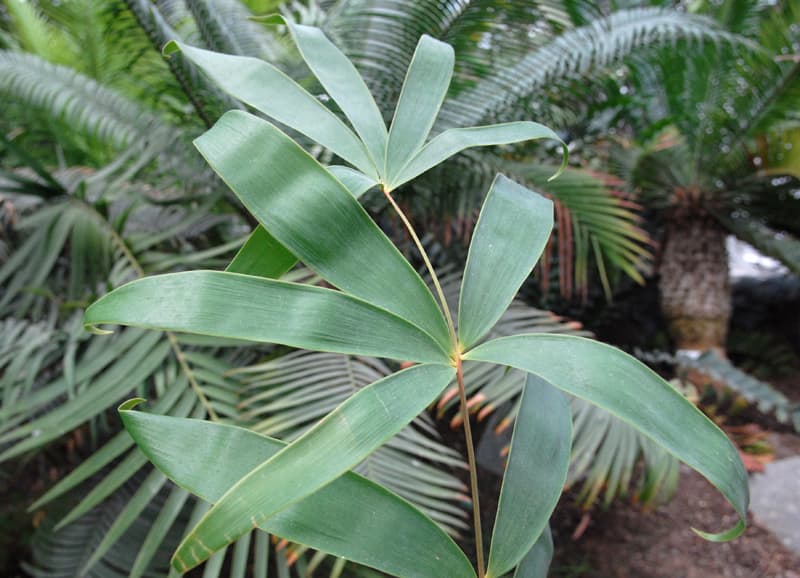
Ceratozamia hildae
Ceratozamia hildae, commonly known as the Bamboo Cycad, is a species native to Mexico, thriving in moist, humid tropical forests. It is distinguished by its long, papery leaves that cluster at nodes, giving it a bamboo-like appearance, and an underground stem that initially develops a branched root system before producing above-ground stems.

Cycas angulata
Cycas angulata is the largest Australian species of cycad, distinguished by its tall, often branched stems and numerous grey-green to glaucous leaves reaching up to 1.7 meters in length. Native to the Northern Territory and northwest Queensland, it is occasionally cultivated as an ornamental plant and its seeds were historically used as a food source by Aboriginal Australians after careful detoxification.
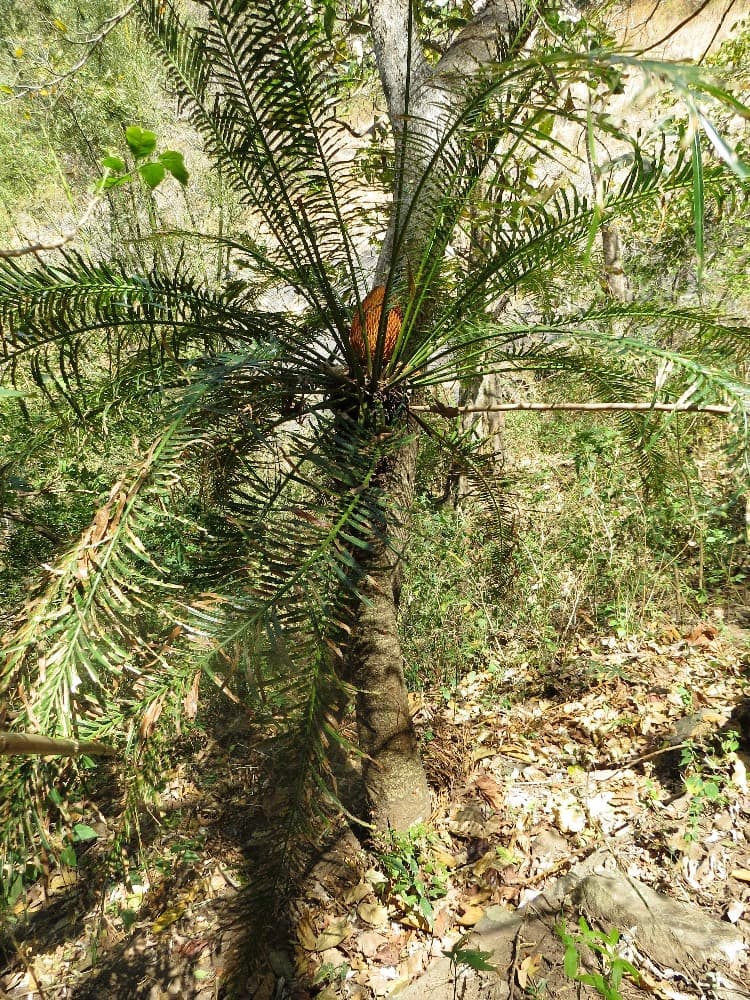
Cycas annaikalensis
Cycas annaikalensis is a critically endangered cycad species native to the Annaikal Hills of Kerala, India. Discovered in 2006, this species is endemic to a very small region and faces an extremely high risk of extinction, with fewer than 100 individuals remaining in the wild. Its botanical characteristics are typical of the Cycas genus, though specific details beyond its endangered status and limited distribution are not extensively documented in available records.