
Cycas bifida
Dense bamboo woodlands or mixed deciduous forest near limestone outcroppings.·Subterranean stem with emergent leaves·Endangered (Chinese populations)
Cycas bifida is a distinctive cycad species native to southern China and northern Vietnam, found in mixed deciduous forests and bamboo woodlands, often near limestone outcroppings. It is characterized by its bipinnate leaves, where each leaflet is further dichotomously divided, a feature reflected in its scientific name. Due to its habitat in remote and sometimes hazardous border regions, and the establishment of nature reserves, populations are protected, though the species is rarely encountered in cultivation.
Key Facts
- ›Native to southern China (Guangxi, Yunnan) and northern Vietnam.
- ›Features bipinnate leaves with dichotomously divided leaflets.
- ›Stems are largely subterranean, with only a small portion emerging above ground.
- ›Found in mixed deciduous forests and bamboo woodlands, often near limestone.
- ›Chinese populations are considered endangered, with protection efforts in place.
- ›Rarely encountered in cultivation.

Southern China, Northern Vietnam
Largely subterranean, 20–60 cm in diameter, Up to 20 cm above ground level
- 2–4 m Long
- 40–80 cm Broad
- Dark Green and Glossy
- Bipinnate
- 27-44 Pairs of Leaflets
- Leaflets Dichotomously Divided
- Leaflets Are Linear, 10–38 cm Long and 1.5–3 cm Broad
- Leaflet Texture: Papery To Leathery
- Petiole Is 0.5–2 m Long
- Petiole Armed With Spikes
- Female cones are closed.
- Sporophylls of female cones are 8–12 cm long.
- Female cones have deep red-brown tomentose down.
- Female cones have 6-8 ovules on an ovate lamina.
- Female cones have yellow to yellow-brown sarcotesta.
- Sclerotesta is ovoid and flattened.
- Male cones are solitary and erect.
- Male cones are spindle-shaped and cylindrical.
- Male cones are 15-23 cm long and 4–6 cm broad.
- Male cones have light yellow tomentose down.
- Male cones have an erect apical spine.
- Sporophylls of male cones are 1.2–2 cm.
- Male sporophylls have 1-3 minute teeth per side.
Ovoid and Flattened Sclerotesta
Poaching
About Cycas bifida
Cycas bifida is a species of cycad plant belonging to the genus Cycas, recognized for its distinctive leaf structure and specific geographic distribution. It is native to the southern regions of China, including Guangxi and Yunnan provinces, as well as parts of northern Vietnam, such as Cao Bằng, Lạng Sơn, and Tuyên Quang provinces. This cycad is typically found inhabiting dense bamboo woodlands or mixed deciduous forests, often in close proximity to limestone outcroppings.
Botanical Characteristics
The most notable feature of Cycas bifida is its bipinnate leaves, which can reach lengths of 2 to 4 meters. Each leaf is adorned with 27 to 44 pairs of leaflets, and these leaflets are further dichotomously divided, meaning they split into two segments. This unique characteristic is the source of its scientific name, 'bifida'. The leaflets themselves are linear, measuring 10 to 38 cm long and 1.5 to 3 cm broad, with a texture that can range from papery to leathery. The leaf petioles are substantial, measuring 0.5 to 2 meters in length, and are armed with spikes. The stems of Cycas bifida are predominantly subterranean, typically measuring 20 to 60 cm in diameter, with only a small portion, up to 20 cm, emerging above ground level and bearing the characteristic leaves.
Reproduction
Reproduction in Cycas bifida involves distinct male and female cones. The female cones are described as closed structures, with sporophylls that are 8 to 12 cm long and covered in deep red-brown tomentose down. They contain 6 to 8 ovules on an ovate lamina, with seeds exhibiting an ovoid and flattened sclerotesta. The male cones are solitary and erect, possessing a spindle shape and cylindrical form, measuring 15 to 23 cm in length and 4 to 6 cm in breadth. They are covered in light yellow tomentose down and topped with an erect apical spine, with sporophylls that are 1.2 to 2 cm and bear 1 to 3 minute teeth per side.
Habitat and Conservation
The natural range of Cycas bifida sometimes includes areas that have been sites of historical border conflicts, leading to the presence of land mine fields. These hazardous conditions, while posing risks, have inadvertently protected the species from poaching. The Chinese populations of Cycas bifida are classified as endangered, prompting conservation efforts such as the establishment of the Longgang Nature Reserve in Longzhou, Guangxi, China, specifically for its protection. Despite these efforts, the species is rarely encountered in cultivation, making its natural habitat crucial for its survival.
Taxonomy and Nomenclature
Cycas bifida has experienced confusion in scientific literature with related species, notably Cycas multifrondis and Cycas micholitzii. In some floristic treatments, such as the Flora of China, it has been identified as Cycas micholitzii, although this classification is contested, with some authorities restricting Cycas micholitzii to plants found in central Vietnam and Laos. Another closely related species, Cycas longipetiolula, is sometimes considered synonymous with Cycas bifida but may also have hybridized with Cycas multipinnata, and is primarily observed in cultivation in Jinping County, Yunnan.
Source: Wikipedia ↗
Frequently Asked Questions
What is the scientific name of this cycad species?
The scientific name for this species is Cycas bifida. It has also been known by the synonym Cycas rumphii var. bifida in some literature.
Where is Cycas bifida naturally found?
Cycas bifida is native to southern China, specifically in the Guangxi and Yunnan provinces, and in northern Vietnam, including Cao Bằng, Lạng Sơn, and Tuyên Quang provinces.
What are the distinctive features of Cycas bifida's leaves?
The leaves of Cycas bifida are bipinnate, meaning they are divided into leaflets, and these leaflets are further split into two (dichotomously divided). They are dark green, glossy, and range from 10 to 38 cm in length.
What is the typical habitat of Cycas bifida?
This cycad thrives in areas of dense bamboo woodlands or mixed deciduous forests, often found in proximity to limestone outcroppings. Some of its natural habitats are located in border regions between Vietnam and China.
What is the conservation status of Cycas bifida?
The Chinese populations of Cycas bifida are considered endangered. Protective measures have been implemented, including the establishment of the Longgang Nature Reserve in China.
Why is the species named 'bifida'?
The species is named 'bifida' due to its leaflets, which are dichotomously divided. This means each leaflet splits into two distinct segments, a characteristic that sets it apart.
Related Cycad species
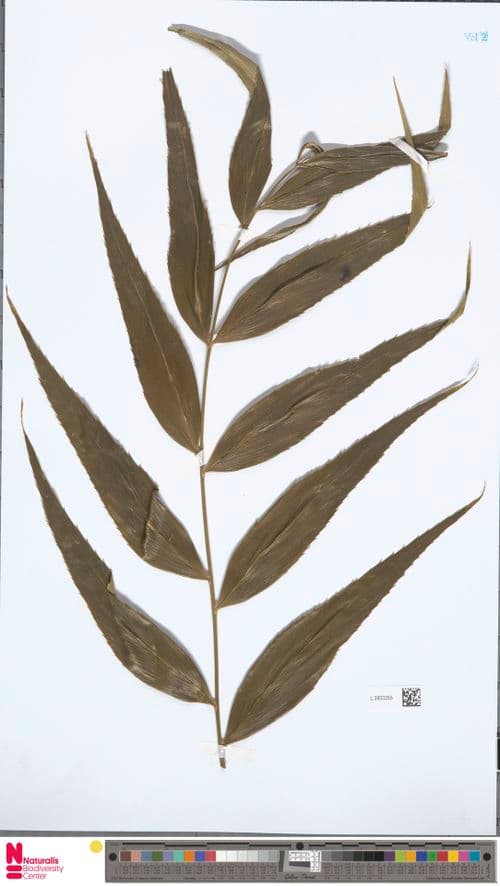
Zamia restrepoi
Zamia restrepoi is a species of cycad native to Panama and Colombia, found in rainforests and disturbed habitats. It is characterized by its subterranean stem, large compound leaves with toothed leaflets, and a critically endangered conservation status due to severe habitat loss. The species was originally described as Chigua restrepoi before being reclassified into the genus Zamia.

Zamia dressleri
Zamia dressleri is a species of cycad native to Eastern Panama, thriving in rainforest environments. This species is distinguished by its subterranean stem and large, compound leaves, each bearing numerous toothed leaflets. Its reproductive structures include cylindrical male cones and ovoid, wine-red female cones, with the seeds also being red.
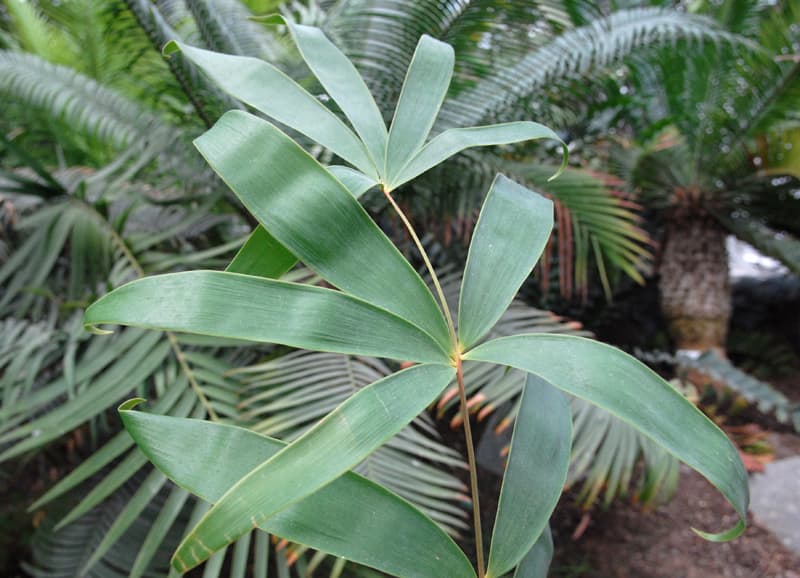
Ceratozamia hildae
Ceratozamia hildae, commonly known as the Bamboo Cycad, is a species native to Mexico, thriving in moist, humid tropical forests. It is distinguished by its long, papery leaves that cluster at nodes, giving it a bamboo-like appearance, and an underground stem that initially develops a branched root system before producing above-ground stems.