
Zamia restrepoi
Rain forest, secondary forest, coffee plantations, and edges of pastures between 100 and 1,000 meters elevation.·Subterranean stem with emergent leaves·Critically Endangered
Zamia restrepoi is a species of cycad native to Panama and Colombia, found in rainforests and disturbed habitats. It is characterized by its subterranean stem, large compound leaves with toothed leaflets, and a critically endangered conservation status due to severe habitat loss. The species was originally described as Chigua restrepoi before being reclassified into the genus Zamia.
Key Facts
- ›Native to Darien Province, Panama, and adjacent Colombia.
- ›Has a subterranean, ellipsoid stem up to 10 cm in diameter.
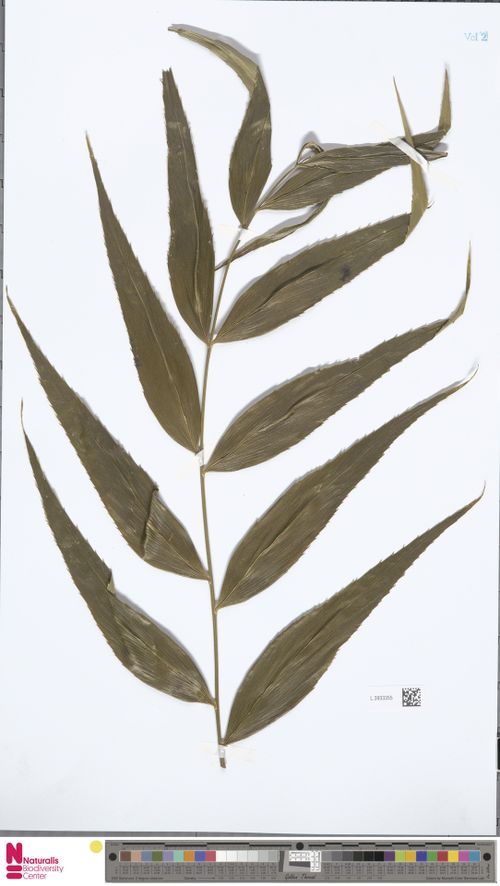
- ›Leaves are large, ranging from 120 to 180 cm long, with 20-30 toothed leaflets.
- ›Habitat includes rainforests, secondary forests, coffee plantations, and pasture edges.
- ›Critically Endangered conservation status due to habitat destruction and small population size.
- ›Originally classified in the genus Chigua before being moved to Zamia.
Panama, Colombia
Subterranean, Ellipsoid In Shape, Up To 10 Centimetres In Diameter
- Compound leaves
- Leaflets are toothed on their edges
- Leaflets are lanceolate
- Leaflets are 15 to 25 centimetres long and 3 to 5 centimetres wide
- Habitat Loss Due To Dam Construction
- Deforestation For Agricultural and Urban Expansion
- Cattle Ranching
- Crop Cultivation
About Zamia restrepoi
Zamia restrepoi is a species of cycad belonging to the family Zamiaceae, native to the tropical regions of Panama and Colombia. This species is notable for its subterranean stem, which is ellipsoid and can reach up to 10 centimeters in diameter. It produces two to five large compound leaves, each measuring between 120 and 180 centimeters in length, supported by petioles and rachises that are often covered in small prickles. The leaves are adorned with 20 to 30 lanceolate leaflets, which have distinctively toothed edges and measure 15 to 25 centimeters long and 3 to 5 centimeters wide.
Habitat and Distribution
This cycad thrives in diverse environments, typically found between 100 and 1,000 meters in elevation. Its natural habitats include rainforests, secondary forests, coffee plantations, and the edges of pastures. Historically, it was known from Darien Province in Panama and adjacent areas of Colombia. However, significant habitat destruction, particularly due to the construction of a dam in the 1990s that flooded much of its known range, has severely impacted its populations.
Conservation Concerns
Zamia restrepoi faces critical threats to its survival. As of recent assessments, the sole remaining known subpopulation is alarmingly small, comprising fewer than 100 adult specimens. While extensive surveys have been conducted, the discovery of additional subpopulations has been unsuccessful, highlighting the urgent need for further research into its distribution and abundance. The ongoing deforestation driven by agricultural expansion, including cattle ranching and crop cultivation, along with urban development, places the species' future in jeopardy. Efforts have been made to rescue and replant specimens in reforested areas at higher altitudes, but the overall population remains critically endangered.
Taxonomy and History
The type specimen for Zamia restrepoi was first collected in northern Colombia in 1918 by Francis W. Pennell. It remained undocumented until rediscovered by Rodrigo Bernal in 1986. In 1990, Dennis Stevenson described the genus Chigua, including two species: C. restrepoi and C. bernalii. Later taxonomic work, notably by Anders Lindström in 2009, recognized the close relationship between Chigua and Zamia, leading to the reclassification of C. restrepoi into the genus Zamia, while C. bernalii was identified as a synonym of Z. restrepoi.
Source: Wikipedia ↗
Frequently Asked Questions
What is the scientific name for this cycad species?
The scientific name for this species is Zamia restrepoi. It was formerly classified under the genus Chigua as Chigua restrepoi before being reclassified in 2009.
Where is Zamia restrepoi found naturally?
Zamia restrepoi is indigenous to Darien Province in Panama and adjacent areas of Colombia. It grows at elevations between 100 and 1,000 meters.
What are the key physical characteristics of Zamia restrepoi?
This cycad has a subterranean stem up to 10 cm in diameter. Its compound leaves can reach lengths of 120 to 180 cm, featuring 20 to 30 lanceolate, toothed leaflets.
What is the conservation status of Zamia restrepoi?
Zamia restrepoi is listed as Critically Endangered. This is primarily due to significant habitat loss caused by infrastructure development and agricultural expansion.
What are the primary threats to Zamia restrepoi?
The main threats are habitat destruction due to the construction of dams, deforestation for cattle ranching and crops, and urban expansion. The remaining known subpopulation is alarmingly small.
Related Cycad species

Cycas bifida
Cycas bifida is a distinctive cycad species native to southern China and northern Vietnam, found in mixed deciduous forests and bamboo woodlands, often near limestone outcroppings. It is characterized by its bipinnate leaves, where each leaflet is further dichotomously divided, a feature reflected in its scientific name. Due to its habitat in remote and sometimes hazardous border regions, and the establishment of nature reserves, populations are protected, though the species is rarely encountered in cultivation.

Zamia dressleri
Zamia dressleri is a species of cycad native to Eastern Panama, thriving in rainforest environments. This species is distinguished by its subterranean stem and large, compound leaves, each bearing numerous toothed leaflets. Its reproductive structures include cylindrical male cones and ovoid, wine-red female cones, with the seeds also being red.

Zamia montana
Zamia montana is a critically endangered cycad species endemic to the Antioquia Department of Colombia. Found in subtropical or tropical moist montane forests, this species is characterized by its extreme rarity and the significant threats posed by logging activities within its natural habitat. The species faces a high risk of extinction, with its only known population located in an area that has undergone recent logging.