
Cycas pectinata
Dry, open thickets in limestone mountains and red soil in sparse monsoon forests; typically grows at elevations from 300 m to 1200 m.·Tall evergreen tree·Listed in CITES Appendix II and IUCN Red List
Cycas pectinata is a widespread cycad species native to Northeast India, Nepal, Bhutan, Myanmar, southern China, and Southeast Asia. It is characterized by its tall, evergreen tree-like form, reaching up to 16.1 meters, and distinctive dark green leaves. The species is notable for its economic and traditional uses, including ornamental value and as a source of food and medicine, but faces significant threats from habitat destruction and overcollection.
Key Facts
- ›One of the most widespread cycad species.
- ›Can grow up to 16.1 meters tall, with one specimen in Assam being the world's tallest Cycas plant.
- ›Used ornamentally, for festive decorations, and as a food source (young fronds, seeds for starch).
- ›Microsporophylls are used in traditional medicine for stomach ailments and to enhance male potency.
- ›Listed in CITES Appendix II and the IUCN Red List due to threats like habitat loss and overcollection.
Yendang
India, Nepal, Bhutan, Myanmar, China, Bangladesh, Malaysia, Cambodia, Thailand, Laos, Vietnam
Robust, Glabrous At Base, Usually Branched When Mature
1 To 2 Meters Long, Dark Green
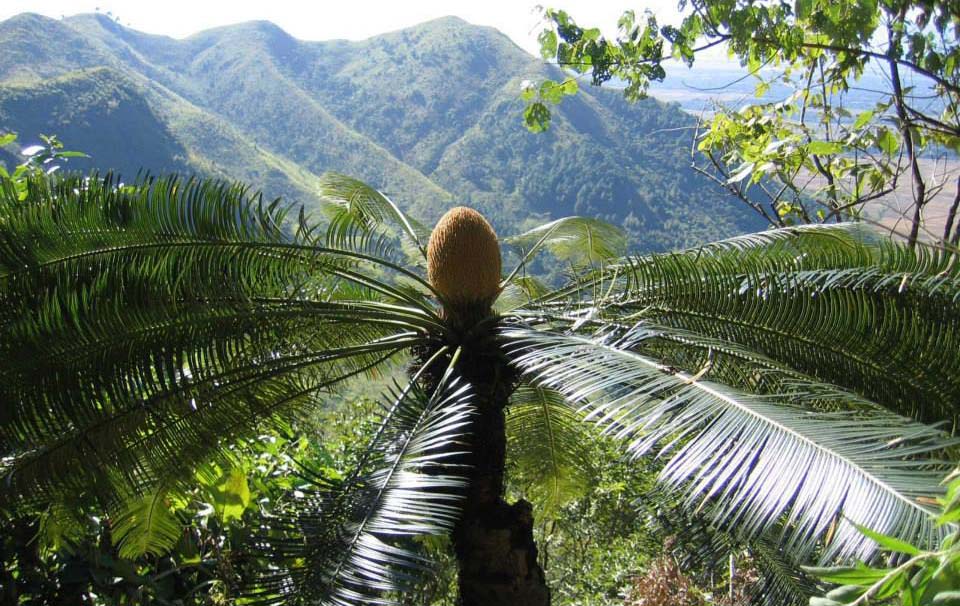
- Male cones are usually large, cylindrically ovoid, and yellowish or orange at maturity.
- Megasporophylls are deeply pectinate and densely covered with hairs.
Ovoid, Glabrous, Orange To Red-Yellow On Maturity
- Ornamental plant
- Decoration for festivals and weddings
- Young fronds eaten as vegetables
- Seeds used as a source of starch
- Microsporophylls used in traditional medicine for stomach-aches and ulcers
- Young microsporophylls eaten to enhance male sexual potency
Clearing of Forest, Overcollection of Male Cones
About Cycas pectinata
Cycas pectinata is a prominent species of cycad, recognized for its substantial size and widespread distribution across Asia. Described in 1826, it has since been identified from Northeast India, Nepal, Bhutan, Myanmar, southern China, Bangladesh, Malaysia, Cambodia, northern Thailand, Laos, and Vietnam. This species typically thrives in challenging terrains, often found in dry, open thickets within limestone mountains and sparse monsoon forests at elevations ranging from 300 to 1200 meters.
Botanical Characteristics
This cycad grows as a tall, evergreen tree, with stems that can reach up to 12 meters in height. A remarkable specimen in Assam, India, has been recorded as the world's tallest Cycas plant, measuring 16.1 meters. The trees are crowned with leaves that are typically 1 to 2 meters long and a deep green color. Mature stems may exhibit branching. The reproductive structures include large, ovoid male cones that are yellowish or orange when mature. The megasporophylls are distinctly pectinate and covered in dense hairs, while the seeds are ovoid, glabrous, and turn orange to red-yellow upon maturity.
Economic and Traditional Significance
Cycas pectinata holds considerable economic and cultural importance in the regions where it grows. It is a popular ornamental plant, frequently cultivated in gardens and public spaces. In Northeast India, its green leaves are utilized for decorating temporary shrines and wedding venues during festivals. Beyond its aesthetic uses, the species serves as a food source; young fronds are consumed as vegetables in Manipur and Sikkim, and the seeds are a traditional source of starch, eaten raw or roasted in Assam and Meghalaya. Furthermore, parts of the plant are integral to traditional medicine. Microsporophylls are chewed raw to address stomach ailments and ulcers, and young microsporophylls are consumed by young men in some areas to purportedly enhance male sexual potency.
Conservation Concerns
Despite its widespread nature, Cycas pectinata faces significant threats, particularly in Northeast India. The primary drivers of its decline are habitat destruction through forest clearing and the overcollection of male cones for medicinal purposes. These pressures have led to its inclusion in CITES Appendix II and the IUCN Red List. In response, conservation programs have been initiated in Assam and Manipur, involving local indigenous tribes and the state forest department. Awareness campaigns, such as the Cycad Volleyball Tournament in Manipur, aim to engage the youth in protecting these ancient plants.
Source: Wikipedia ↗
Frequently Asked Questions
What is Cycas pectinata?
Cycas pectinata is a species of cycad described in 1826. It is known for its tall, tree-like growth form and is one of the most widespread cycads found across various parts of Asia.
Where is Cycas pectinata found?
This species is native to a broad geographical area including Northeast India (Assam, Manipur, Meghalaya, Sikkim, Darjeeling), Nepal, Bhutan, Myanmar, southern China (Yunnan), Bangladesh, Malaysia, Cambodia, northern Thailand, Laos, and Vietnam. It typically grows at elevations between 300 and 1200 meters.
What are the notable physical characteristics of Cycas pectinata?
Cycas pectinata grows into a tall evergreen tree, often reaching up to 12 meters, with a remarkable specimen recorded at 16.1 meters. It has a crown of dark green leaves, each 1 to 2 meters long. Mature plants may exhibit branching stems.
Are there any economic or traditional uses for Cycas pectinata?
Yes, Cycas pectinata is a popular ornamental plant. Its leaves are used for decorations during festivals and weddings. Traditionally, young fronds are eaten as vegetables, and seeds are a source of starch. Parts of the plant are also used in traditional medicine.
What is the conservation status of Cycas pectinata?
Cycas pectinata is listed in CITES Appendix II and on the IUCN Red List. It faces severe threats in regions like Northeast India due to forest clearing and overcollection, prompting conservation efforts.
What does Cycas pectinata mean in Vietnam?
In Vietnam, Cycas pectinata is known as the 'Hundred Year tree' (Cây thiên tuế) and is considered an auspicious ornamental plant. Large specimens are often placed in front of important buildings.
Related Cycad species

Encephalartos horridus
Encephalartos horridus, commonly known as the Eastern Cape blue cycad, is a distinctive, low-growing cycad native to the Eastern Cape Province of South Africa. It is recognized for its striking blue-gray, spiny leaves and typically develops a subterranean stem. This species thrives in arid shrublands and rocky ridges, exhibiting a slow growth rate and requiring specific conditions for successful cultivation.
Zamia inermis
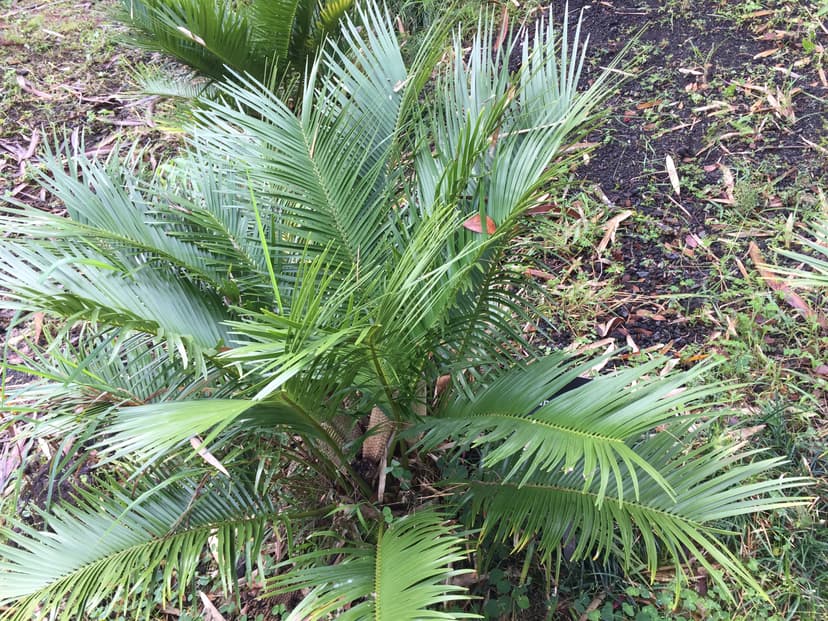
Zamia inermis is a critically endangered cycad species native to Actopan, Veracruz, Mexico. It is characterized by its shrub-like growth, with a trunk that can be branched and upright leaves composed of numerous linear-lanceolate leaflets. This species is dioecious and faces significant threats from habitat loss, wildfires, and over-harvesting.

Encephalartos dolomiticus
Encephalartos dolomiticus, commonly known as the Wolkberg cycad, is a critically endangered cycad species native to the Wolkberg region of South Africa. This tree-like cycad typically grows up to 2 meters tall and is characterized by its distinctive bluish leaves forming a crown, with lance-shaped leaflets arranged oppositely along the rachis. It is a dioecious species, producing separate male and female cones.