
Encephalartos dolomiticus
Mountainous regions (Wolkberg) at elevations of 1100–1500 meters.·Tree-like cycad, often with basal shoots.·Critically Endangered
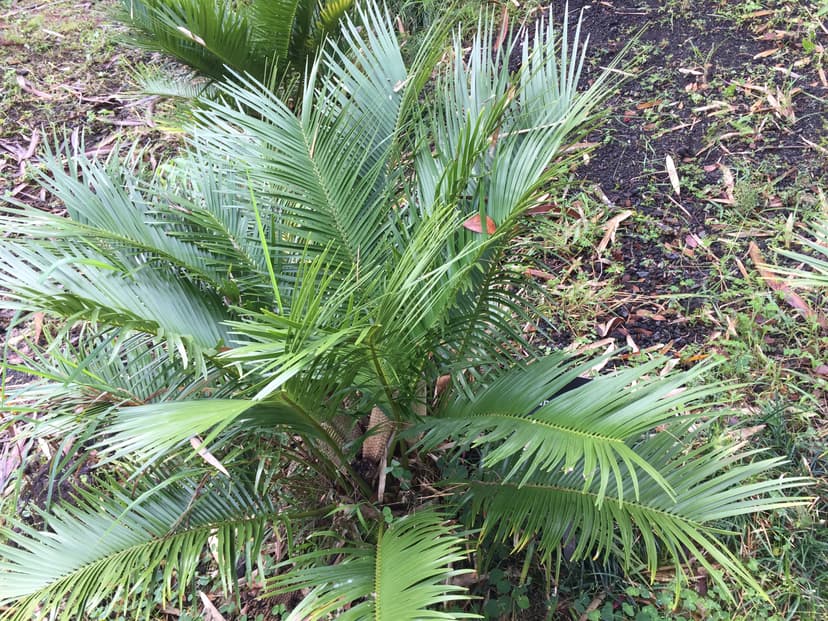
Encephalartos dolomiticus, commonly known as the Wolkberg cycad, is a critically endangered cycad species native to the Wolkberg region of South Africa. This tree-like cycad typically grows up to 2 meters tall and is characterized by its distinctive bluish leaves forming a crown, with lance-shaped leaflets arranged oppositely along the rachis. It is a dioecious species, producing separate male and female cones.
Key Facts
- ›Critically endangered species found only in the Wolkberg, South Africa.
- ›Grows up to 2 meters tall with bluish, crown-forming leaves.
- ›Dioecious, meaning separate male and female plants are required for reproduction.
- ›Male cones are ovoid, green, and measure 35–50 cm long.
- ›Female cones are larger, 30–45 cm long, and up to three can grow on a single plant.
- ›Seeds are oblong, 30–35 mm long, and enclosed in a yellow sarcotesta.

Wolkberg Cycad
South Africa
- Up to 2 m tall
- Up to 40 cm wide at the base
- Often with additional shoots sprouting from the bottom
- Bluish in color
- Form a crown at the top
- 60–80 cm in length
- Sometimes twisted
- Lance-shaped leaflets
- Leaflets 12–17 cm long
- Leaflets angle oppositely along the rachis at 45°
- Leaflets have smooth margins
- Leaflets have occasional small teeth on the lower side
- Straight petiole with small spines
- Male cones are green, ovoid, 35–50 cm long, and 10 cm wide.
- Female cones are similar in shape, 30–45 cm long, and 18–25 cm wide.
- Up to three female cones can grow on a single plant.
- Macrosporophylls of female cones have a warty surface.
Oblong Shape, 30–35 mm Long, Covered By A Yellow Sarcotesta
About Encephalartos dolomiticus
Encephalartos dolomiticus, known commonly as the Wolkberg cycad, is a species of cycad recognized for its critically endangered status. This plant is exclusively found in the rugged terrain of the Wolkberg mountains, specifically in the Penge area of southeastern Limpopo Province, South Africa, where it inhabits elevations ranging from 1,100 to 1,500 meters.
Description and Characteristics
This cycad exhibits a tree-like growth form, reaching heights of up to 2 meters and a basal width of 40 cm. It frequently produces additional shoots from its base, contributing to a clustered appearance. The most striking feature is its crown of bluish leaves, each measuring 60–80 cm in length, which can sometimes exhibit a twisted orientation. The lance-shaped leaflets are arranged oppositely along the rachis at a 45-degree angle, are 12–17 cm long, possess smooth margins, and may have small teeth on their lower edges. The petiole is straight and adorned with small spines.
As a dioecious species, Encephalartos dolomiticus relies on the presence of both male and female plants for reproduction. The male cones are ovoid and green, measuring 35–50 cm in length and 10 cm in width. Female cones share a similar shape but are larger, ranging from 30–45 cm in length and 18–25 cm in width; remarkable instances of up to three female cones growing on a single plant have been observed. The macrosporophylls of the female cones are distinctively warty. The plant produces oblong seeds, approximately 30–35 mm long, each encased in a yellow sarcotesta.
Source: Wikipedia ↗
Frequently Asked Questions
What is the conservation status of Encephalartos dolomiticus?
Encephalartos dolomiticus is listed as critically endangered. This designation highlights the extreme risk of extinction it faces in its natural habitat.
Where is Encephalartos dolomiticus found naturally?
This species is exclusively found in the Wolkberg region, specifically near Penge in southeastern Limpopo Province, South Africa. It thrives at elevations between 1100 and 1500 meters.
What are the characteristics of Encephalartos dolomiticus leaves?
The leaves of Encephalartos dolomiticus are bluish and form a crown at the top of the plant, reaching lengths of 60–80 cm. They are sometimes twisted, and the lance-shaped leaflets are 12–17 cm long, angled oppositely at 45 degrees along the rachis, with smooth margins and occasional small teeth.
How do male and female cones of Encephalartos dolomiticus differ?
Male cones are green, ovoid, and typically measure 35–50 cm in length and 10 cm in width. Female cones are similar in shape but larger, ranging from 30–45 cm long and 18–25 cm wide, with up to three cones sometimes developing on a single plant. The macrosporophylls of the female cones have a warty surface.
What are the seeds of Encephalartos dolomiticus like?
The seeds of Encephalartos dolomiticus are oblong, measuring 30–35 mm in length. They are notable for being covered by a yellow sarcotesta, which is a fleshy outer layer.
Related Cycad species
Zamia inermis
Zamia inermis is a critically endangered cycad species native to Actopan, Veracruz, Mexico. It is characterized by its shrub-like growth, with a trunk that can be branched and upright leaves composed of numerous linear-lanceolate leaflets. This species is dioecious and faces significant threats from habitat loss, wildfires, and over-harvesting.

Encephalartos latifrons
Encephalartos latifrons, commonly known as the Albany Cycad, is a critically endangered species of cycad native to the Eastern Cape province of South Africa. This tall, tree-like plant is characterized by its upright or prostrate stem and bright green, feather-like leaves. It is notable for its rarity and the challenges it faces in natural reproduction.

Encephalartos sclavoi
Encephalartos sclavoi, also known as Sclavo's cycad, is a critically endangered cycad species native to the Uluguru Mountains of Tanzania. This "living fossil" is characterized by its relatively short, arborescent growth, long dark green leaves with concave and spined leaflets, and distinctive yellow seed cones. Its limited population and specific ecological needs make it a focus of conservation efforts.