
Dioon edule
Tropical deciduous thorn forests and oak woodlands, at altitudes of 500–1000 feet, in harsh areas with exposed, shallow soils and very dry climates.·Arborescent·Insects (beetles Pharaxonotha dimorpha and Pharaonotha vovidesi)·On the verge of becoming endangered
Dioon edule, commonly known as the chestnut dioon or palma de la virgen, is a cycad species native to the eastern coast of Mexico. It is characterized by pinnate leaves that can reach around 135 cm in length and a slow growth rate adapted to harsh, dry climates. This species plays a significant role in its ecosystem, particularly in nitrogen fixation, and is recognized for its mutualistic relationship with specific beetle species responsible for its pollination.
Key Facts
- ›Native to the eastern coast of Mexico, primarily found in the Sierra Madre Oriental.
- ›Features pinnate leaves that lack spines on leaflet borders in mature plants.
- ›Exhibits a slow growth rate and is drought-tolerant (xerophilous).
- ›Has a mutualistic relationship with beetles Pharaxonotha dimorpha and Pharaonotha vovidesi for pollination.
- ›Both subspecies of Dioon edule are considered on the verge of becoming endangered.
- ›Possesses a unique reproductive cycle with significant variation in cone intervals between male and female plants.

Chestnut Dioon, Palma De La Virgen
Mexico
- Large Central Medulla
- Single Vascular Bundle Containing Xylem, Phloem, and Cambium
- Lateral Budding Present
- Pinnate leaves
- Measure around 135 cm long
- Lack spines on leaflet borders in mature plants
- Wider leaves typical of subsp. edule found in the South
- Narrower leaves typical of subsp. angustifolium found to the North
- Male and female plants are difficult to distinguish until cones develop.
- Cone intervals can be used to determine sex: females typically have longer intervals than males.
- Beetles live and breed in male cones.
- Central cell of the archegonium is up to 3 millimeters in length.
- Nucleus within the archegonium is up to 0.5 mm in diameter.
- Seeds must combat harsh, dry climates and frequent bushfires.
- Seeds must also avert rodent predators.
Horticultural Purposes, Medicinal Purposes
Human-Caused Habitat Destruction, Collection For Horticultural Purposes, Collection For Medicinal Purposes
About Dioon edule
Dioon edule, commonly known as the chestnut dioon or palma de la virgen, is a species of cycad native to the eastern coast of Mexico. Belonging to the Zamiaceae family, it is one of the oldest lineages of seed-bearing plants, predating dinosaurs. The species is characterized by its slow growth rate and adaptation to harsh, dry environments, making it a resilient survivor in its native habitat.
Anatomy and Characteristics
Dioon edule is distinguished by its crown of pinnate leaves, which can reach approximately 135 cm in length. Mature plants lack spines on the borders of their leaflets, though juvenile leaves may possess them. The plant exhibits lateral budding and secretes mucilage from cut surfaces. Its vascular system is adapted for a slow-growing, drought-tolerant lifestyle, featuring a single vascular bundle and a small conduction channel. The roots are substantial, with large adventitious roots that harbor nodules containing tannins, and are often associated with endomycorrhizae and symbiotic blue-green algae that aid in nutrient and water absorption and nitrogen fixation.
Habitat and Ecology
This cycad is endemic to the Sierra Madre Oriental in Mexico, typically found in tropical deciduous thorn forests and oak woodlands at altitudes between 500 and 1000 feet. It thrives in exposed areas with shallow, rocky soils, enduring very dry climates and frequent brush fires. Dioon edule demonstrates a Type III survivorship curve, with high seedling mortality but robust survival in mature plants that are well-armored against environmental stressors. Its distribution is often clumped due to competition with faster-growing species, predation, and variations in temperature and precipitation.
Reproduction and Conservation
Distinguishing between male and female Dioon edule plants can be challenging until cones develop. Cone intervals provide a clue, with females generally having much longer intervals than males. The species engages in an obligatory mutualistic relationship with beetles Pharaxonotha dimorpha and Pharaonotha vovidesi, which act as pollinators. Both subspecies of Dioon edule are currently on the verge of becoming endangered, primarily due to human-induced habitat destruction and over-collection for horticultural and medicinal uses. Efforts to conserve the species include establishing seed banks and implementing protective legislation.
Source: Wikipedia ↗
Frequently Asked Questions
What is the scientific name of the chestnut dioon?
The scientific name for the chestnut dioon is Dioon edule. This binomial name is used to scientifically classify the species and distinguish it from other plants.
Where is Dioon edule naturally found?
Dioon edule is indigenous to the eastern coast of Mexico. It is commonly distributed throughout the Sierra Madre Oriental, spanning regions from Veracruz to Nuevo Leon.
What are the distinctive botanical features of Dioon edule?
Dioon edule is notable for its crown of pinnate leaves, which can grow up to 135 cm long and lack spines on the leaflet borders in mature specimens. It also excretes mucilage from cut surfaces and has a slow growth rate adapted to arid conditions.
How does Dioon edule reproduce and get pollinated?
Dioon edule reproduces via cones, and pollination is facilitated by a mutualistic relationship with specific beetles, Pharaxonotha dimorpha and Pharaonotha vovidesi. These beetles live and breed in male cones, consuming pollen and cone tissues while transferring pollen to female cones.
What is the conservation status of Dioon edule?
Both subspecies of Dioon edule are considered to be on the verge of becoming endangered. They face significant threats from human-caused habitat destruction and collection for horticultural and medicinal purposes.
What are the typical habitats for Dioon edule?
Dioon edule commonly resides in tropical deciduous thorn forests and oak woodlands. They are typically found at altitudes of 500–1000 feet, often in exposed areas with shallow, rocky soils and dry climates.
Related Cycad species

Encephalartos lanatus
Encephalartos lanatus, commonly known as the Olifants River cycad, is a slow-growing cycad species native to Mpumalanga and Gauteng in South Africa. Characterized by its bluish-green, woolly leaves and the unique arrangement of leaflets, this species thrives in rocky, prairie-covered slopes and exhibits remarkable resilience to fire and frost.
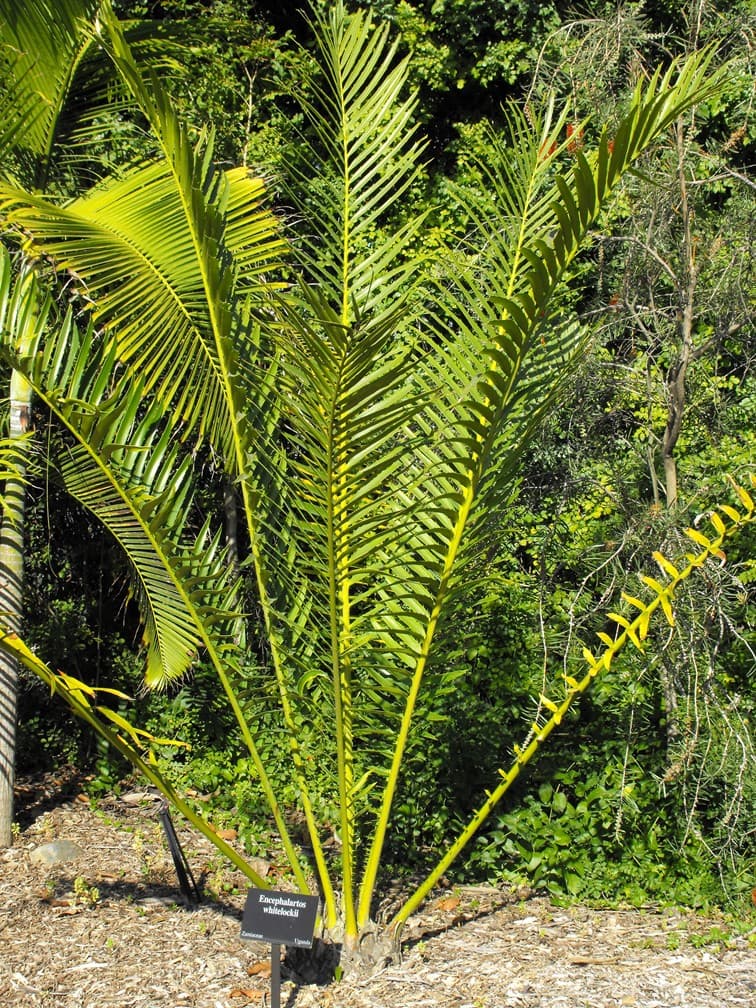
Encephalartos whitelockii
Encephalartos whitelockii is a critically endangered cycad species native to a single location in southwestern Uganda, forming one of Africa's most impressive cycad populations along the Mpanga River. This large, arborescent cycad is characterized by its tall stems topped with stiff, glossy dark green fronds and distinctive bluish-green cones, and it plays an important role in the local ecosystem, particularly for baboons.
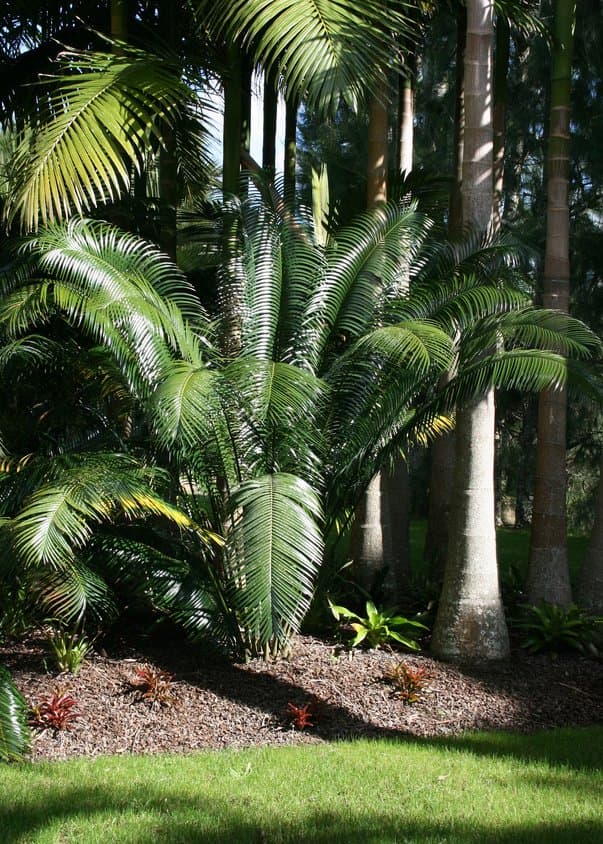
Lepidozamia peroffskyana
Lepidozamia peroffskyana is a palm-like cycad native to eastern Australia, specifically in Queensland and New South Wales. It is characterized by its slow growth, long lifespan, and impressive reproductive cones, which are among the largest in the cycad world. The species is named in honor of Count Peroffsky, a benefactor of the St. Petersburg Botanical Garden.